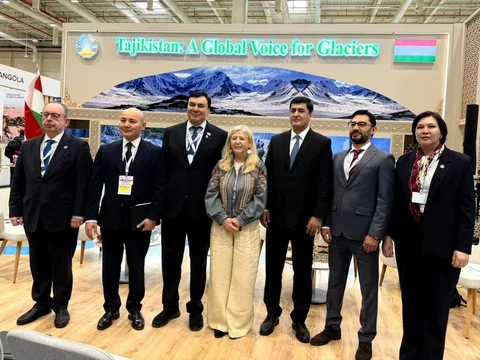
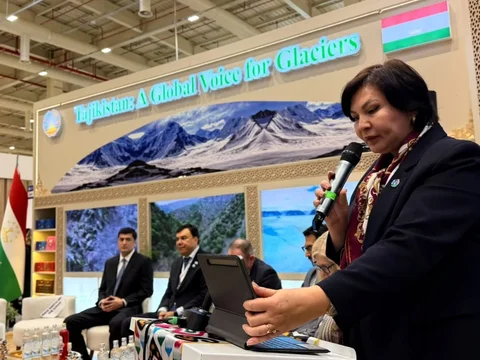


Bishkek, Nov. 19, 2026 /Kabar/. During the 31st Conference of the Parties to the UN Framework Convention on Climate Change (COP31), a regional dialogue focused on the "Glaciers to Farms" (G2F) program was held at the National Pavilion of the Republic of Tajikistan. Ministry of Natural Resources, Ecology and Technical Supervision reports.
According to the ministry, Deputy Minister of Natural Resources Asel Raimkulova took part in the dialogue.
During the event, representatives from Central Asian countries and international organizations discussed prospects for regional cooperation regarding the preservation of glaciers, climate-resilient agriculture, and the attraction of investments to enhance the resilience of mountain ecosystems and local communities.
The event highlighted the particular significance of the G2F program for the Kyrgyz Republic, given the mountainous nature of the country’s territory and the growing impact of climate change on water resources and natural ecosystems.
It was noted that approximately 90% of Kyrgyzstan’s territory consists of mountains, and the country’s glacier area has shrunk by 16% over the last 70 years. These changes have a direct impact on water security, agriculture, energy potential, and the country’s socio-economic development.
Special attention was also given to Kyrgyzstan’s national measures to strengthen its climate policy, specifically, the adoption of the Law of the Kyrgyz Republic "On Climate Action," which will enter into force on January 1, 2027, as well as ongoing efforts to develop renewable energy, improve energy efficiency, promote climate-resilient agriculture, and preserve forest ecosystems. Discussing the prospects for Kyrgyzstan’s participation in the G2F program, the deputy minister outlined three priority areas for future work:
- accelerating the preparation and implementation of investment projects aimed at enhancing climate resilience;
- ensuring access for countries in the region to climate finance in the form of grants and concessional funding;
- strengthening regional scientific and technical cooperation, as well as the exchange of knowledge and best practices.
Asel Raimkulova emphasized that the successful implementation of the program requires a comprehensive approach that takes into account the interconnections between glaciers, water resources, agriculture, and the well-being of mountain communities.