


Bishkek, July 23, 2026 /Kabar/. Bishkek discussed journalists' safety issues when covering emergency situations, improving interaction between the media, the Ministry of Emergency Situations of Kyrgyzstan, and the press services of government agencies, as well as developing practical recommendations for journalists and editorial offices.
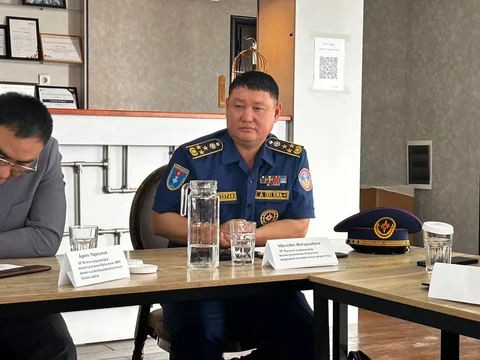
Yrysbek Zholdoshbaev, Director of the Disaster Medicine Service at Ministry of Emergency Situations noted that journalists today are professionals in their field, but when covering emergencies, it's important to consider the specifics of working in high-risk environments.
"Journalists today are professionals in their field, but they must not forget about safety. Every media outlet should have a specialist or department responsible for handling emergency situations," he noted.
He added that due to climate change, Kyrgyzstan is increasingly facing natural disasters, including mudflows. He emphasized that the Ministry of Emergency Situations cannot cope with the consequences of such events alone.
"Today, Ministry of Emergency Situations employees not only deal with the aftermath of emergencies but also assist victims, including cleaning up the aftermath of mudflows in people's yards," Zholdoshbaev said. He also shared the experience of Iran, where, according to him, emergency response responsibilities are divided between the fire and rescue services.
"I've been to Iran. They don't have a Ministry of Emergency Situations like we have here. They have fire and rescue services. The country's leadership provides them with significant support and participates in events and seminars aimed at improving the qualifications of specialists," he said.
Zholdoshbaev also noted that public criticism of the Ministry of Emergency Situations is often heard after emergencies.
"The public often asks: why didn't the ministry warn in advance? Why weren't preventative measures taken? But we must understand that some natural phenomena cannot be accurately predicted. Mudflows can occur unexpectedly, and in such cases, it's important to understand that this is a natural phenomenon, and it's impossible to completely prevent all the consequences," he noted.
According to him, to effectively respond to emergency situations, it is necessary not only to improve the work of government services but also to increase public awareness and the professional training of journalists covering such events.