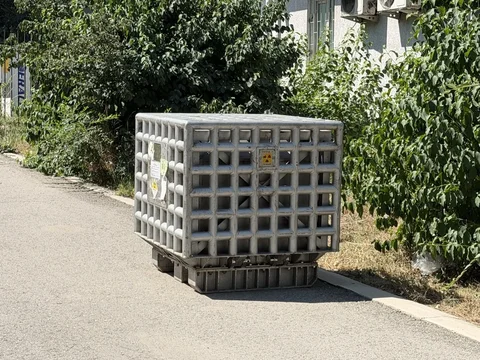
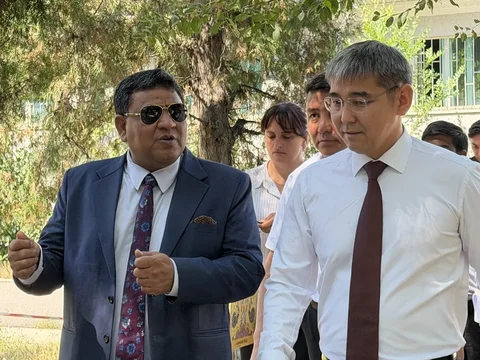

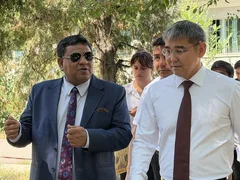

Bishkek, July 27, 2026 /Kabar/. Today, July 27, Kyrgyz Health Minister Damir Osmonov, together with Indian Ambassador to Kyrgyzstan Birender Singh Yadav, visited the National Center for Oncology and Hematology, where the official handover of a new Cobalt-60 radioactive source for the Babatron external beam radiation therapy unit took place.
According to the ministry, the handover of the source will ensure the continued uninterrupted operation of the equipment and maintain the availability of life-saving radiation therapy for cancer patients.
This initiative is another practical result of cooperation between Kyrgyzstan and India in healthcare. As previously noted, the development of cooperation with India encompasses oncology, medical personnel training, the introduction of modern technologies, and the modernization of medical infrastructure.
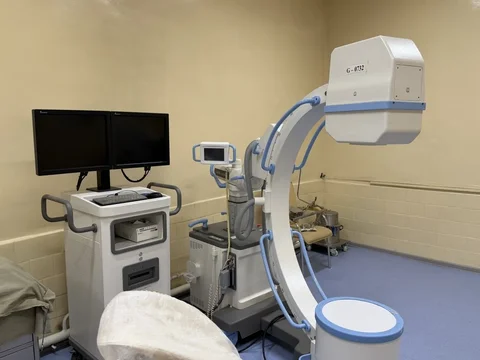
During the event, Nurbek Bukuev, Director of the National Center for Oncology and Hematology, reported that all radiation therapy units are currently operational: two linear accelerators, the Babatron unit, two flexitrons, and other specialized equipment are functioning. Approximately 160 patients are treated daily on two linear accelerators, up to 120 patients are planned to be treated daily on the Babatron device, approximately 25 patients are treated on the Terad device, and approximately 40 additional inpatients receive daily treatment on flexitrons.
He also reported that the state is taking measures to ensure the uninterrupted operation of high-tech equipment. Four million soms have been allocated from the republican budget for the repair of linear accelerators, 31 million soms for the purchase of necessary spare parts, and, starting in 2027, approximately 18 million soms are planned for annual funding for the maintenance of all radiation therapy equipment. This will allow for timely maintenance and the prompt resolution of any technical issues.
Damir Osmonov emphasized that ensuring the stable operation of modern medical equipment is a key condition for improving the quality of specialized oncology care and a priority of state healthcare policy.
In turn, the Indian side confirmed its readiness to continue cooperation in developing oncology services in Kyrgyzstan. Specifically, they expressed their willingness to provide further assistance in the timely replacement of the Cobalt-60 source after its effective lifespan has expired, which will ensure the continued operation of the Babatron device.