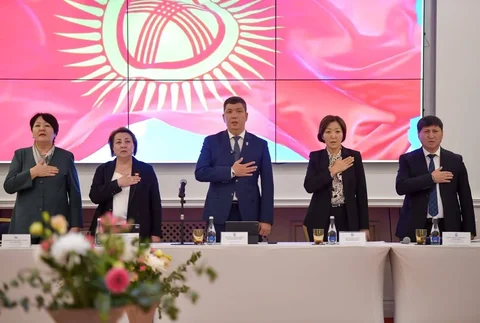
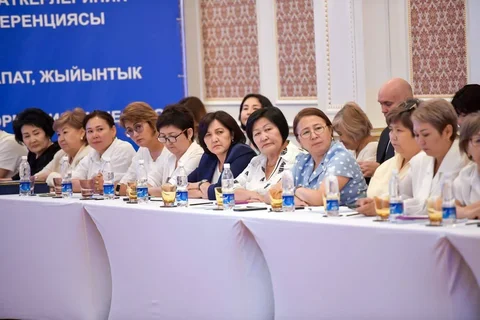

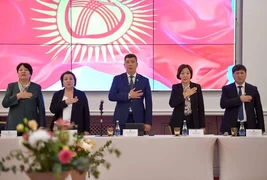
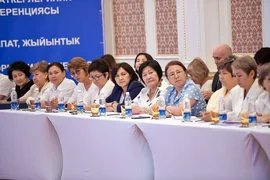

Bishkek, Aug. 26, 2026. /Kabar/. On August 25, a conference of Bishkek's educators and teachers was held on the topic "Education Changing the Era: Change, Quality, Results." Ministry of Education reports.
The event was attended by Minister of Education Dogdurkul Kendirbaeva, members of the Jogorku Kenesh (Parliament), Bishkek Mayor Aibek Dzhunushaliev, Deputy Mayor for Social Affairs Rakhat Musaeva, President of the Kyrgyz Academy of Education Nazira Dyusheeva, Director of the Republican Institute for Advanced Training and Retraining of Pedagogical Workers Almaz Toktomametov, representatives of the Bishkek City Hall's Department of Education, heads of educational institutions, representatives of the teaching community, and education experts.
During the conference, Education Minister Dogdurkul Kendirbaeva noted that the transition to a 12-year school curriculum requires changes in content, methods, and the educational environment.
"In the new academic year, grades 3 and 8 will be added to grades 1, 2, 5, and 7, which will transition to a 12-year school curriculum. Up to 15 specialized programs will be available for grades 8," the minister said.
She also emphasized that children should experience changes directly at school in the new academic year.
President of the Kyrgyz Academy of Education Nazira Dyusheeva presented a report on "The 2026-2027 Academic Year: September Results." Almaz Toktomametov, Director of the Republican Institute for Advanced Training and Retraining of Pedagogical Workers, presented information on the "Altyn Kazyk" program and the philosophy of a 12-year education.
The keynote address, "Education Changing the Era: Change, Quality, and Results," was delivered by Zhanybek Orozaliev, Director of the Department of Education. Participants discussed current issues in the development of the education system, plans for the second phase of the transition to 12-year education, improving the quality of education, and the application of modern approaches to the management of educational institutions.
The conference also examined the performance of Bishkek schools and their practical experience, issues related to the development of education within the framework of administrative-territorial reform, and modern approaches to organizing the educational process.
The conference concluded with an open-mic discussion, during which participants made proposals and discussed current issues related to the further development of education in the capital.
Following the conference, a corresponding resolution was adopted.