
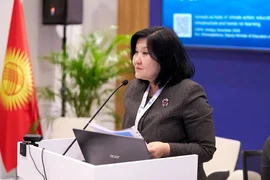

Bishkek, Nov. 13, 2026 /Kabar/. Kyrgyzstan has unveiled its "Green School" national model, aimed at integrating climate education into school curricula, developing students' environmental skills, and enhancing the energy efficiency of educational institutions.
According to the Ministry of Education, the presentation took place on November 12 at the 31st Conference of the Parties to the UN Framework Convention on Climate Change (COP31) in Antalya, Turkey.
During the conference, the ministry in collaboration with international partners hosted two thematic sessions focused on environmental education and strengthening the resilience of schools against climate change.
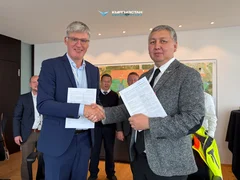
At the first session, Adylbek Kasymaliev, Chairman of the Cabinet of Ministers and Chief of Staff of the Presidential Administration of Kyrgyz Republic visited the Kyrgyz national pavilion. He reviewed the country's initiatives in environmental education, as well as potential areas for cooperation with international partners.
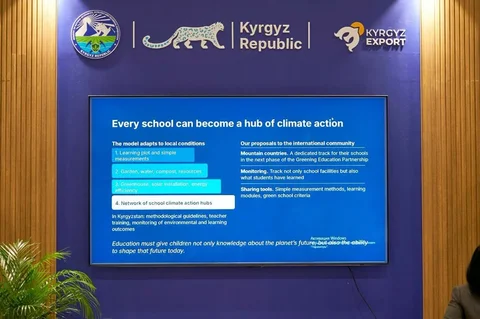
The "Green School" model was presented to the participants; it entails incorporating climate education into curricula, fostering students' environmental competencies, implementing energy-efficient solutions, and creating opportunities for the practical study of environmental protection.
Special emphasis was placed on developing school gardens, utilizing renewable energy sources, and employing eco-friendly heating systems. The session also highlighted examples of practice-oriented learning supported by UNESCO, the UN World Food Programme, and other international partners.
Furthermore, participants examined a joint initiative by ICESCO and Cambridge University Press & Assessment, which focuses on developing international guidelines for integrating climate education into school curricula. This initiative aims to equip students with the knowledge, skills, and values necessary for sustainable development and a responsible attitude toward the environment. The second session, titled "Using Technology to Advance Environmental Education: From Glaciers and Water Security to Climate-Resilient Schools," was organized by the Ministry of Education in collaboration with ICESCO.
Participants discussed the integration of modern technologies and scientific data into the educational process, the study of glacier conditions, the conservation of water resources, and enhancing the resilience of schools to climate change.
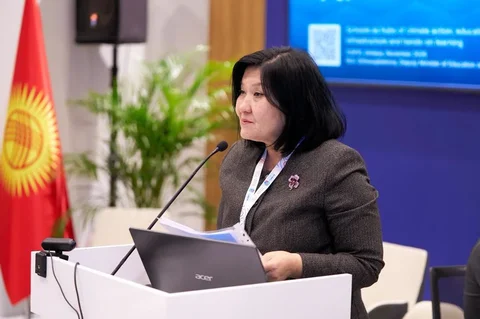
Representatives from Kyrgyzstan shared their experience in utilizing scientific research, digital educational resources, and hands-on teaching methods to improve students' environmental literacy.
The session also addressed topics such as the digital monitoring of climate change, the application of artificial intelligence, the development of professional competencies for educators, and the implementation of innovative solutions for creating sustainable educational infrastructure.
Both sessions served as a platform for exchanging expertise, strengthening international partnerships, and discussing practical solutions in the field of climate education.