
Bishkek, Sept. 9, 2026 /Kabar/. Kyrgyzstan ranked 80th out of 91 participating countries in the PISA-2025 international study, climbing 11 positions compared to its previous result. The country demonstrated statistically significant growth across all three core areas of the assessment: science, mathematics, and reading literacy.
According to the PISA-2025 results, Kyrgyzstan’s average scores were 363 points for science literacy, 364 points for mathematics literacy, and 344 points for reading literacy. In 2006, these figures stood at 322, 311, and 285 points, respectively.
Thus, between 2006 and 2025, the score for science literacy rose by 41 points, mathematics literacy by 53 points, and reading literacy by 59 points.
Kyrgyzstan also outperformed the averages of country groups with comparable income levels in reading and mathematics literacy, as well as in the "Learning in the Digital World" domain. Regarding science literacy, the country's results are comparable to the group average.
More than 6,000 students from 195 general education institutions across Kyrgyzstan participated in the study. The sample included urban, rural, and remote schools from various regions of the country. Schools and students were selected based on standardized international criteria, without regard to academic performance levels.
This marked the first time Kyrgyzstan participated in PISA using a computer-based format. Testing was conducted in Kyrgyz, Russian, and Uzbek, with the translation and adaptation of materials carried out in accordance with international standards.
A total of 91 countries participated in the PISA-2025 cycle, with the international assessment covering approximately 762,000 students.
Kyrgyzstan had previously participated in the study in 2006 and 2009. Returning to the assessment after a 16-year hiatus made it possible to evaluate changes in the education system over a long period and identify areas for future development.
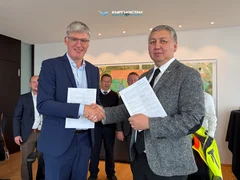
Minister of Education Dogdurkul Kendirbaeva, while in Bratislava (Slovakia) for the event presenting the PISA-2025 results, noted Kyrgyzstan's steady progress across all areas.
"There is steady, dynamic development in all areas," the Minister said.
According to Kendirbaeva, PISA results reflect not only the state of the education system but also society's attitude toward knowledge and children. She emphasized the need to foster the development of young children, equip schools with modern educational resources, and elevate the role of teachers.
The Minister also highlighted the "Altyn Kazyk" program, underscoring its importance for the country's human capital development.
"We are neither at the very top nor at the very bottom. For us, this represents success after a long break," Kendirbaeva said, expressing gratitude to students' parents, teachers, school administrations, and the Ministry of Education team.