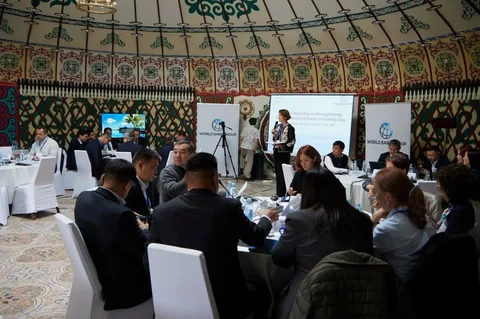
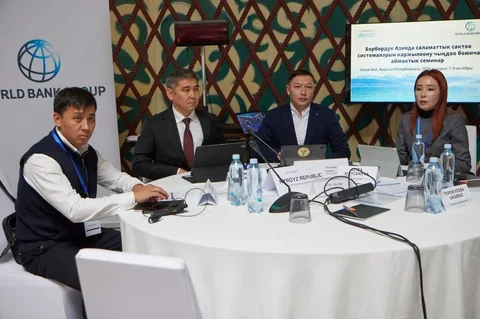

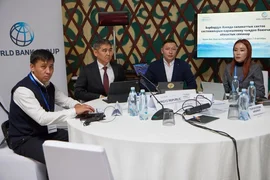
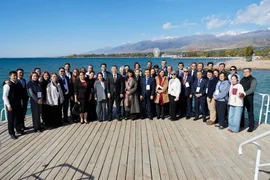

Bishkek, Oct. 8, 2026 /Kabar/. A regional seminar on strengthening healthcare financing systems in Central Asia began on October 7 at Issyk-Kul; the event was organized by the World Bank in partnership with the WHO.
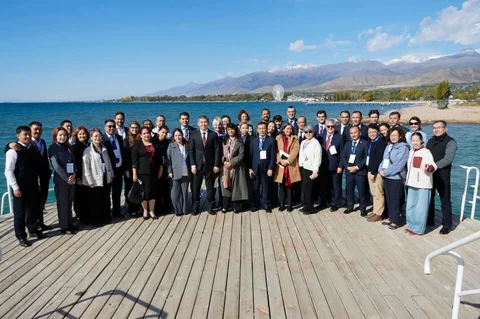
The seminar, held from October 7 to 9, has brought together approximately 40 government representatives from Central Asian countries, regional and international experts, World Bank staff, and WHO representatives.
The seminar focuses on key healthcare financing functions and practical challenges facing countries across the region, including healthcare financing governance, revenue generation and pooling mechanisms, strategic purchasing, provider payment mechanisms, the development of health service packages, hospital financing, contracting with private providers, and approaches to reducing out-of-pocket expenses and strengthening financial protection.
Opening the meeting, Damir Osmonov, Minister of Health of Kyrgyzstan noted that countries in the region face shared challenges: ensuring the sustainability of healthcare financing, using available resources more effectively, guaranteeing equitable public access to medical care, and simultaneously improving the quality of that care.
"We understand that financing reforms are not merely a question of how much funding is allocated to the healthcare system. It is equally important how these funds are pooled, how medical services are purchased, what incentives are created for medical organizations, and how financing impacts the quality and outcomes of treatment," Damir Osmonov noted.
The seminar will provide an opportunity to share experience gained from ongoing and completed reforms in Central Asia and neighboring countries, as well as to identify avenues for future cooperation and the exchange of technical expertise. Particular attention will be paid to the practical experience of countries in the region, including the transition to strategic purchasing of health services, the refinement of provider payment mechanisms, and the improvement of financing efficiency for healthcare organizations.
For Kyrgyzstan, this agenda is of particular importance in the context of ongoing efforts to improve the health financing system, develop primary health care, enhance the efficient use of public resources, and strengthen financial protection for citizens.
Following the seminar, participants will define future reform directions and opportunities for regional cooperation and knowledge sharing.