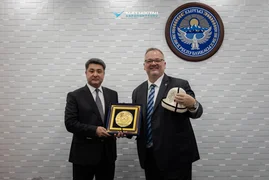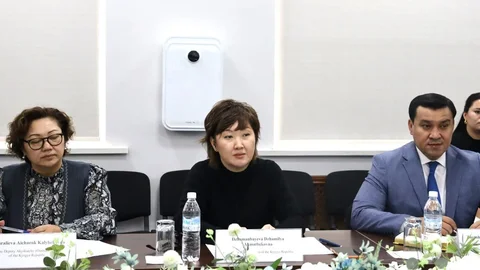
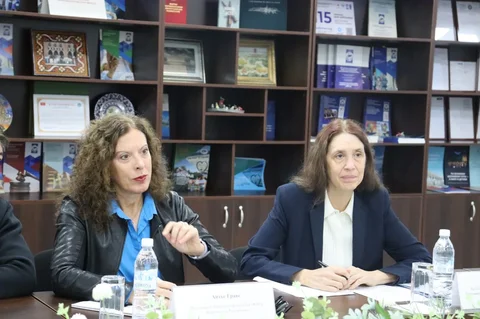

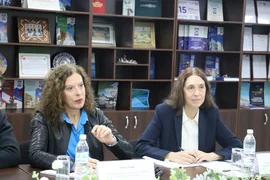
Bishkek, Oct. 31, 2025 /Kabar/. Kyrgyz Ombudsman Jamilya Jamanbaeva, UN Resident Coordinator Antje Grawe, and Regional Representative of the Office of the UN High Commissioner for Human Rights in Central Asia Matilda Bogner held a working meeting.
According to the agency, the parties discussed amendments to the Constitution of the Kyrgyz Republic, the introduction of the death penalty in the country, and the draft law on declaring invalid the Law of the Kyrgyz Republic on accession to the Second Optional Protocol to the International Covenant on Civil and Political Rights (ICCPR).
Jamilya Jamanbaeva reported that, according to the Ministry of Internal Affairs, the number of crimes against women and children increases by approximately 30% every year.
And in 2024, 64.1% of the appeals received by the Ombudsman's Institute were related to the activities of judicial and law enforcement agencies.
"We understand the emotional reaction of society to tragic cases of violence, but we believe that the return of death penalty will not solve the problem. It is necessary to improve the quality of investigations, ensure the inevitability of punishment, and strengthen measures to prevent crimes," Jamanbaeva noted.
During the meeting, Jamilya Jamanbaeva noted that in 2023, the Ombudsman's Institute expressed its position on the return of death penalty when group of deputies initiated an appeal to the Constitutional Court to reconsider the ban on this highest measure of punishment. The ombudsman emphasized that the position of the Ombudsman's Institute remains unchanged, the return of death penalty contradicts Kyrgyzstan's international obligations, namely, the provisions of the Second Optional Protocol aimed at abolishing the death penalty, which was ratified in 2010.
UN representatives expressed support ombudsman's position. They recalled that the reinstatement of death penalty not only contradicts the country's international obligations but could also negatively affect its international image as a state committed to protecting human rights.
"If this change is implemented, it will fundamentally distance the country from its international obligations. ICCPR and the Second Optional Protocol do not contain provisions for their denunciation; the abolition of death penalty is legally irreversible for states that have ratified these treaties," emphasized UN Resident Coordinator Antje Grawe.
At the conclusion of the meeting, the parties agreed to continue cooperation.