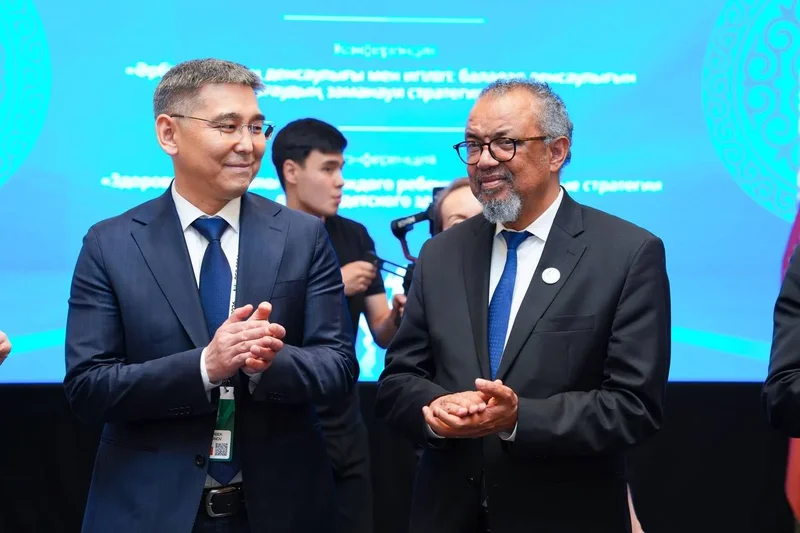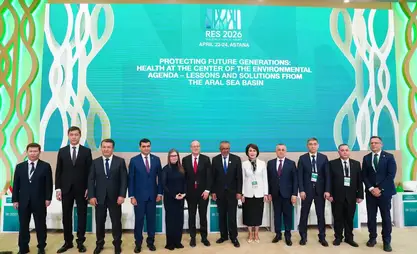
Bishkek, April 23, 2026. /Kabar/. During working visit to Astana, Health Minister Damir Osmonov participated in the events of the Regional Environmental Summit (RES), which is taking place from April 22–24, 2026, in Kazakhstan.
According to the ministry, one of the key events of the summit was the high-level international conference "The Health and Well-Being of Every Child: Modern Strategies for Child Health Protection," organized with the participation of the World Health Organization, health ministers from Central Asian countries, Azerbaijan, Georgia, and international partners.
Following the conference, participants adopted the Astana Call to Action, a joint document reaffirming states' commitment to strengthening child and adolescent health systems, developing primary health care, disease prevention, immunization, mental health, protecting vulnerable groups, and data-driven decision-making.
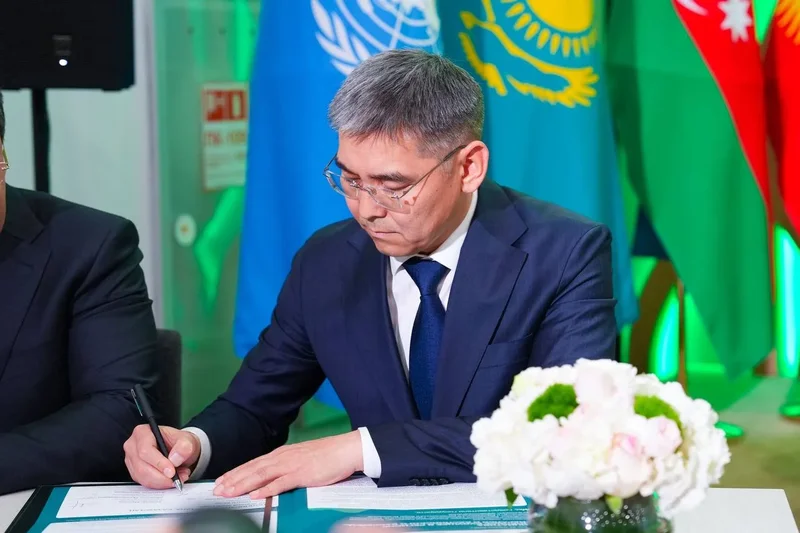
Speaking at the ministerial panel session, the minister presented the Kyrgyz Republic's position on the relationship between the environment and public health.
In his speech, Osmonov noted that for Kyrgyzstan, mountainous regions are not only a geographical feature but also an important factor influencing access to medical care, quality of life, and the sustainability of the healthcare system. He emphasized that climate change, melting glaciers, water shortages, and the isolation of remote communities require modern and adapted approaches to organizing medical care.
The minister placed particular emphasis on healthcare issues within the framework of the Kyrgyz Republic's state policy on the development of mountainous regions.
According to him, this involves creating a sustainable healthcare system for residents of high-altitude and hard-to-reach areas, expanding primary healthcare, developing digital solutions, mobile medical services, and emergency response mechanisms.
The minister also noted that the challenges of mountainous regions largely overlap with those of the Aral Sea region and the Caspian basin, where environmental changes directly impact public health, as any changes in the mountains directly impact water resources and, consequently, living conditions much wider than the mountainous regions themselves. In this regard, he emphasized the importance of uniting the efforts of countries in the region, sharing experiences, and developing coordinated solutions.
"Kyrgyzstan is ready to continue collaborating with the WHO and regional partners to ensure that health remains at the center of the environmental and climate agenda, in the interests of current and future generations," Osmonov emphasized.