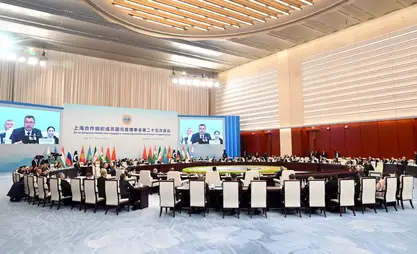
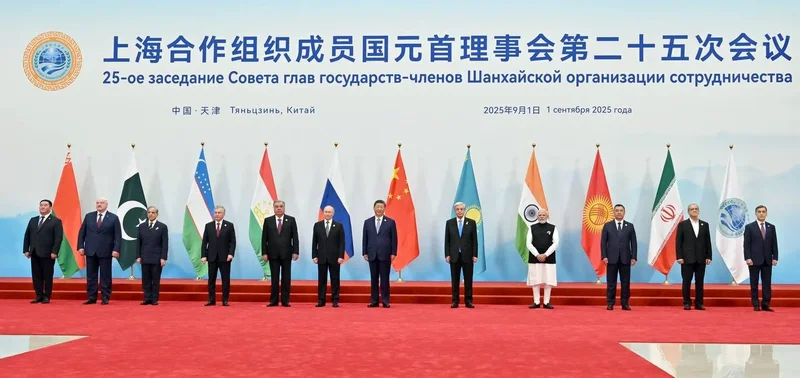
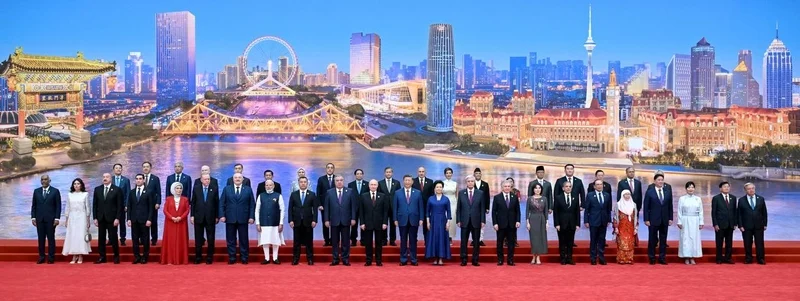
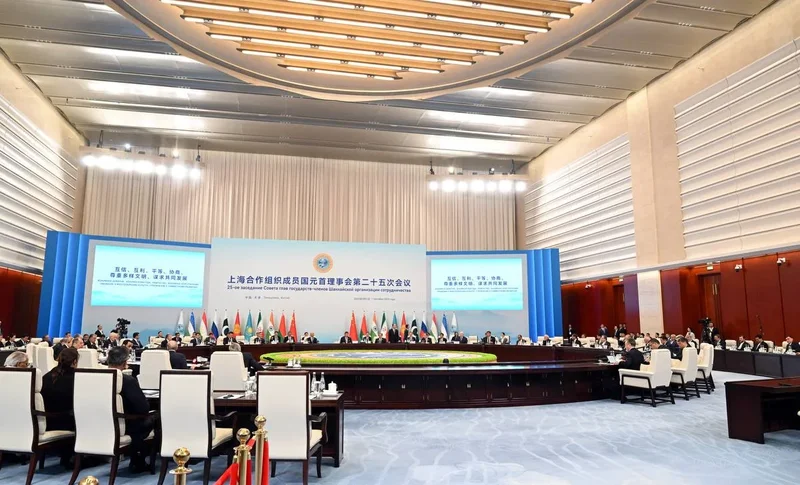
Bishkek, Sept. 1, 2025 /Kabar/. Tianjin is a major industrial and logistics center in China, where the new Silk Road begins. In the Celestial Empire, where philosophy and symbolism are given serious importance, the choice of the venue for the meeting of the SCO leaders carries obvious meanings and messages. At the zero kilometer of the new geopolitical reality, the heads of state of the Shanghai Cooperation Organization approve long-term development plans.
The SCO today has 10 full member states - Kyrgyzstan, China, Kazakhstan, Russia, Tajikistan, Uzbekistan, Pakistan, India, Iran, Belarus and 16 observer countries and dialogue partners - Afghanistan, Mongolia, Azerbaijan, Armenia, Bahrain, Egypt, Cambodia, Qatar, Kuwait, Maldives, Myanmar, Nepal, UAE, Saudi Arabia, Turkiye, Sri Lanka. The Shanghai Cooperation Organization united not only neighbors in Eurasia and the global South, significant interest in the unification is also shown in the Middle East and on other continents. The SCO today is a region where, despite global instability on the external contour and crises, there is confident economic growth, large infrastructure projects are being implemented and transport corridors are actively developing.
Economic integration based on mutual benefit—without coercion, preconditions, or harm to sovereignty—represents a new geopolitical configuration that is gradually replacing the old world order rooted in the law of the strong. The Shanghai Cooperation Organization is gaining economic weight and establishing itself as an association capable of ensuring its own security and safeguarding its sphere of interests. While the SCO does not position itself in opposition to others, it remains ready to defend the right of its members to independent development. Accordingly, the heads of state devoted serious attention to regional stability during the talks in Tianjin.
President of Kyrgyzstan Sadyr Zhaparov also emphasized this in his speech. “Our country, which is taking over the SCO presidency, considers strengthening peace and harmony in Eurasia to be one of its priorities. The first is to ensure long-term stability. Kyrgyzstan will continue to increase collective efforts aimed at countering threats and challenges to the security of the SCO member states. First of all, we are talking about countering terrorism, separatism and extremism,” the head of state emphasized.
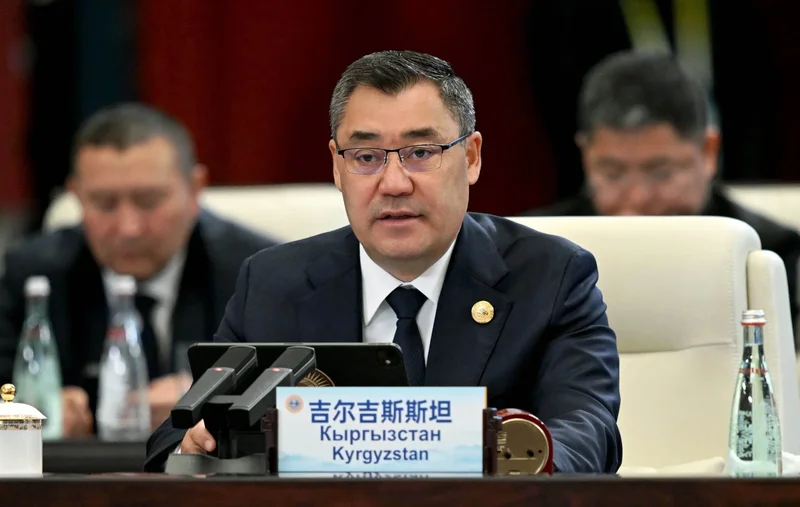
In this context, Sadyr Zhaparov noted that the Center for Combating Transnational Organized Crime, which is being created in Bishkek at the initiative of Kyrgyzstan, will make a significant contribution to the common cause of combating the illegal activities of international organized crime groups in the SCO space.
Of course, the Shanghai Cooperation Organization is more about the economy and harmonious development, but large projects begin with putting your own house in order. That is, success in achieving the set goals must be guaranteed, so the principle of indivisible security in the SCO format is considered an important element of the architecture of strategic interaction, which is immune to external factors or interference. Stability is the basis of trusting and mutually beneficial cooperation. When it is ensured, one can confidently make plans for the future.
Sadyr Zhaparov emphasized that thanks to the political will of the heads of Central Asian states, one of the key problems and threats to security was resolved - Kyrgyzstan, Uzbekistan and Tajikistan settled territorial disagreements. Now there are no disputed borders in the region. "These decisions clearly demonstrate the ability of member states, guided by the Shanghai Spirit, to find mutually acceptable solutions to the most sensitive issues, thereby strengthening the architecture of regional stability, good-neighborliness and long-term development," the president of Kyrgyzstan emphasized.
All these together creates a favorable geopolitical landscape in the SCO region, allowing us to confidently look to the future and focus on establishing mutually beneficial cooperation with a reserve for decades to come. Sadyr Zhaparov noted that realizing the potential of economic cooperation is another priority that Kyrgyzstan should focus on as the country chairing the SCO. In Tianjin, the president proposed to speed up the resolution of the issue of establishing an effective financial mechanism for the Organization, including the creation of the SCO Development Bank, the Development Fund and the Investment Fund, thus promoting regional economic integration.
“The Kyrgyz chairmanship also proposes to develop multilateral cooperation to create favorable conditions for international road and rail transport, which also includes the creation of new transport routes and the effective use of the transit and transport potential of the SCO member states,” said Sadyr Zhaparov.
Chinese President Xi Jinping addressed the summit with a call to strengthen solidarity and expand interactions between the organization’s members, as well as to use the advantages of each country to bear responsibility for peace, stability, development and prosperity of our region. The SCO states need to use the advantages of their markets and complementarity of economies, simplify trade and investment procedures, strengthen cooperation in energy, infrastructure, digital economy, innovation and artificial intelligence. “That is, to move together towards modernization through mutual support for the sake of a common future,” Xi Jinping emphasized.
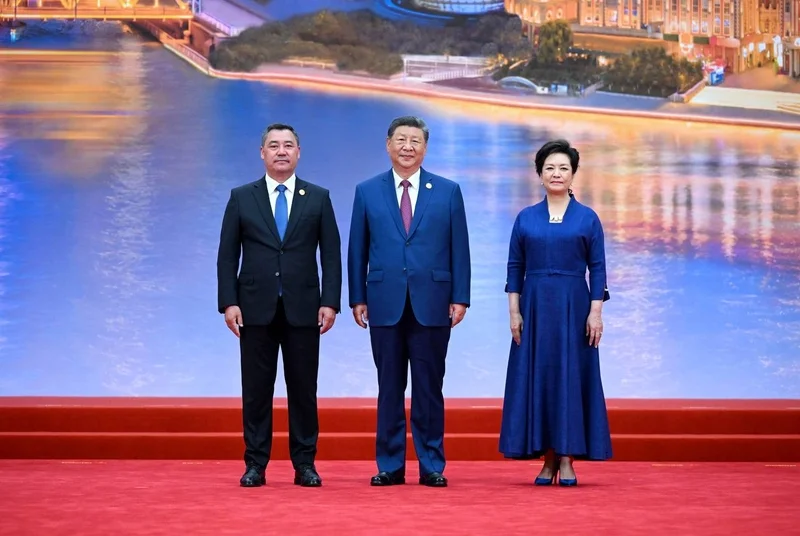
The Chinese leader also said that it is necessary to maintain a commitment to equality and justice, defend the historical truth about World War II, protect a multipolar world order, and support a multilateral trading system based on the WTO. He called for the rapid opening of a Center for Countering Security Challenges and Threats, an SCO Anti-Drug Center, and the creation of a Development Bank for partner countries.
Russian President Vladimir Putin noted that the SCO program adopted at the summit until 2035 predetermines the main areas of activity of the Shanghai Organization in politics, economics, security, and the humanitarian sphere.
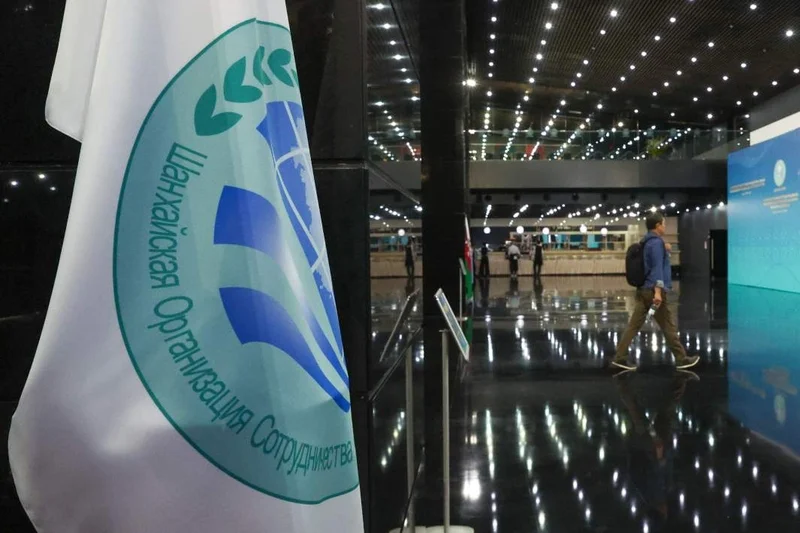
"The pace of development of cooperation within the SCO is truly impressive. For example, the average growth of the gross domestic product of member countries last year was more than five percent, and industrial production - 4.6 percent. Countertrade is also growing steadily. All this is above world indicators. National currencies are increasingly used in mutual settlements.
We are in favor of issuing joint bonds of member states, creating our own payment, settlement and depository infrastructure in the SCO, and forming a bank for joint investment projects. All this will improve the efficiency of our economic exchanges and protect them from fluctuations in the external environment," Vladimir Putin emphasized.
Following the results of the SCO summit in China, more than 20 joint documents were signed in Tianjin. Including a declaration of the heads of state, a development strategy for the Shanghai Cooperation Organization, a program to counter extremist ideology, and a roadmap for implementing an energy cooperation strategy.
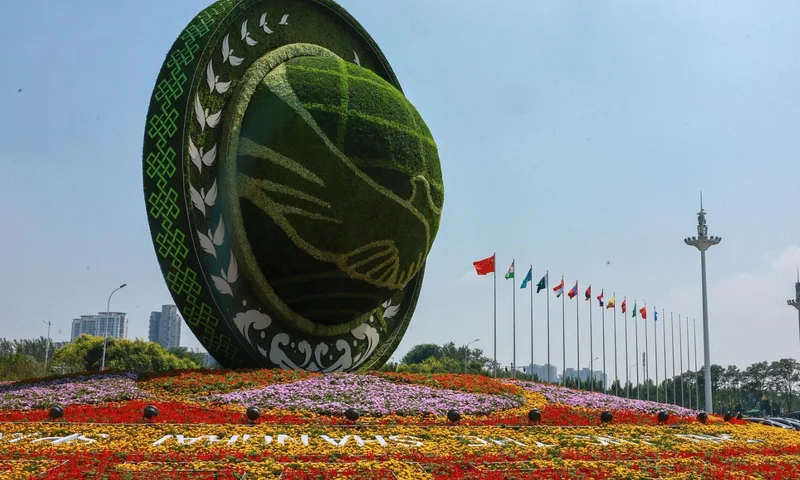
A fundamental decision was made to launch mechanisms for the formation of the SCO Development Bank. Another important result for us was that during Kyrgyzstan's chairmanship, the city of Cholpon-Ata will be the tourist and cultural capital of the Shanghai Cooperation Organization.
The experts note that the decisions made in Tianjin lay the foundations for full-scale multilateral cooperation, further economic growth in the SCO region and ensure unconditional protection of the interests of partner countries and guarantee the right to choose their own path of development.