Trade, investment, and railways: State of Kyrgyz-Chinese Relations
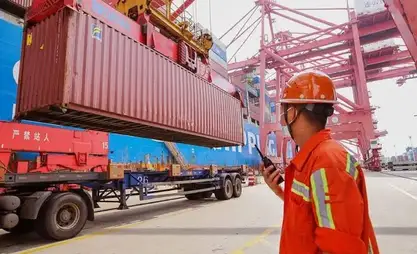
Relations between Kyrgyzstan and China have reached a new level in recent years, reflected not only in intensified political dialogue but also in the implementation of concrete projects in trade, investment, transport, energy, agriculture, technology, and education. Today, bilateral cooperation extends beyond trade and focuses on expanding transport and logistics capacity, developing production and exports, strengthening energy potential, introducing digital technologies, and training skilled personnel.
Trade between Kyrgyzstan and China
According to the National Statistics Committee, from January to May 2026, the total foreign trade turnover between Kyrgyzstan and China amounted to $2.09 billion. China remains the country's largest trading partner, accounting for 32.1% of its total foreign trade.
During the same period, Kyrgyzstan's exports to China reached $73.7 million. Kyrgyzstan's imports from China totaled $1,935.9 million.
Investments: Production and new projects
China is the largest non-CIS investor in Kyrgyzstan's economy. In the first quarter of 2026, direct investment from China to Kyrgyzstan amounted to $ 80,154,400. This figure increased by 20.9% compared to the same period last year and accounted for more than one-fifth of the total foreign capital inflow into the country.
Chinese investment plays a significant role in Kyrgyzstan’s economy, spanning the mining, manufacturing, energy, and infrastructure sectors. A number of major enterprises and industrial projects have been implemented in the country with Chinese investment. Among them is Altynken LLC, which is developing the Taldy-Bulak Levoberezhny gold deposit, one of the largest joint investment projects between Kyrgyzstan and China.
In the industrial sector, the ORIS NPZ oil refinery was launched in 2024 as part of Kyrgyz-Chinese cooperation. A total of 255 million soms was invested in the project, and the facility is currently operating at full capacity. In addition, a waste-to-energy plant has been built in Bishkek, processing municipal waste while generating electricity.
Economist Iskender Sharsheyev told Kabar News Agency that cooperation with China is opening up new opportunities for Kyrgyzstan in trade, investment, infrastructure, manufacturing, energy, and transit.

"Relations between Kyrgyzstan and China have risen to the level of a comprehensive strategic partnership in a new era. According to Chinese customs statistics, trade turnover between the two countries reached a record high in 2024, exceeding $22 billion. China is one of Kyrgyzstan's main trade and investment partners. This creates conditions for the entry of affordable goods from China and the entry of Kyrgyz agricultural products, including organic produce, into the Chinese market," the economist said.
Railway: An opportunity for Kyrgyzstan to become a transit country
One of the largest cooperation projects between Kyrgyzstan and China is the China-Kyrgyzstan-Uzbekistan railway. The section within Kyrgyzstan is approximately 304 km long. This railway will transform Kyrgyzstan into part of a new transport link between China and Central Asia.
"The largest infrastructure cooperation project is the China-Kyrgyzstan-Uzbekistan railway. Its construction was symbolically launched at the end of 2024, after which it entered its active phase. This railway is expected to transform Kyrgyzstan into a major transit hub between China, Central Asia, and Europe, reducing cargo delivery times to 7-8 days. Annual transit revenue could reach approximately $200 million. Enterprises and logistics centers such as At-Bashy and Manas will be established along the route, and new jobs will be created," Sharsheyev said.
It is worth noting that the possibility of establishing a freight transfer station and logistics center in the Makmal area is currently under consideration. Cargo will not only transit through Kyrgyzstan but will also create demand for storage, sorting, processing, packaging, and other logistics services.
President Sadyr Zhaparov, in a recent interview with journalist Ali Toktakunov, noted that the launch of the railway would generate significant budget revenues from cargo transit. The head of state described the railway as a long-term investment project for Kyrgyzstan, calling it “a second Kumtor.”
Energy: A key prerequisite for production
The operation of new factories, logistics centers, and enterprises directly depends on a stable electricity supply. Energy is considered a separate area of cooperation with China.
For example, agreements have been signed and projects are being implemented with Chinese companies to build large solar power plants in the country. Specifically, investment projects to build solar power plants are currently underway in the Ak-Tatyr rural municipality of the Batken district and in the Ak-Turpak rural municipality of the Kadamjay district.
Ak-Turpak Solar Power Plant: This plant is being jointly built by States Technology Co., Limited, and San Energy Co., in accordance with an agreement signed in Suzhou, China. The total capacity is 250 MW. Preparatory and construction work is currently underway, with full commissioning scheduled for 2027.
The Ak-Tatyr solar power plant is being implemented by CECEP Solar Energy Co., Ltd., one of China's largest state-owned corporations. The first phase of this plant, with a total capacity of 600 MW (200 MW), is scheduled to begin operation in September 2026. Construction is currently nearing completion.
Both plants are separate facilities being built with direct Chinese investment to ensure energy independence for the Batken region.
Technology and the digital economy
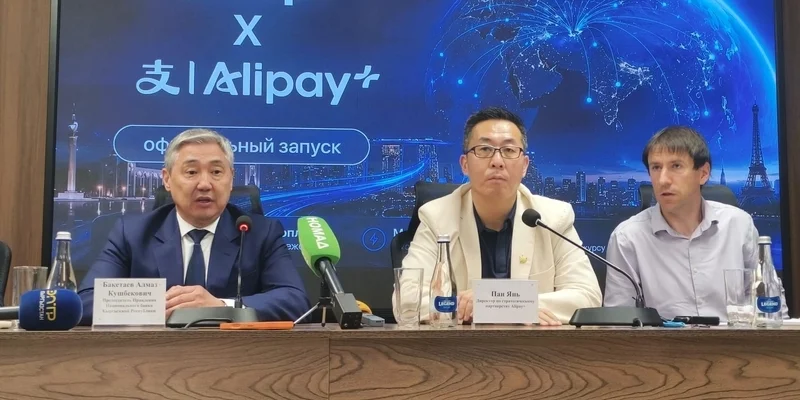
Technology is a new area of cooperation with China. During President Sadyr Zhaparov's state visit to China in 2025, the Ministry of Digital Development signed two memorandums with the Chinese side, creating new opportunities for technological development and digital transformation in the country. China's experience in artificial intelligence, digital payments, telecommunications, and e-commerce is of great importance to Kyrgyzstan. For example, in 2025, a memorandum was signed between the Kyrgyz Elcard system and the Chinese international digital payments platform Alipay+. As part of this partnership, in May of this year, Interbank Processing Center CJSC (Elcard), together with Alipay+, launched international QR payments for users in Kyrgyzstan. As a result, Elcard Mobile users now have the ability to make payments abroad. This project was implemented as part of digital infrastructure development and aims to simplify payments for tourists and entrepreneurs.
Education - a long-term capital of cooperation
Education is another important area of Kyrgyz-Chinese cooperation. For the 2025–2026 academic year, the Chinese side offered 125 scholarships under the Xinjiang Uyghur Autonomous Region program and 15 scholarships under the Sichuan Province program.
According to the Ministry of Science, Higher Education and Innovation, China has also allocated 15 government scholarships to Kyrgyz citizens. In particular, a competition was announced for undergraduate, language training, master’s, and doctoral programs at Chinese universities for the 2026–2027 academic year.
These initiatives are being implemented as part of bilateral cooperation in education, providing Kyrgyz citizens with opportunities to study at Chinese educational institutions. The scholarships cover tuition fees, dormitory accommodation, monthly stipends, and health insurance.
All of these measures are being implemented as part of the two countries' cooperation in education, and Kyrgyz citizens are receiving scholarships for study at Chinese educational institutions. These scholarships also cover tuition fees, dormitory accommodation, stipend payments, and health insurance.
Tourism: Infrastructure and new opportunities
During President Sadyr Zhaparov’s state visit to China in 2025, the relevant ministers of the two countries signed a memorandum of understanding on facilitating group tourism. The memorandum is aimed at stimulating Kyrgyzstan’s tourism industry, attracting investment, and promoting economic growth. One of the key advantages of the agreement is that it enables the Chinese side to officially organize and send tourist groups to Kyrgyzstan.
According to the State Border Service, 10.5 million foreign citizens crossed Kyrgyzstan’s border in 2025, with Chinese citizens accounting for 44% of the total.
“As a result of cooperation with China, road and transport infrastructure is improving and travel times are being reduced. Projects in Issyk-Kul are contributing to the development of tourism, while the number of jobs in construction, manufacturing, logistics, and agriculture is increasing. Farmers and entrepreneurs are gaining access to the Chinese market, while cooperation in the digital economy, artificial intelligence, and green technologies is contributing to the emergence of new professions of the future.
At the same time, there are public concerns regarding the debt burden, the share of local workers in projects, environmental issues, and the protection of national interests. According to the official position, projects are being implemented on a mutually beneficial basis and in accordance with local legislation. However, for their full benefits to be felt, high-quality implementation, transparent oversight, and the active participation of the local population are essential," said economist Iskender Sharsheyev.