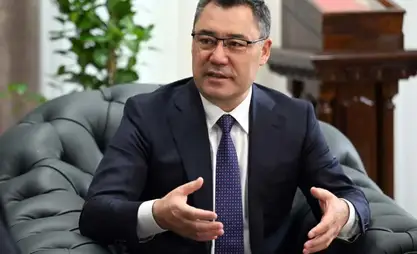
Bishkek, Oct. 2, 2025. /Kabar/. Kyrgyz President Sadyr Zhaparov stated in an interview with Kabar News Agency that the country’s new electoral law is designed to guarantee transparent and fair parliamentary elections, eliminating the practice of buying and selling mandates.
According to the president, candidates will now compete solely based on their own efforts and the trust of the people.
“The main advantage of the new law compared to previous elections is that parliamentary mandates will no longer be sold for $100,000 to $1 million. Each candidate will be independent and fight only for themselves,” Zhaparov said.
Under the new system, three deputies will be elected from each constituency. The third seat is allocated in accordance with gender equality provisions, ensuring representation of both men and women.
Zhaparov stressed that any citizen can run for parliament, regardless of their current position. “If a minister, mayor, governor, school director, or teacher wishes to become a candidate, they must resign from their post to participate in the elections. If they win enough votes, they will become deputies. If not, they will lose both the mandate and their previous position,” he said.
This measure, he explained, will prevent officials from pressuring subordinates into campaigning on their behalf.
Addressing gender balance, Zhaparov noted: “If all three top vote-getters in a constituency are women, the third seat will go to a man to maintain gender balance. If two women win the first two seats, the third will be given to the highest-ranked man. Should a mandate later be vacated, it will pass to the next candidate on the list.”
The president also highlighted measures to expand voter access. Citizens will be able to vote outside their home constituency on election day by presenting one of three documents: a national ID, an international passport, or the Tunduk mobile application with a QR code. The same rules apply to voters abroad.
Looking ahead, Zhaparov said the government intends to further digitalize the electoral process.
“In the future, people will be able to vote directly from home via the internet. Our compatriots abroad will also gain full access to elections. It’s only a matter of time,” he concluded.