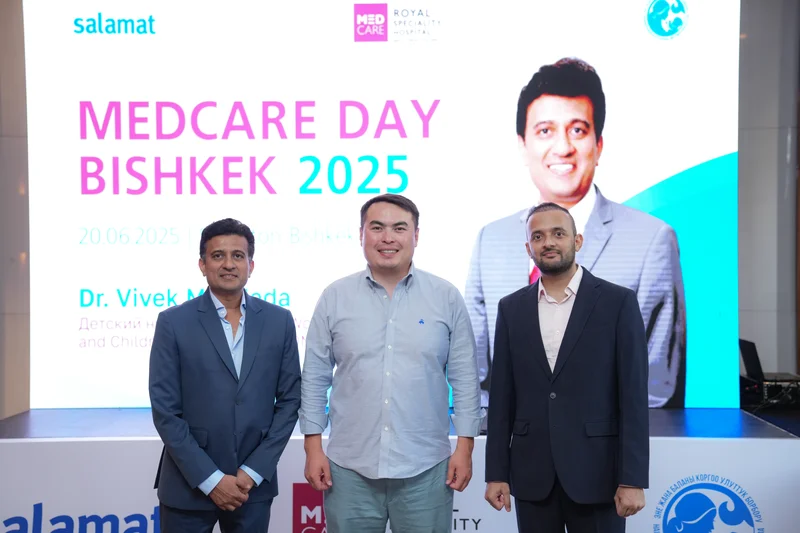
Bishkek, July 17, 2025. / Kabar /. An information session dedicated to rare pediatric diseases took place in Bishkek, Kyrgyzstan, with the participation of renowned pediatric neurologist Dr. Vivek Mundada from the UAE. Dr. Mundada, an expert in gene therapy for spinal muscular atrophy (SMA) and Duchenne muscular dystrophy (DMD), was invited to the country by Salamat, in collaboration with Medcare Hospitals & Medical Centres (UAE) and the National Centre for Maternal and Child Health.
During his visit, Dr. Mundada conducted a training session for doctors and held meetings with parents of children affected by rare diseases. The discussions focused on modern methods of diagnosis and treatment, how to choose the right medications, and the steps that can be taken to bring Kyrgyzstan closer to accessible therapy for these children.
In recent years, there has been a growing awareness of spinal muscular atrophy (SMA), a rare and severe genetic disorder. Parents who receive this diagnosis after their child’s birth not only face the emotional turmoil but also the daunting task of finding funds for life-saving treatment. One of the most effective treatments is Zolgensma, often referred to as the world’s most expensive drug.
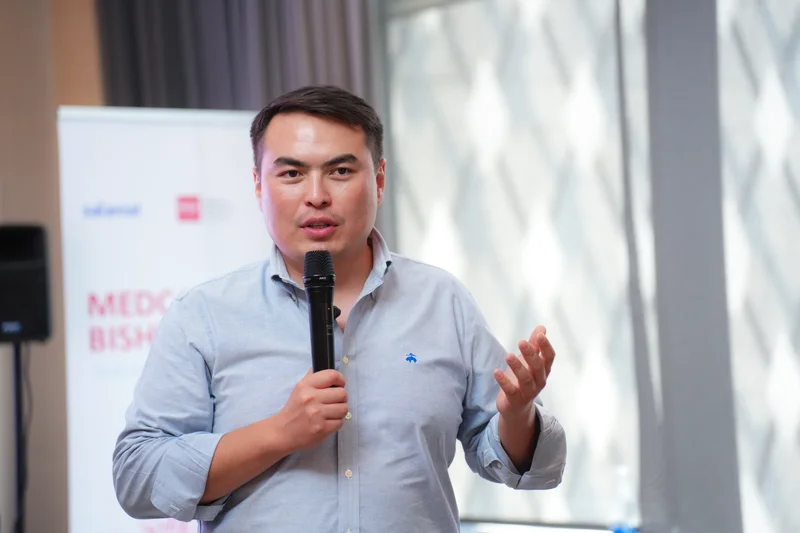
According to Dr. Vivek Mundada, an essential step in combating SMA and DMD is the early screening of newborns. If the diagnosis is made within the first days of life, the chances of successful treatment are significantly higher.
"If the child has not yet lost muscle strength and complications haven’t started, we can administer gene therapy in time to prevent severe outcomes. Early diagnosis is crucial," Dr. Mundada emphasized.
The current price of Zolgensma is approximately $1.9 million, a reduction from its earlier price of $3.1 million, achieved through efforts by clinics, parents, and some governments.
“The high cost of the drug reflects the immense resources spent on its development. However, as the costs are recovered, the price will continue to drop,” Dr. Mundada stated.
However, the cost is not the only barrier to treatment. Zolgensma is a viral gene therapy, and if a child has developed antibodies to the virus, the treatment simply will not work. This was the case for two out of three children in Kyrgyzstan who were unable to receive the treatment due to high antibody levels.
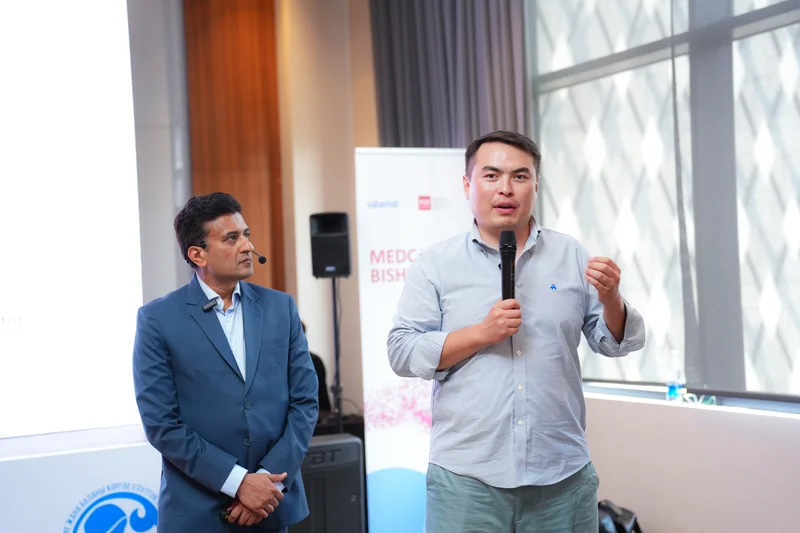
“It’s crucial to get an antibody test in advance. If the levels are high, gene therapy cannot be performed. We advise not to start fundraising without the test results and an official invoice from the clinic,” Dr. Mundada added.
In some countries, including Russia, it is prohibited to begin fundraising for treatment without two documents: a confirmed diagnosis and an antibody test result. This approach protects parents from false hopes and prevents the public from unnecessary fundraising.
“Kyrgyzstan needs clear laws and regulatory frameworks for charity work, with transparent requirements for each type of fundraising, to eliminate public mistrust and confusion,” stated Asylbek Abdykarimov, a representative of Salamat.
One of the key priorities now is the introduction of neonatal screening, which could save many children by starting treatment early, preventing the rise of antibodies, and significantly improving the chances for a normal life.
"We see how early diagnosis changes everything. Such children live better, develop normally, and go to school. It’s a true investment in their future,” Dr. Mundada concluded.
In Kyrgyzstan, children with SMA and DMD lose their chance at treatment due to late diagnosis. According to Nurmukhamed Babadjanov, a candidate of medical sciences and pediatric neurologist at the NCMD’s perinatal pathology department, the problem of SMA and DMD is particularly pressing due to late diagnosis and a shortage of specialists in the regions.
“Conditions like SMA and Duchenne’s disease are rare compared to conditions like cerebral palsy or epilepsy, but they are severe hereditary diseases. If not diagnosed in time, they lead to deep disability. This is especially true for the first and second types of SMA, where children with type one often do not live past three years, and those with other types become wheelchair-bound,” Babadjanov explained.
However, intellectually, these children develop normally – it is only their motor skills that are affected. The muscles weaken first, and then the child loses the ability to move independently.
Babajanov stresses that modern medicine already offers therapies that can impact the progression of these diseases, including gene and pathogenetic therapies. But everything depends on timely diagnosis.
“We insist on the necessity of neonatal screening – testing all newborns for hereditary diseases. Yes, it’s expensive, but it’s an investment in the future. If we detect the disease right after birth and start treatment on time, the child can live a full life,” the specialist affirmed.
If the diagnosis is made late, at 2-3 years old when the child has already lost motor skills, the best that can be done is to slow the progression of the disease, but the lost abilities cannot be restored.
There is also a severe shortage of pediatric neurologists and other specialists in the regions of Kyrgyzstan. Most cases are initially “filtered” by family doctors, who are burdened with excessive workloads.
To mitigate the risks, Kyrgyzstan is implementing an early intervention program. Nurses and family doctors are trained to recognize "red flags" – signs that a child needs to be urgently referred to a specialist.
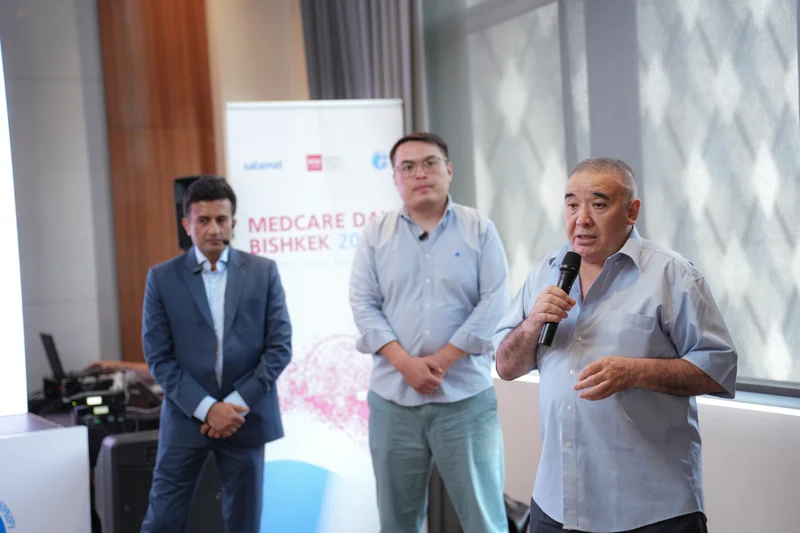
“Our goal is to teach local doctors to spot troubling signs like muscle weakness, developmental delays, and poor tone. Only in this way can we diagnose severe diseases on time and give children a chance,” Babadjanov emphasized.
**Building Bridges Between Countries and Healthcare Systems**
Salamat (Kyrgyzstan), in collaboration with Medcare Hospitals & Medical Centres (UAE), is working to connect Kyrgyzstani doctors with the latest global advancements in the treatment and rehabilitation of children with severe genetic disorders.
“A patient may spend five months receiving treatment in Dubai, and then we must hand them over to Kyrgyzstani doctors when they return. These meetings are essential to ensure there is no gap or lack of information. Rehabilitation must be as comfortable and safe as possible,” said Rahul Shukla, Head of Development at Medcare Hospitals.
Gene therapy is not a one-off treatment; it requires a comprehensive approach involving doctors from different countries and specialties, Salamat emphasized.
Salamat is a concierge service specializing in finding medical services, qualified doctors, and clinics worldwide, and accompanying patients through every stage of treatment.
Contact Information for Salamat:
Phone: +996 556 618 686
Instagram: @salamat__med
Telegram: @salamat_kyrgyzstan