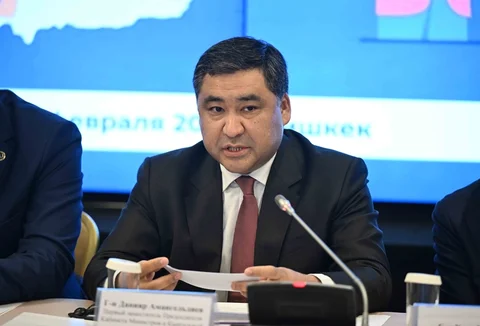
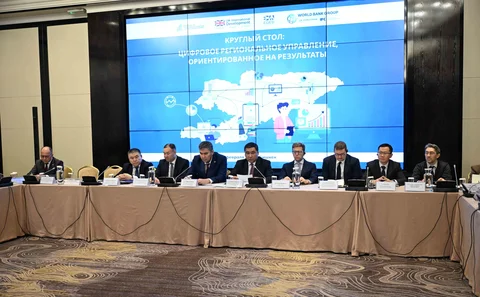
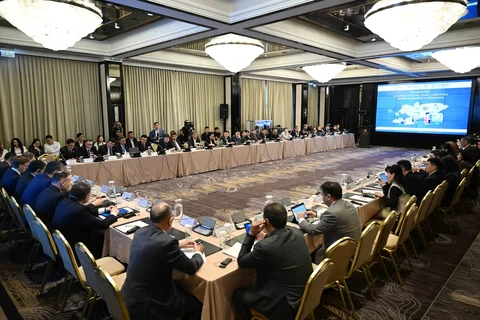
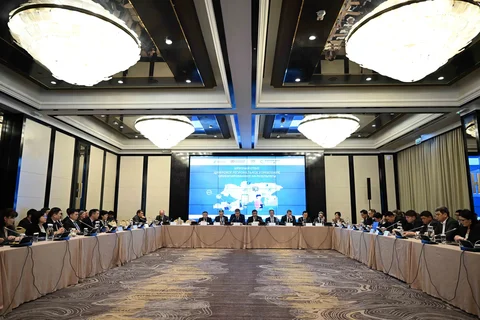

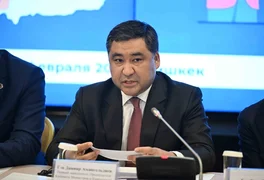


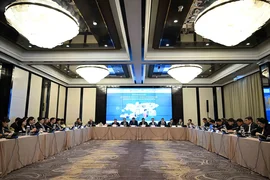

Bishkek, Feb. 19, 2026 /Kabar/. First Deputy Chairman of the Cabinet of Ministers Daniyar Amangeldiyev spoke at a roundtable discussion on regional development, the digitalization of public administration, and the implementation of modern management tools, Cabinet of Ministers reports.
In his address to the participants—representatives of international partners and local experts—Daniil Amangeldiyev noted the country's stable economic growth. By the end of 2025, the country's GDP will approach 2 trillion soms, effectively doubling compared to 2022. First Deputy Chairman emphasized that these figures are the result of systemic reforms, but the Cabinet's key priority remains ensuring balanced growth that should be felt in every region of the country.
"Modern economy requires modern management." "We are moving from disparate paper-based procedures to a unified management cycle: planning - budgeting - implementation - monitoring. This chain must operate digitally and be fully integrated at the central and local levels," he stated.
First Deputy Chairman emphasized the importance of transitioning to a modern management cycle, including planning, budgeting, implementation, and monitoring in a single digital format, integrated at the central and local levels.
Daniyar Amangeldiyev paid special attention to the state automated information system "Sanarip Aimak." He stated that the system creates a unified digital space for territorial management, ensuring prompt interdepartmental data exchange and centralized databases. It serves as the foundation for the implementation of territorial strategies based on a unified methodology.
Daniyar Amangeldiyev expressed gratitude to development partners for their support of digital initiatives. The "Effective Governance for Economic Growth" project, supported by the UK government and the World Bank, has become an important tool in creating modern digital solutions and institutional mechanisms that have accelerated the pace of reform.
Along with technological solutions, the need to simplify procedures, enhance the professional competencies of state and municipal employees, and clearly delineate responsibilities between levels of government was emphasized.
In conclusion, Daniyar Amangeldiev expressed confidence that the transition to data-driven governance will ensure a qualitative improvement in the lives of citizens throughout Kyrgyzstan.