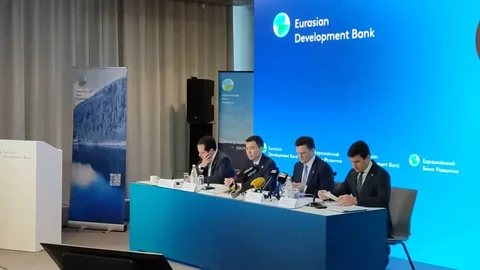
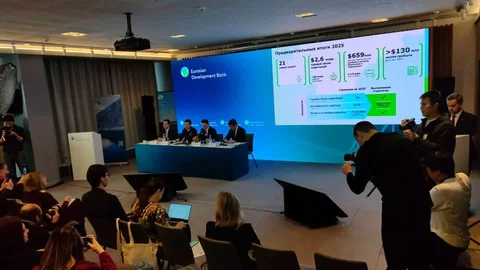




Bishkek, Dec. 19, 2025. /Kabar/. Eurasian Development Bank (EDB) has presented a macroeconomic three years forecast for its partner countries in Almaty. According to the analysis, this will be a period of sustained and stable growth. Kyrgyzstan will continue to demonstrate the best performance across key indicators.
EDB is comprised of seven member states – Russia, Belarus, Armenia, Kazakhstan, Kyrgyzstan, Tajikistan, and Uzbekistan – which form the core of the EAEU and the CIS. This means that economic conditions will favor development in these associations. Integration processes between the Eurasian Partnership countries are beginning to bear fruit, reflected in the implementation of infrastructure projects, increased industrial production, expanded trade, and more.
The key findings of EDB analysts are as follows:
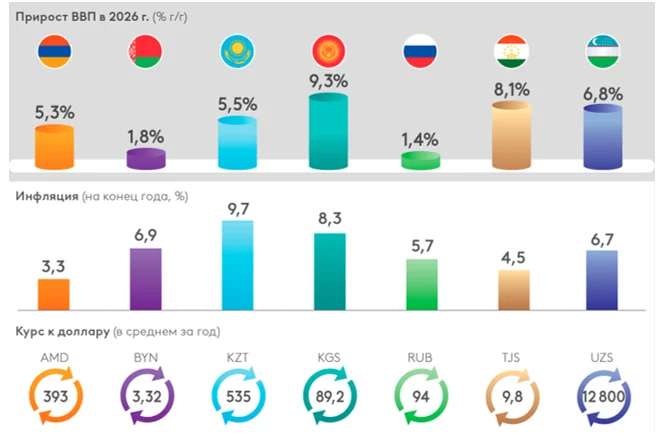
- region's GDP growth will be 2.3% in 2026, Kyrgyzstan (9.3%), Tajikistan (8.1%), Uzbekistan (6.8%), and Kazakhstan (5.5%).
- inflation will continue to slow to 6.4% in 2026 thanks to prudent monetary policy.
- investment will remain the main driver of growth in the region, particularly in manufacturing and mining, energy, and construction.
- commodity markets will move in mixed directions: oil prices will fall slightly, while metals and gold will remain high.
- dollar is gradually losing its share of central bank reserves, but its role remains stable.
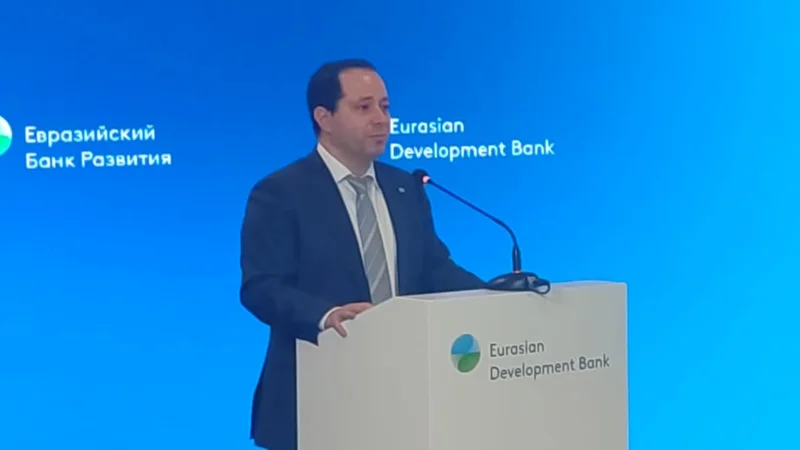
The macroeconomic situation is developing in such a way that growth opportunities are currently concentrated in the rapidly developing Central Asian region, emphasized Evgeny Vinokurov, EDB Chief Economist.
"Central Asian countries are demonstrating the highest growth rates in recent years. By the end of 2025, we expect 6.6%. In Kyrgyzstan, it will be 10.3%, in Tajikistan 8.3%, in Uzbekistan 7.4%, and in Kazakhstan 5.6%.
Looking ahead to 2026, the region will continue to grow steadily, at around 6.1%, which is above the global average. The combined GDP of Central Asian countries will exceed $600 billion. This result will be driven by active investment and strong consumer demand. We forecast Kazakhstan to grow by 5.5%, Kyrgyzstan by 9.3%, Tajikistan by 8.1%, and Uzbekistan by 6.8%.
As for inflation, we also expect positive trends. In most Central Asian countries, price increases will gradually slow," said Evgeny Vinokurov, Chief Analyst at the EDB.
Now, regarding Kyrgyzstan specifically. Our country will maintain its regional growth leadership in 2026-2027. Investments in transport, energy, and water supply will increase. EDB notes that projects for approximately 100 new hydroelectric power plants are being implemented in the republic, and solar and wind power generation is being developed. A large-scale housing construction program is ongoing, attracting significant investment. These areas remain important growth drivers.
Experts estimate that inflation in Kyrgyzstan will reach 8.3% by the end of next year. This means that its rate will decrease slightly, and price growth to slow in the medium term. "Additional factors for stabilization will be a stable som exchange rate and lower oil prices compared to medium-term averages in recent years. Together, this will allow inflation to return to the target range of 5-7%," the report states.
EDB forecasts the som exchange rate to be in the range of 87-90 to the dollar next year. The key interest rate by the end of 2026 will be around 11%.
Overall, the Eurasian Partnership region is showing a stable picture with a significant share of positive trends. The economies of all countries in the region will gain momentum, and key indicators of their stability and development will be in the "green zone," that is, with positive growth.
Experts note that cooperation in the region is structured in such a way that the partner countries' economies complement each other. Joint infrastructure projects, such as Kambarata-1, provide significant support for this interaction. EDB notes its readiness to participate in the construction of the region's largest hydroelectric power station.
Nikolai Podguzov, EDB Chairman of the Board notes that regional infrastructure projects not only address specific economic challenges but also play an important integrating role.
"The partnership model between the EAEU countries and within broader interaction formats between Central Asian countries is being developed very effectively, and productive. There's mutual understanding and friendly communication, both at the government and company levels. We have a strong multinational team and representative offices in each country. We have established contacts with both the business community and governments. All this allows us to work on projects smoothly.
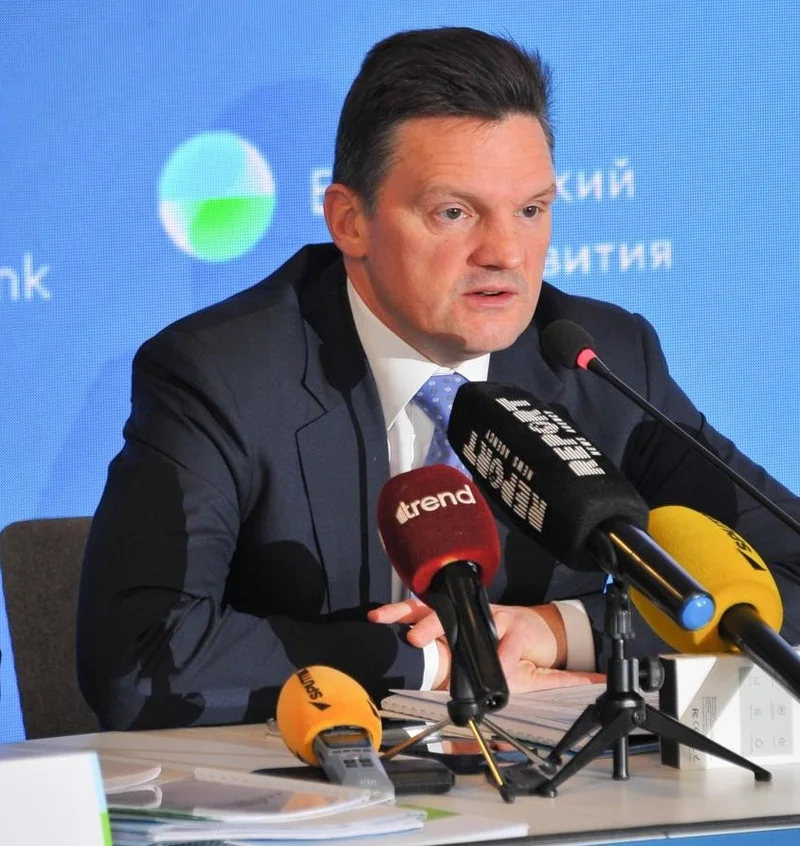
As for Kyrgyzstan, we have exceeded all of our initial plans, outlined in our 10-year strategy. We are now able to invest more in projects in your country. For example, for Bishkek Solar (a solar power plant), it's around $180 million.
Overall, the culture of project financing in Kyrgyzstan has grown significantly. We, the Kyrgyz-Russian Development Fund, the government of the republic, and our interactions with our neighbors all played a positive role in this. "All of this together produces such results," Nikolai Podguzov noted in comments to the Kabar news agency.
According to experts, a model of interaction where the economies of the region complement each other creates new incentives for development and conditions for the joint implementation of large-scale projects of regional significance. Central Asia is gradually transforming into a macro-region where, in cooperation with its immediate and historical neighbors, drivers for sustainable and long-term development are being established. The development of a Eurasian transport framework and major energy sector projects are the fundamental elements that will become the foundations of a new level of economy.