Bishkek, March 31, 2026. /Kabar/. In Kyrgyzstan, prices for socially important food products are under government control and remain lower than in neighboring countries. Despite rising costs for certain items, ongoing monitoring and measures help prevent sharp price hikes.
The country continuously monitors prices for socially important products, and appropriate measures are taken depending on the market situation. Aizada Kerimbaeva, chief specialist of the Department for Analysis, Reporting, and Interaction with the Eurasian Economic Commission (EEC) of the Antimonopoly Regulation Service, told Kabar news agency.
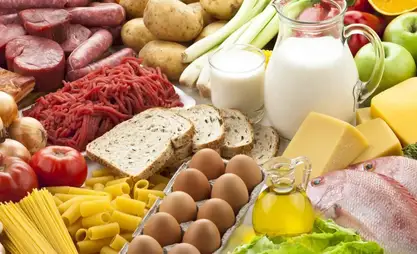
According to her, the agency is currently working with a list of 16 types of socially important products. Recently, meat and eggs have become the most prominent items on this list.
"In early March, egg prices in the country increased." In this regard, the Antimonopoly Service conducted an analysis and organized a series of meetings with representatives of the Association of Poultry Farmers and Retail Chains. It was determined that two main factors contributed to the price increase: higher wholesale prices at poultry farms and unjustified price increases by intermediaries.
The association and its members were issued price stabilization warnings. Producers, in turn, attributed the price increase to higher feed prices, vaccination costs, and other factors. "According to monitoring results, the price of eggs has now fallen from the previous 13-18 soms to 8-10 soms per egg," she reported.
The specialist also discussed government regulation in the meat and wheat flour markets. To stabilize prices, government regulation of beef and lamb was introduced on January 30 and extended until May 30. Daily monitoring is conducted, and measures are taken in the event of violations. In addition, in collaboration with the Flour millers association, we ensure a stable supply of first-grade flour at a price of approximately 34-35 soms.
As for vegetables, no significant price increases have been recorded. Average prices nationwide are: carrots - 19-27 soms, onions - 41 soms, potatoes - 45-48 soms.
Uran Chekirbaev, head of the food security department at the Ministry of Water Resources, Agriculture, and Processing Industry, noted that food prices are influenced by external and internal factors: geopolitics, climate change, logistical issues, and the effects of the pandemic.
"As GDP and wages grow, purchasing power and demand increase. As a result, prices for some products have risen over the past two to three years. For example, while meat cost an average of 585 soms in 2023, it has now reached 800 soms.
However, since August of last year, the government has taken a number of measures: a temporary ban on cattle exports, and zero tax rates were established on certain goods. This helped prevent sharp inflation. For comparison, food inflation in Kazakhstan last year was 12%, while in our country it was 9%," Chekirbaev emphasized.
Comparative monitoring for March (price changes):
Kyrgyzstan
Growth: eggs (+1.1%), milk (+0.7%), beef (+0.2%), imported flour (+0.1%), bread (+0.1%).
Decrease: carrots (-1%), potatoes (-0.8%), onions (-0.6%), sunflower oil (-0.6%), sugar (-0.3%), lamb (-0.2%), local flour (-0.2%).
Kazakhstan (Increase)
Butter (+33.8%), potatoes (+13.1%), lamb (+2.9%), sunflower oil (+2.7%), milk (+2.2%).
Russia (Increase)
Wheat flour (+4.7%), eggs (+2.7%), carrots (+2%), potatoes (+0.2%).
Overall, price stability in the country is ensured by comprehensive control of internal and external factors.