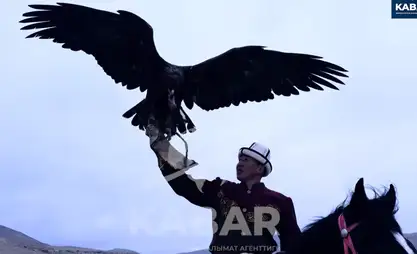

Bishkek, March 13, 2026. /Kabar/. Berkutchi (eagle trainer) is traditional hunters who train Golden Eagles (Berkut) to hunt foxes, hares, and wolves from horseback, which is an ancient tradition of nomadic people, passed down from generation to generation. The art of hunting with golden eagles requires not only skill and patience, but also a special bond between man and bird of prey. For centuries, golden eagles have helped nomads obtain food and survive in the harsh conditions of the mountains and steppes. Today, this unique culture remains an important part of the national heritage and lives on thanks to enthusiasts who train golden eagles and preserve the traditions of their ancestors.
Since 2011, Salavat Aibek uulu, a resident of Issyk-Kul region, has been passionate about training golden eagles.
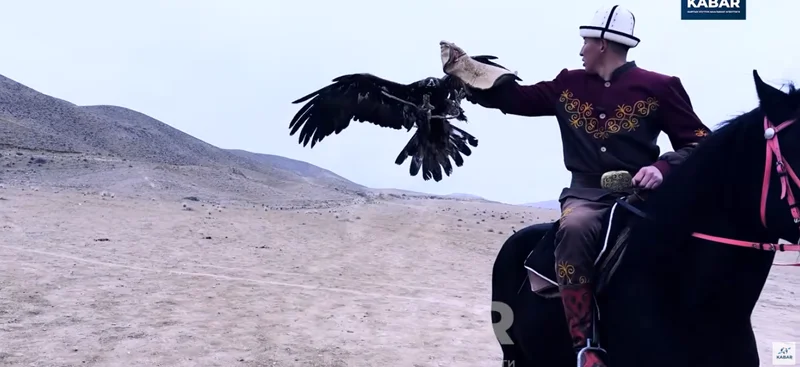
According to him, golden eagles can live up to 50-60 years. However, people usually keep and train golden eagles for about 15-20 years, after which they are released back into the wild. This is done because golden eagles shouldn't be around humans their entire lives; they need to live freely and reproduce.
"When we go hunting, golden eagles can fly up to 2-3 km. If they fly further and fail to catch prey, they may sit down and never return. Therefore, golden eagles are trained from early age to return to their owners on their own. If a golden eagle isn't trained, it becomes lazy. Just as horses are trained, golden eagles need constant training," he said.
According to Salavat, golden eagles are fed meat every two days. To keep the bird in good shape, they try to let it fly almost every day. When they hunt jackal, its pelt is used separately, and the meat is given to the golden eagle. Hunting usually happens in autumn-winter season, so we buy meat for the bird. Golden eagles eat only meat, and it must be fresh. In hot weather, they also drink water.
"Golden eagles don't eat spoiled or stale meat. If they do eat it, they can develop ulcers in their beak, and the bird becomes ill," he noted.
Furthermore, if the golden eagle isn't given meat after a flight, it may become offended and may not even return to its owner the next time. Therefore, upon its return, the bird is always rewarded with meat.
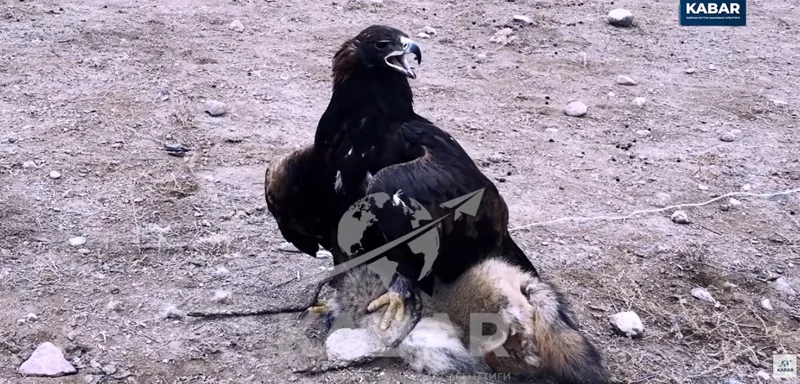
"When a new golden eagle is first trained, the horse can be very frightened of the bird and not allow it to approach. Therefore, they are also gradually acclimated to each other. "If a golden eagle catches prey, it holds it very tightly and covers it with its wings to prevent other animals from snatching it away. "The golden eagle can eat the meat, skin and fur included, but the next day it regurgitates the fur and any inedible remains because its stomach cannot digest soil, fur, and grass," he noted.
He also said that golden eagles are trained to hunt alongside taigans (hunting dogs).
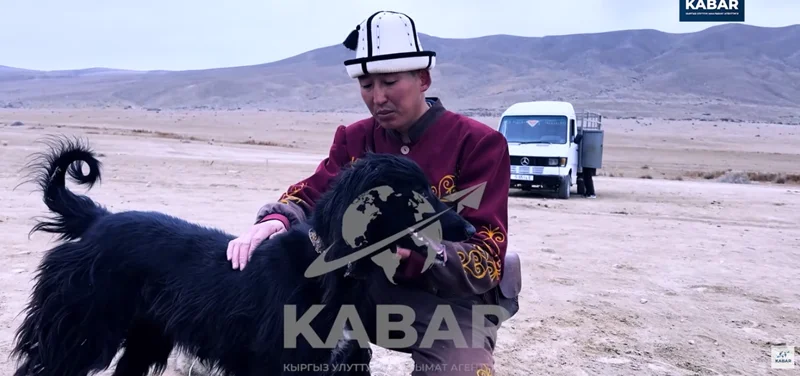
"This is because our area has a lot of rocky terrain and bushes. For example, if a fox or hare manages to hide in the bushes, it can be difficult for a golden eagle to catch them. In such cases, the bird begins to circle in the air, and then the taigans are released. They flush the prey out of the bushes, after which the golden eagle swoops down and catches it.
Taigans are very fast and agile dogs. Our ancestors have long used them for hunting. They can run up to 10-15 km and are equally adept at running on flat land and in the mountains. These dogs are not afraid of the cold. Another advantage is that taigans don't bite people. Keeping them indoors is simply not an option; they are hunting dogs and require constant exercise," the golden eagle specialist shared.