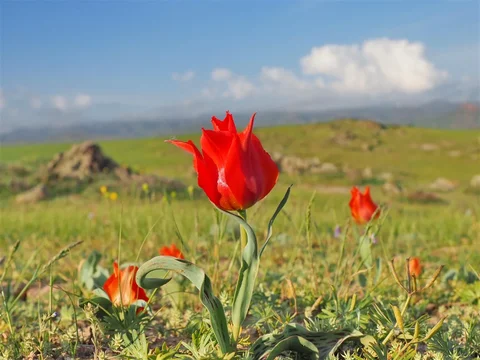
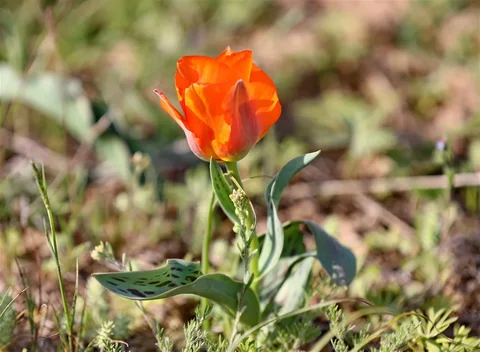
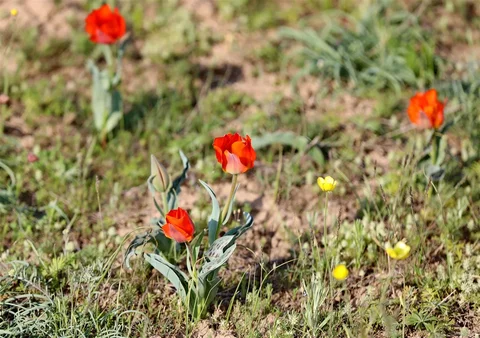
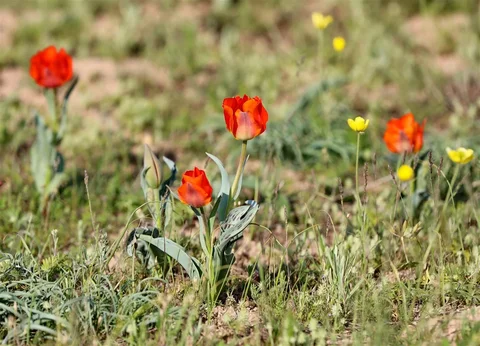
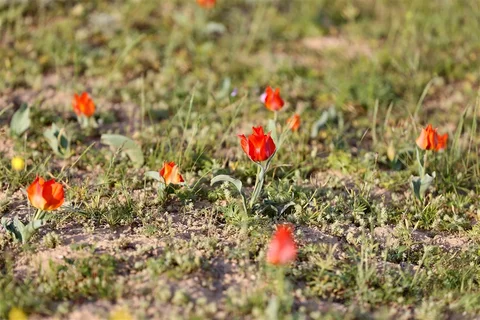
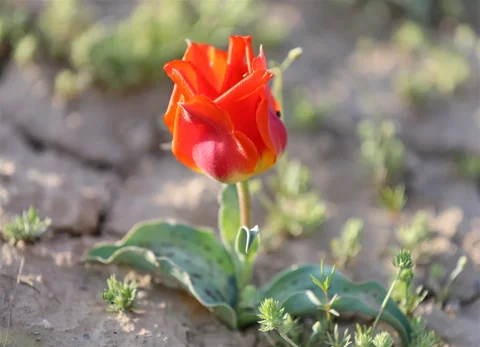
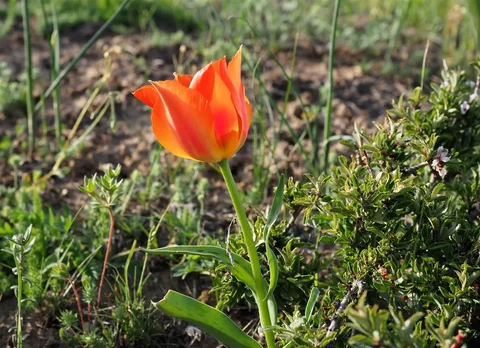

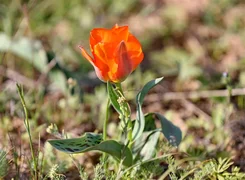
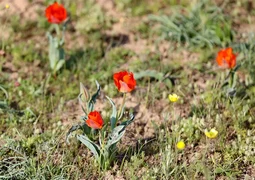
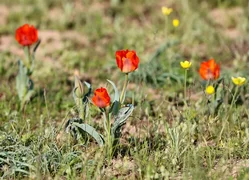
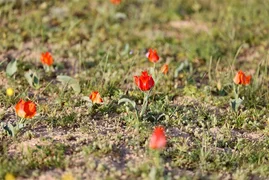
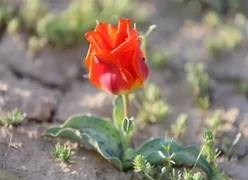
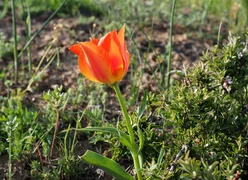

Bishkek, May 20, 2026 /Kabar/. Among the spring blooms in Talas region, Greigii Tulip is one of the most beautiful and rare wild tulips of Central Asia, listed in the Red Book of Kyrgyzstan. This is not just a flower, but an ancient relic of the mountain landscapes, preserved through millennia of climate change.
Greigii Tulip is easily recognized by its large flowers, reaching up to 15 centimeters in diameter, and distinctive leaves with dark purple or brownish stripes and spots. Scientists consider Central Asia one of the world's key centers of tulip origin, and it is this species that has become the basis for many ornamental varieties grown today in botanical gardens across Europe and Asia.
It was first tested in 1872 in St. Petersburg, and by the end of the 19th century, it had gained recognition in Holland and was widely used in breeding. Hundreds of garden varieties are known today, but wild populations continue to exist in Kyrgyzstan, Kazakhstan, and neighboring regions.
Greigii Tulip continues to create unique natural landscapes, adorning the mountains of Kyrgyzstan. Millions of people around the world admire the descendants of these wild tulips, not always knowing that their "ancestors" still bloom in the Kyrgyz mountains—fragile and in need of protection.
Vlad Ushakov