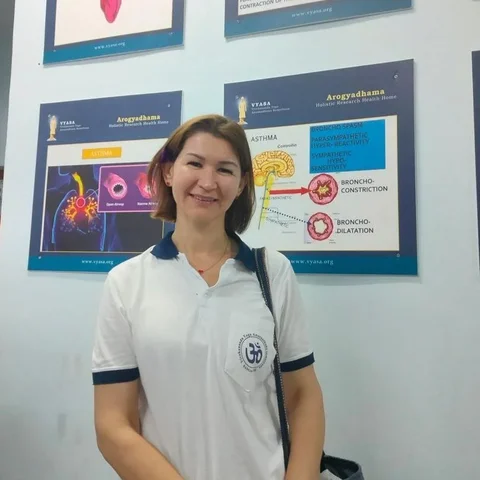
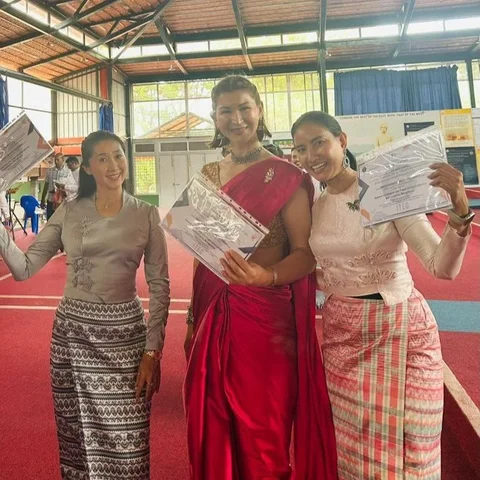


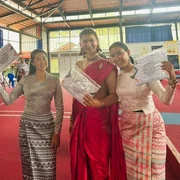

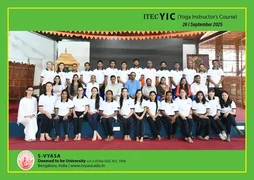
Hatha yoga instructor Arina Niyazbekova in her interview with Kabar spoke about her yoga journey, her participation in an international educational program in India, and how spiritual practices help find harmony between body and mind.
— Arina, tell us about your trip to India?
— I've been teaching hatha yoga for five years, but I've been practicing since 2014. My yoga journey has been very interesting and a bit challenging. I used to weigh 135 kilograms and wanted to get my body in shape. I tried various exercises: going to the gym, doing Callanetics, but I liked yoga more. Over time, the weight started to go down, my mood improved, and my self-esteem grew. Once I got my body in shape, I decided to test myself—to see if I could become an instructor and help others. So, I took an instructor course in Bishkek and immediately began teaching.
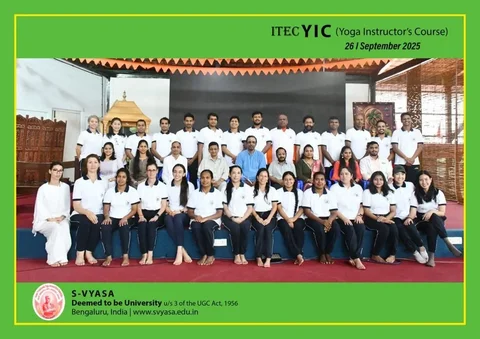
After several years of working, I traveled to Rishikesh, India, for the first time in 2023, where I completed a month-long refresher course and successfully defended my dissertation. Later, the Indian Embassy in Kyrgyzstan announced a call for instructors for a training program in Bangalore at S-VYASA University in Bengaluru. I was fortunate to win the program—I was the only representative from Kyrgyzstan. The program was fully sponsored by the Indian government and ITEC (Indian Technical and Economic Cooperation): the training took place at the university, we lived on campus, and a scholarship was a pleasant bonus.
— What were your impressions of the country itself: the people, the atmosphere, the culture?
— The university was located in a protected area, practically in the jungle. We were treated like dear guests: excellent food, the best rooms, all the necessary study materials. They organized trips for us to Mysore and Bangalore. In Mysore, we visited the famous palace, and in Bangalore, we visited through the authentic streets and went shopping. The atmosphere was very welcoming and inspiring everywhere.
— What surprised you more or inspired you during the trip?
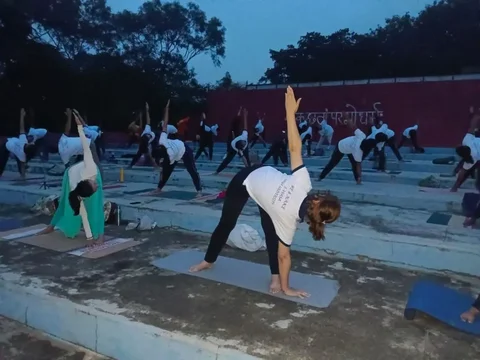
— I was impressed by the approach of teaching. Everything is built on respect, spirituality, and inner discipline. We used to wake up at 5:00 a.m., and the first practice began at 5:30 a.m. Then breakfast, followed by lectures on the history of yoga, philosophy, and anatomy. But most importantly, there was spiritual atmosphere everywhere.
— You're a hatha yoga instructor. How did this trip influence your approach to the practice?
— After the trip, I began to appreciate yoga more deeply, especially its spiritual component. For me, yoga is about peace and self-confidence. I realized importance of the body but the state of mind as well.
— What does yoga mean to you: is it more about health, spirituality, or lifestyle?
— For me, yoga is all of these things. It's harmony between body and soul, inner balance, confidence, and gratitude. Many people, especially in the West and here, think that yoga is only about physical endurance. But in reality, it's about the connection between body and soul. Only when a person meditates, attunes themselves to the best, and combines this with physical practice can they achieve a state of bliss.
— What practices or knowledge have you brought from India and are you using here in Kyrgyzstan?
— I brought several interesting practices from India, primarily meditation. I've already practicing them into my classes, and I think my students have already experienced the full benefit of these methods.
— What do you advise people who just start practicing yoga?
— Take your time and trust your instructor. Yoga is not a competition or preparation for the Olympics. Everything has its time: results will come gradually. The main thing is to enjoy the practice.