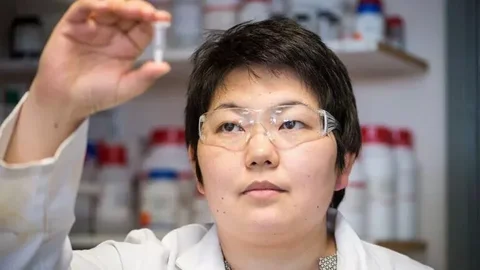
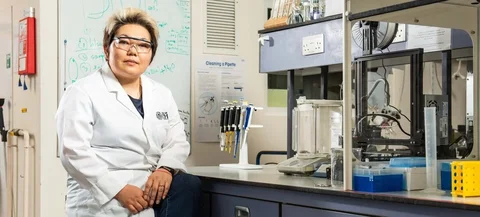

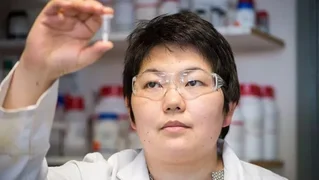
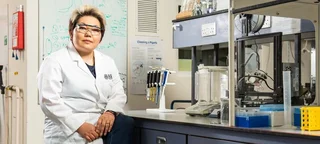
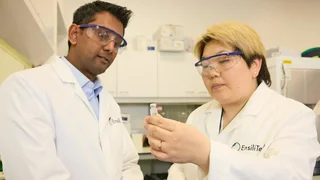
Bishkek, Feb. 26, 2026 /Kabar/. Dr. Asel Sartbaeva, a chemist from an ordinary Kyrgyz village, has created a technology capable of making vaccines resistant to elevated temperatures. This discovery could radically change the storage and delivery of vital drugs to hard-to-reach regions of the world, UN News Service on International Day of Women and Girls in Science informs.
Sartbaeva grew up in an ordinary rural school in Kyrgyzstan, where she showed an interest in mathematics, physics, and chess. During her school years, Asel won the national Olympiad in Strength of Materials twice, becoming the first girl to do so. These successes reinforced her desire to pursue a scientific career.
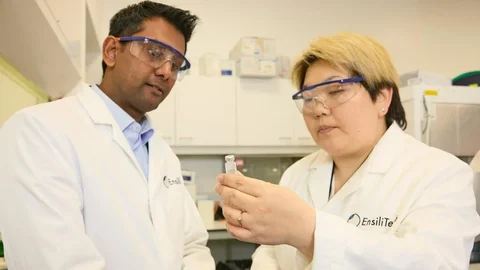
After graduating the university in Bishkek, Sartbaeva received a scholarship to pursue a PhD at Cambridge University in the UK. There, she studied silicon materials and later zeolites, which are used in a variety of industries, from washing powders to protection against radiation contamination. She is now an associate professor at the University of Bath and the founder of the technology company EnsiliTech, which is implementing her innovations in vaccine production and delivery.
The idea for the technology, called "ensilication," was born after Sartbaeva observed her daughter being vaccinated at a clinic. She noticed the vaccine being taken out of the refrigerator and wondered why it couldn't be preheated. The possibility of the drug spoiling prompted her to explore the possibility of creating a protective silicon shell for biomolecules that preserves their structure at elevated temperatures. It took nearly ten years to develop and test this idea.
Vaccine delivery remains critical. Many countries lack reliable electricity and refrigeration. In remote areas, such as the mountain villages of Kyrgyzstan, vaccines are delivered by horseback, while in island nations they are delivered by boat, and sometimes even on foot in portable containers. Sartbaeva's technology will significantly reduce vaccine loss and make them accessible to millions of children, especially in low-income countries.
In addition to her scientific work, Asel is actively involved in educational initiatives. She is an ambassador for UNICEF's Girls in Science program, which supports schoolgirls in STEM (science, technology, engineering, and mathematics) subjects. The program includes master classes, mentoring sessions, and leadership and communication skills development. This helps girls believe in themselves and choose a scientific career, despite stereotypes and societal pressure.
Sartbaeva notes that parental support, especially fathers, plays a crucial role.
"Parents often fear that if a girl becomes a scientist, she won't have a family. It's important for me to show that this isn't true. It's possible to combine a career and a personal life," she says.
The "Girls in Science" initiative has already helped thousands of schoolchildren develop self-confidence and communication skills. Many program graduates have chosen STEM fields at universities they hadn't even considered before.
Sartbaeva emphasizes that science requires a variety of talents, from experimentalists to programmers and communicators. "This is especially important for girls planning to study chemistry, physics, mathematics, or engineering. We absolutely need you," she says.
Sartbaeva's development and the work of her company, EnsiliTech, during the COVID-19 pandemic demonstrate how innovation and scientific research can solve global health problems, making life-saving medicines accessible to those who need them most.