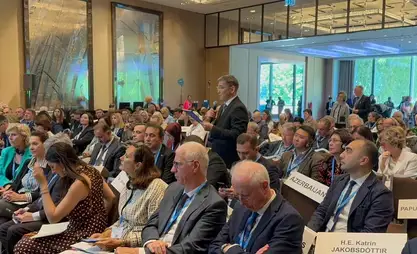
Bishkek, May 18, 2026. /Kabar/. At the 79th session of the World Health Assembly, the Kyrgyz Republic presented the results of developing its pediatric oncology system and priority areas for international cooperation in helping children with cancer.
According to the Ministry of Health, Minister Damir Osmonov noted that the development of pediatric oncology is one of the priorities of state healthcare policy.
He noted that despite limited resources, Kyrgyzstan has achieved significant progress in recent years thanks to government support, human resource development, and international partnerships.
As noted, over the past ten years, public funding for pediatric oncology in the country has increased more than 200-fold. This has expanded access to modern medications, improved supportive care, and increased the availability of diagnostic testing.
The minister also announced that in 2023, Kyrgyzstan officially joined the World Health Organization's Global Initiative to End Childhood Cancer as a focal country. The country has implemented national clinical protocols for pediatric oncology and hematology, approved the specialty of pediatric oncology and hematology, and strengthened its system of multidisciplinary care for children.
Particular attention was paid to the development of high-tech medicine. In 2024, Kyrgyzstan successfully performed its first autologous bone marrow transplant on a child.
Kyrgyzstan also continues to expand its collaboration with international organizations and specialized centers, including St. Jude Children's Research Hospital and the Princess Maxima Center for Pediatric Oncology.
Furthermore, the republic is interested in joining the Global Platform for Access to Childhood Cancer Medicines, implemented by the WHO jointly with St. Jude Global.
According to the minister, Kyrgyzstan intends to further develop its pediatric oncology infrastructure, strengthen its early diagnosis system, and increase access to modern treatments for children with cancer.