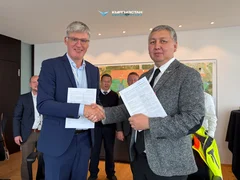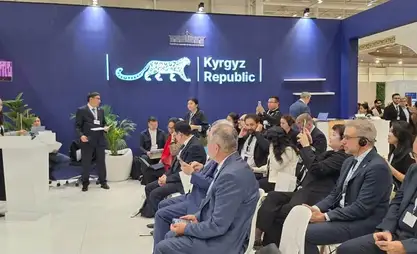

Bishkek, Nov. 17, 2026 /Kabar/. On November 16, at the national pavilion of Kyrgyzstan in Antalya during COP31, a delegation from the Ministry of Emergency Situations of the Kyrgyz Republic, led by First Deputy Minister Akylbek Mazaripov hosted two side events focused on practical solutions for forecasting mudflows and floods, as well as information systems for monitoring natural hazards.
According to the ministry, participants explored how integrating ground-based observations, satellite data, and hydrometeorological information helps to identify threats in a timely manner and enables informed decision-making to protect the population.
The side event titled "Practical Solutions for Forecasting Mudflows and Floods" addressed the interim results of the RESILAND CA+ project implemented with support from the World Bank and discussed prospects for future work. Key topics included a flood forecasting and early warning system for the Kugart River basin, the development of data storage and processing infrastructure, an information system for managing protective structures, and the training of specialists.
The side event "Information Systems as a Tool for Monitoring and Forecasting Hazardous Natural Processes" featured the Climate Resilience Information System (CRIS AIS), a module for assessing mudflow and flood risks based on the Atlas of Mudflow Hazards of the Kyrgyz Republic, approaches to monitoring high-altitude glacial lakes prone to outburst, and the use of digital technologies by the Kyrgyz Hydrometeorological Service (Kyrgyzhydromet).
Special attention was given to cooperation with the UN World Food Programme, the UN Development Programme, and the Government of Switzerland. Their support facilitates the implementation of information-based solutions, the strengthening of technical infrastructure, and the professional development of specialists within the Ministry of Emergency Situations.
During the discussions, it was emphasized that the effectiveness of digital systems depends on the quality of the input data, regular information updates, scientifically sound methods, and the verification of results through ground-based observations. Furthermore, the sustainable operation of such solutions requires trained personnel and ongoing collaboration between agencies.