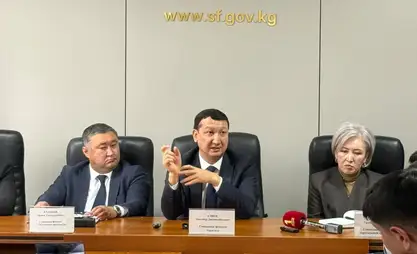

Bishkek, Nov. 12, 2026 /Kabar/. The volume of funds allocated for pension payments in Kyrgyzstan has grown from 52 billion soms in 2021 to 122 billion soms in 2026, with the figure projected to exceed 140 billion soms in 2027. Baktiyar Aliev, Chairman of the Social Fund told as part of the media project "Open Cabinet: Zone of Responsibility."
According to his data, the insurance component of pensions was increased by 20 percent effective October 1, 2026, a measure that required an additional 4.2 billion soms for the remainder of the year. Next year, approximately 18 billion soms will be needed for further pension increases. In total, an additional 27 billion soms has been earmarked for these purposes.
The chairman noted that the number of pension recipients has also grown significantly in recent years. As of November 1, 2026, there were 826,000 registered pensioners in the country.
"In 2010, the number of pensioners was 400,000. Over the last 16 years, that figure has doubled, surpassing 800,000. In the last four years alone, there has been an increase of 100,000 people," he said.
He further noted that while the average pension was 6,000 soms in 2021, it reached 12,888 soms as of October 1, 2026.
Additionally, the head of the agency addressed the ratio of working citizens to pensioners within the pension system. According to the recommendations of international organizations, there should be 3.5 working citizens for every pensioner; however, in Kyrgyzstan, this figure currently stands at only 0.9.
According to Aliev, the primary source of revenue for the Pension Fund is social security contributions. In addition, the Fund holds approximately 40 billion soms invested in government securities, with the returns from these investments also flowing into the Pension Fund.
The work is also ongoing to fully launch the Social Fund’s information system. The chairman stated that the modules for pension allocation and disbursement are fully operational, and the modules for revenue tracking and individual record-keeping are also functioning in an integrated manner. Currently, the system is being integrated with the State Tax Service’s database.
This work is expected to be completed in the coming days, and the remaining two modules are scheduled to be fully operational by the end of November.