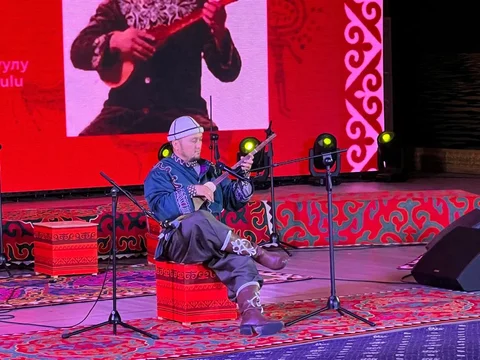
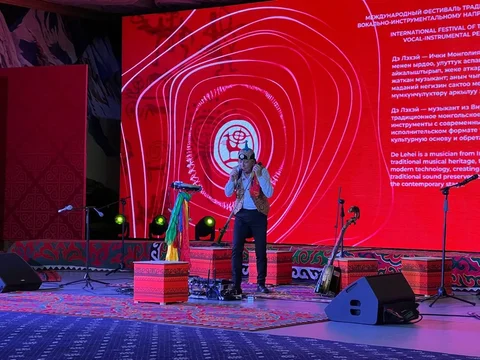
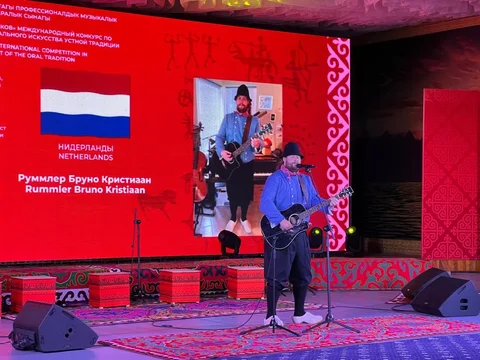
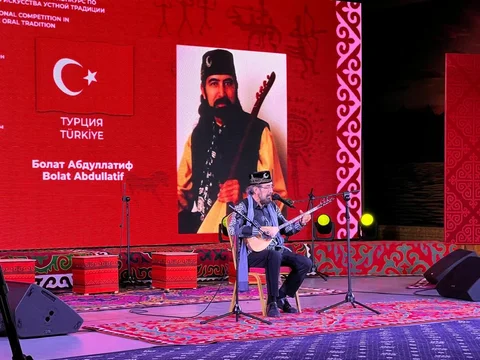

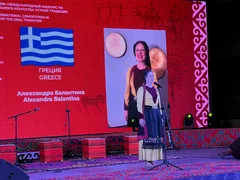
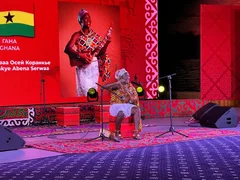
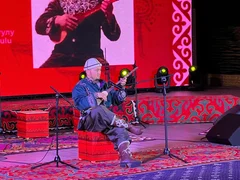
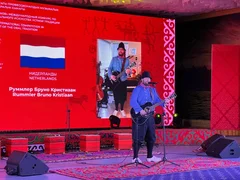
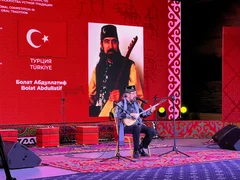

Issyk-Kul, Sept. 2, 2026. /Kabar/. The International Festival of Traditional Music "Nomads Art" is taking place at the Rukh Ordo Cultural Center as part of the 6th World Nomad Games.
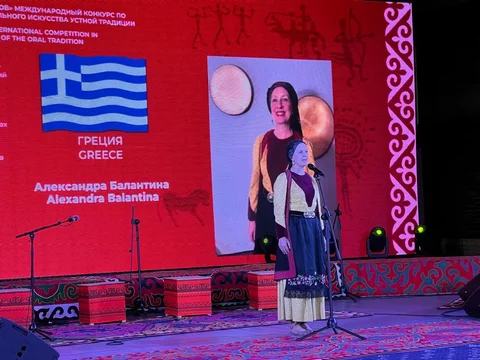
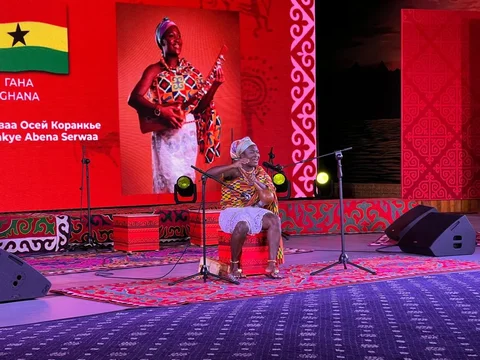
A key part of the event was a competition for traditional music speakers, bringing together representatives from more than 36 countries, as well as regions and subjects of Russia and Uzbekistan.
The festival's main goal is to recognize the traditional musical heritage of nomadic peoples as a living, professional art form, where performance schools, musical language, national instruments, the practice of oral transmission of traditions, and issues of their scientific research are considered as a unified, holistic cultural process.
The competition is held in the categories of storytelling, instrumental, and vocal-instrumental arts. As the organizers told the Kabar news agency, the project is conceived not simply as a competition, but as a vibrant space for creative dialogue: participants give concerts, conduct master classes, and organize jam sessions.
"Performers of a wide variety of genres came together on one platform: Tuvan throat singing, Japanese traditional music, Kazakh dombra and jetigen, Mongolian morin khuur, Korean gayageum, Iranian tombak, daf, and barbat, Turkish saz, Tajik and Uzbek dutar, Indian bansuri, sarod, and tabla.
Rare large instruments, including a Japanese koto with a two-meter case, were brought to Kyrgyzstan especially for the festival. A great deal of work was done to bring these ancient instruments to Kyrgyzstan."
Participants come from Turkiye, Mongolia, China, Kazakhstan, Brazil, Argentina, Ghana, Korea, New Zealand, Canada, Sri Lanka, and other countries. "Most of the guests are professional musicians and descendants of family dynasties. For example, Aksinia Stepanova is an olonkhosut from Yakutia. They have an entire dynasty of olonkhosuts. She grew up in this atmosphere and very carefully preserves the traditions and tries to pass them on to the younger generation," the festival curators explained.
The organizers are paying special attention to the younger generation, as joint musical improvisation brings together representatives of different cultures.
"People of different nationalities from different continents are trying to unite in music, to play something similar. It may sound with different intonations, but this music seems to unite everyone." "I think this moment brings people together and helps young people understand that, despite different languages, nationalities, and religions, music can unite us," they emphasized.
According to them, despite its official name, the International Competition of Traditional Music Speakers, this event has gone far beyond a simple competition.
"Here, at Rukh Ordo, in just a few days, you can hear the entire musical map of the world," the organizers emphasized.
As a reminder, the three-day competition began on September 2 with the storytelling category. A prestigious international jury will evaluate the participants' performances, and the Grand Prix, prizes, and special awards from the competition fund will be presented at the end of the competition.