
Presidential elections in Kyrgyzstan will take place on January 27, 2027. To ensure the successful conduct of this political campaign, the Central Election Commission (CEC) has begun preparatory work. A series of measures is underway, including equipping polling stations with necessary gear and accepting applications from candidates.
Kabar agency spoke with Aidana Zhupueva, head of the department for the organization of electoral process at CEC, regarding preparations for the upcoming presidential elections.
— How are preparations for the upcoming presidential elections progressing? How many polling stations will be open across the country?

— There are 2,492 polling stations in Kyrgyzstan. Regarding the establishment of polling stations abroad, we recently held discussions with the Ministry of Foreign Affairs. At present, based on proposals from the ministry, plans are in place to open approximately 100 polling stations abroad, spanning 94 cities across 35 countries. In the past, additional polling stations were also set up in shopping centers and marketplaces. For the presidential elections, polling stations for remote voting will also be established.
Furthermore, as you may know, polling stations for remote voting were utilized during the previous parliamentary elections. We are currently working with local authorities and territorial election commissions to analyze areas with the highest population density. Based on this, polling stations for remote voting will also be opened within Kyrgyzstan.
As of today, we have a sufficient supply of electoral equipment. Prior to the elections, all equipment will undergo testing and verification. The Republican Headquarters has been established for the elections. The headquarters is headed by the Chairman of the Cabinet of Ministers, Adylbek Kasymaliev, with the CEC Chairman Tynchtyk Shainazarov, serving as co-chair. The Republican Headquarters meeting took place on October 6, and a second meeting is also planned.
Our primary focus is equipping the territorial election commissions. It is crucial that power supply and heating meet established requirements; to this end, we are coordinating with local government authorities.
Additionally, we are providing stationery and informational signage to be displayed outside the polling stations. These materials have already been delivered to Osh and Manas cities. Currently, all territorial election commissions are fully staffed; their chairpersons and secretaries are establishing schedules and organizing duty shifts.
— How many personnel are involved across the 2,492 polling stations?
— There are 56 territorial election commissions nationwide, comprising 672 members. The 2,492 precinct election commissions have a total membership of 25,000.
— How many applications have been received from candidates so far?
— At present, three candidates have submitted documents to CEC, expressing their intent to run for the presidency. Presidential elections differ from elections for the Jogorku Kenesh (parliament). In previous parliamentary elections, participating parties and independent candidates would first submit an application, open an election fund, and only then pay an electoral deposit. This deposit is not returned to the candidate; instead, it is transferred to the state budget. Now, those wishing to run for president must submit their application and pay the electoral deposit simultaneously. The current electoral deposit is 1 million soms. A candidate must choose one of the designated banks, either "Abank" or "Eldik Bank" to open an account and establish an election fund. From the funds in this account, the candidate must transfer the required amount to the Central Election Commission. We must be provided with a document confirming this payment; without it, we cannot accept any other documentation. Consequently, a candidate must first submit proof of payment of the electoral deposit, followed by their formal application.
Furthermore, a presidential candidate is required to collect between 30,000 and 60,000 signatures from voters. In previous presidential elections, the signature-collection process was conducted on paper; it is now carried out in an electronic format. The "Tunduk" mobile application features a dedicated section for elections. Upon initiating a request to provide a signature, a signature form appears, displaying a list of candidates along with their photographs. Each voter may support their chosen candidate by providing their signature. A voter may submit their support for a given candidate only once. A common question is whether a signature can be withdrawn if it was provided for a candidate by mistake once support for a candidate has been registered, it cannot be retracted. This is a key distinction in the current process.
To be eligible as a candidate for the presidency, an individual must be a citizen of Kyrgyzstan and have reached the age of 35 by the election day, must have resided in the country for a total of at least 15 years, and must be proficient in Kyrgyz language. Furthermore, a candidate must have no criminal record, must have ceased any religious activity within the last five years, and must not be affiliated with any criminal groups. These are the requirements.
— When will the signature-collection process begin?
— We will stop accepting applications from prospective candidates at midnight on November 12. Following this, the signature-collection process will take place, concluding at midnight on December 7. Subsequently, CEC will spend 10 days verifying the signature-collection documentation. Candidate registration will close at midnight on December 20. Registered candidates may begin their campaign activities on December 23. Campaigning must cease at 8:00 a.m. on January 26, 2027. January 26 will be a "day of silence"; on this day, citizens who are unable to visit a polling station, due to health issues or other reasons may cast their votes elsewhere. Such individuals must submit an application to their local precinct election commission two days prior to election day.
— Have there been any instances where election campaigning began earlier than permitted by law? What measures have been taken?
— Recently, posts have circulated on social media, some by bloggers urging support for specific individuals running as candidates (e.g., "This person is running as a candidate; let’s support them"). The CEC has a working group dedicated to monitoring campaign activities, and they have issued warnings in these instances.
— How much funding will be spent on the presidential election?
— According to the budget approved by the Central Election Commission, 1.2 billion soms will be allocated for the presidential election. Of this amount, 240 million soms is earmarked for the possibility of a repeat vote. A total of 53 million soms has been allocated for equipping and supplying polling stations abroad, as well as for other related tasks.
— Will gifts be presented to citizens voting for the first time?
— Starting November 23, members of the Central Election Commission will hold meetings with students from higher education institutions and vocational schools across the country. Out of a total of 4.3 million registered voters, 42% are young people. During these meetings, the importance of youth participation in elections will be explained, along with details on how the electoral process works and the conditions the Central Election Commission has put in place for voters.
Additionally, the Central Election Commission operates a Civic Education Center, which also collaborates with youth departments within municipal administrations. As for those who have just turned 18, no gifts will be presented to them.
— How many international observers are expected for the presidential election?
— Immediately after the election date was set, we sent letters to the central election commissions of other countries and to various international organizations. During last year’s parliamentary elections, 788 individuals from 58 countries were accredited as international observers. This year, we have reached out to an even larger number of countries, contacting the electoral authorities of nations across Europe, the Americas, and other regions. We are currently receiving applications from those wishing to serve as observers. We will begin the accreditation process shortly, at which point we will know exactly how many countries will be represented by international observers.
— Could you please explain the options for remote voting available to citizens?
— Yes, we introduced a remote voting system during last year’s parliamentary elections. Because the election was organized by electoral districts, voters could go to any polling station, where a ballot specific to their own district would be printed for them. When comparing elections for members of the Jogorku Kenesh (parliament) with presidential elections, it is important to note that presidential elections are held within a single, nationwide constituency. In parliamentary elections, for instance, if you were registered in the Pervomaysky District of Bishkek, you could not vote at a different polling station within that same district, though you could cast a ballot if you traveled to a different electoral district.
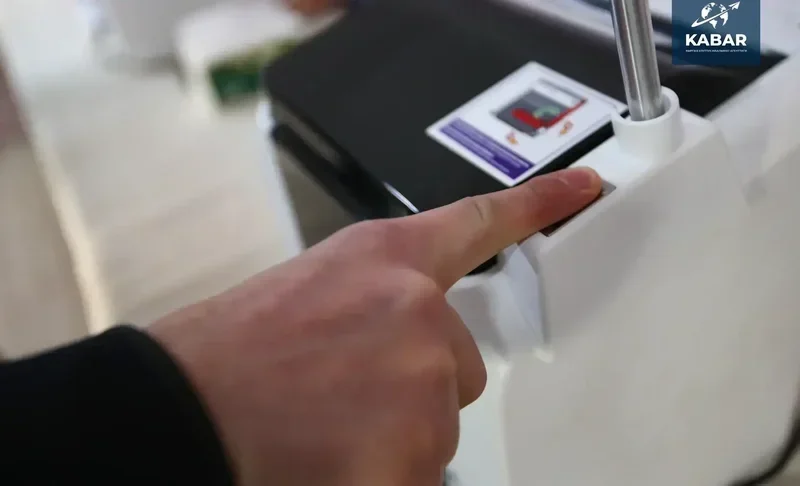
The situation is different now. Because there is only one, unified constituency, it does not matter whether you are in the Pervomaysky District or the Oktyabrsky District; if you cannot make it to your assigned polling station, you can simply go to any other convenient, nearby polling station to vote. For example, if I am registered in the Oktyabrsky District but happen to be in Osh or even abroad on election day, I can still participate by undergoing identification, either by presenting my physical passport or a digital version via the "Tunduk" app.