
Two hundred young delegates from Türkiye and abroad will gather in Istanbulfor a six-day simulation of UN climate negotiations, as Türkiye prepares to host COP31, the organizers said.
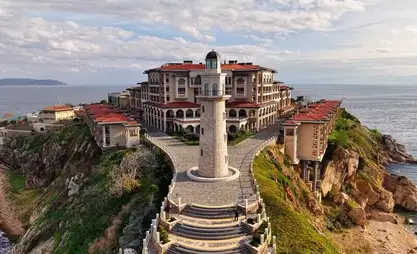
NextGenCOP30.5, organized by the Cemre Foundation in partnership with Türkiye's Environment, Urbanization and Climate Change Ministry, in cooperation with Istanbul Technical University and support from the University of Cambridge, will take place from Aug. 27 to Sept. 1 on Democracy and Freedoms Island.
Participants, including students from the universities of Cambridge and Oxford, will be divided into six negotiating blocs reflecting the economic and political interests represented in UN climate talks.
They will negotiate emissions reductions and the energy transition, climate finance and loss and damage, as well as adaptation and resilience.
The simulation is designed to give young people practical experience of diplomacy, including defending national interests, building coalitions, managing red lines and making concessions under pressure.
Organizers will also introduce unexpected climate-crisis scenarios, forcing delegates to reassess positions and seek new alliances.
A youth test for climate diplomacy
“We do not want young people to watch the climate debate from the sidelines. We are inviting them to take their seats at the table,” said Furkan Gokgoz, chairman of the board of the Cemre Foundation. “Because tomorrow’s real negotiating tables will be occupied by the young people of today.”
The official opening on Aug. 28 is scheduled to include Murat Kurum, Türkiye’s environment, urbanization and climate change minister and president of COP31. The program will also feature policy and academic sessions on climate finance, the circular economy, sustainable agriculture, climate technology, entrepreneurship and the use of artificial intelligence in climate solutions.
Prof. Khaled Soufani of Cambridge Judge Business School is expected to participate online in a session on climate finance and the circular economy. Academics from Istanbul Technical University, Bogazici University and the University of Cambridge are also expected to take part.
The simulation will conclude with a plenary vote on a common text, the “Antalya Agreement.” Adoption will require support from at least four of the six negotiating blocs, reflecting the coalition-building, bargaining and text-drafting involved in multilateral climate negotiations.
“The most difficult part of climate diplomacy is not defining the problem, but bringing different interests together around the same solution,” Gokgoz said. “The Antalya Agreement will be the outcome of the ideas the delegates defended and the compromises they built.”
Connecting negotiations with climate innovation
Alongside the negotiation-focused Blue Zone, the Green Zone will showcase technologies and business models aimed at reducing emissions and strengthening climate resilience.
Ten climate-focused startups — five from the Cambridge entrepreneurial ecosystem and five from Türkiye’s innovation ecosystem — will present their work. The zone will feature an expert panel, three-minute startup pitches, exhibitions, demonstrations and networking among entrepreneurs, delegates, academics, policymakers, investors and media representatives.
Organizers said the initiative is intended to connect those debating climate policy with teams developing practical solutions to climate challenges.
The event is part of the Cemre Foundation’s broader effort to prepare young people not only as informed participants in climate discussions but also as future negotiators and climate leaders capable of interpreting scientific evidence and representing their institutions or countries internationally.
“Some of the young people taking their seats at a simulation table today will, within a few years, have a voice in real climate negotiations on behalf of Türkiye, an international organisation, a university or a company,” Gokgoz said. “We want Türkiye’s young people to tell Türkiye’s climate story at negotiating tables around the world.”
The six-day program will ultimately test whether delegates can secure the cross-bloc support needed to adopt the Antalya Agreement, putting their negotiating skills, climate knowledge and ability to build consensus to the test ahead of COP31.
Source: Anadolu Agency