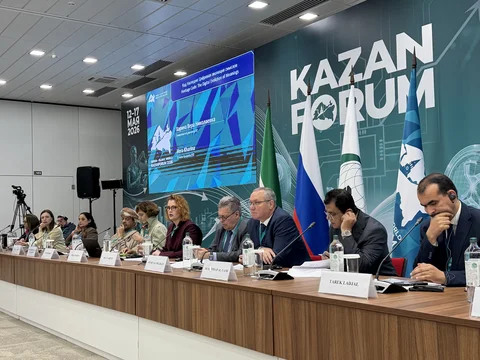
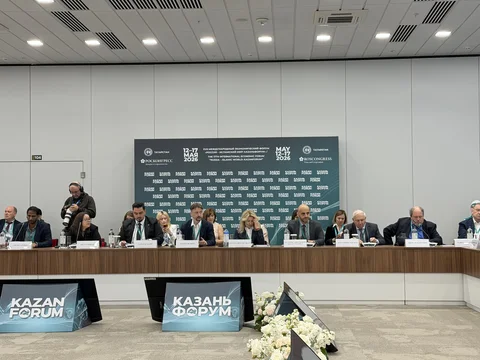
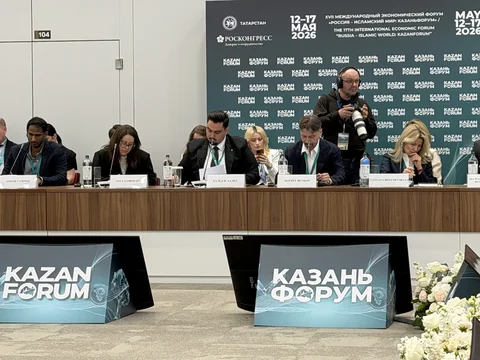
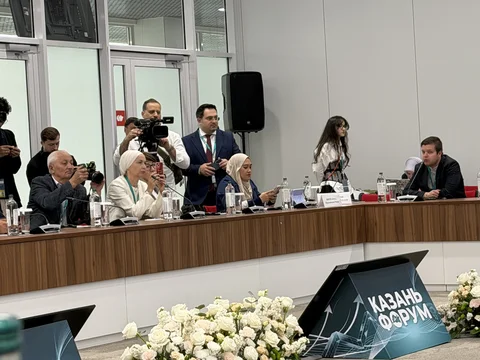
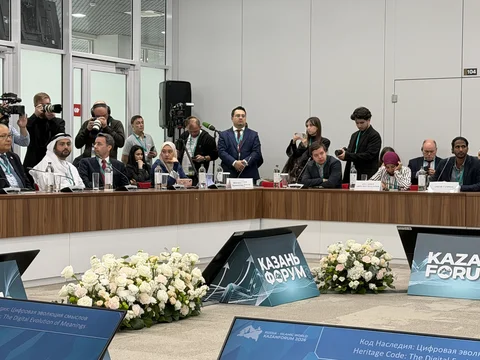
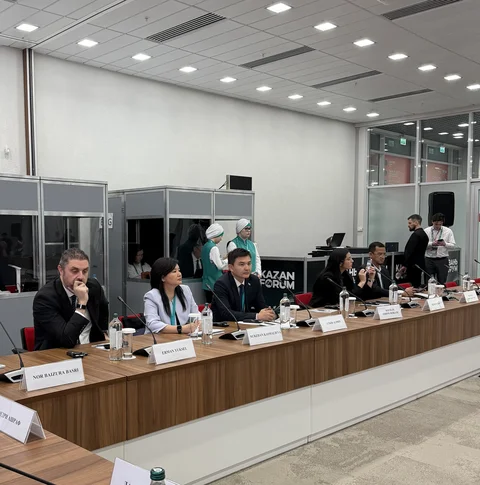

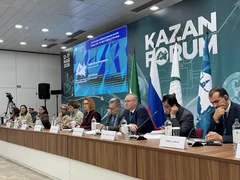
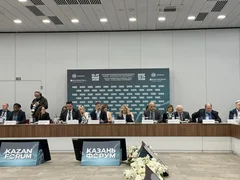
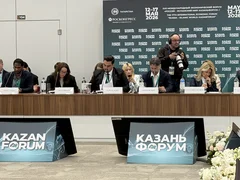
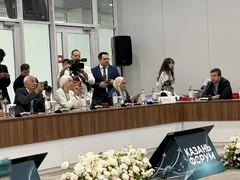
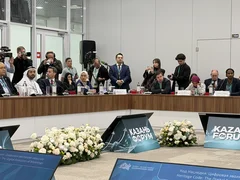
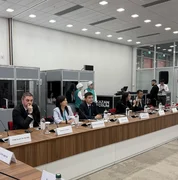
Kazan, May 14, 2026 /Kabar/. "Heritage Code: The Digital Evolution of Meanings" media forum was held at the XVIIth International Economic Forum "Russia – the Islamic World: Kazanforum". It was dedicated to using new technologies in journalism and media, as well as new opportunities and precautions against potential dangers.
"Currently, the question also arises of how to use the opportunities of modern achievements for the benefit of preserving our cultural and spiritual heritage. We hope that our meeting today will contribute to resolving this issue," Marat Gatin, Assistant to Rais of the Republic of Tatarstan, Deputy Chairman of the Russia–Islamic World Strategic Vision Group set the tone for the conversation.
According to him, information interaction between Russia and the countries of the Islamic world is becoming wider every year. And it was Kazanforum that became the main platform for discussing new approaches and technologies in this area.
In today's reality, the usual communication formats are being transformed following the preferences of the audience. It is important to keep up with trends and adapt them to preserve national and cultural heritage, said Aidar Salimgaraev, head of Tatmedia Republican Agency for Press and Mass Communications.
"This year, about 400 journalists from 29 countries came to Kazanforum. This indicates a high interest in the event all over the world. The geography is also expanding. Everyone can find something important and interesting here," he said.
The media forum was attended by media executives and well-known journalists from different countries of the Islamic world. They shared their suggestions and concerns about the use of new technologies in journalism including artificial intelligence.
"We work in an environment where deepfakes occur, information is being distorted. We are not just fighting against fakes, but we advocate for the integrity of information. Another challenge is to preserve sovereignty. Currently, most of the OIC countries cannot control how secure their history and values are," Tarek Ladjal, head of the OIC Information Department, shared his assessment of the situation.
He proposed several measures that, in his opinion, would allow the media community to go through a period of digital transformation.
"The first point is continuous improvement of literacy. We need to do more than just publish texts. It is important to learn using artificial intelligence technologies, large databases, and keep up with the times in terms of language," he is convinced.
The second necessary point, in his opinion, is constant cooperation, which will protect the information space from digital vandalism.
The third factor is to keep the memory while working that all materials should be human–centered.
Kazan remains one of the world's largest cultural centers, so discussing the issue of introducing new technologies to preserve heritage here is especially symbolic, added Muhammad Al-Yami, Director General of the Union of News Agencies of the Organization of Islamic Cooperation.
"The Union is working on using new technologies to achieve its objectives. Artificial intelligence is at the core of our organization's work. We launched the Smart Editor program to create media content, and also conducted advanced training courses for journalists from the Islamic world," he said.
Mr. Alyami particularly noted the contribution of Tatmedia Republican Agency for Press and Mass Communications, which assisted the union he heads in holding various events.
Other proposals made at the KazanForum media forum included holding regular meetings of media representatives - leaders of the OIC countries, creating a network of journalists from the Global South, as well as defining ethical standards for the use of artificial intelligence in journalism.