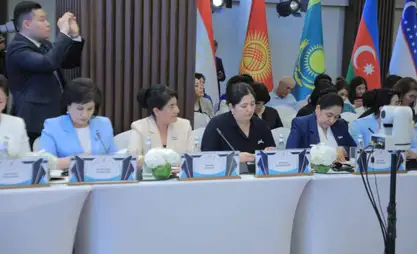

The 2nd Asian Women’s Forum and the meeting of the Dialogue of Women Leaders of Central Asian Countries and Azerbaijan are being held in Bukhara, UzA reports.
The forum is attended by representatives from more than 40 foreign countries and international organizations.
Representatives of parliaments from Asian countries, members of the diplomatic corps, and experts from international organizations are exchanging experiences. Special attention is being paid to expanding women’s role in political decision-making, strengthening their economic independence, and promoting their entrepreneurial activity.
Four panel sessions are planned, focusing on increasing women’s engagement in science, innovation, and artificial intelligence, ensuring safety in the digital environment, and social protection.
As part of the forum of women scientists on “Women’s Leadership in Science: Modern Challenges, Innovative Solutions and Scientific Cooperation”, issues related to supporting women’s intellectual potential, promoting innovative approaches, and strengthening regional cooperation were addressed.
This year, Uzbekistan chairs the Dialogue. The accession of the Republic of Azerbaijan to the Dialogue format strengthens regional unity and expands mutually beneficial partnership.
The meeting was opened by Tanzila Narbayeva, Chairperson of the Senate of the Oliy Majlis, who noted the importance of the work underway to increase women’s socio-political activity, support their potential, and strengthen their role in public administration.
During the Dialogue of Women Leaders of Central Asian Countries and Azerbaijan, women’s leadership in science, modern challenges, innovative solutions, and scientific cooperation were discussed.
Two panel sessions were held as part of the forum. The first session focused on opportunities and prospects for regional development through the application of scientific and innovation achievements. During the discussion, issues related to developing the scientific potential of the region’s countries, expanding the innovation ecosystem, strengthening scientific and technological cooperation, and enhancing the role of women in scientific and research activities were considered.
The focus was on applying scientific achievements to economic development, strengthening technological partnerships among the region’s countries, optimizing financial instruments to support science, and creating a modern innovation environment.
Participants also considered prospects for training a new generation of researchers, measures to support young people in science, and the development of interregional academic and scientific exchange programs.
Following the forum, a Joint Communiqué was adopted, providing for the implementation of the proposals and recommendations, including the creation of the regional network of women scientists, SheScience Central Asia, which will serve as a mechanism to strengthen scientific cooperation and promote joint research in the region.