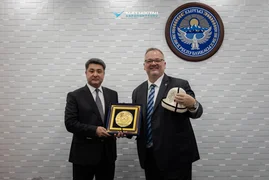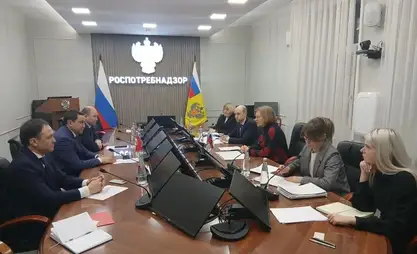
Bishkek, Feb. 10, 2026. /Kabar/. Kyrgyz Minister of Health Kanybek Dosmambetov held a working meeting with Anna Popova, Chief state sanitary doctor of the Russian Federation.
According to the agency's press service, during the talks, the Kyrgyz side expressed gratitude for the long-standing support of Russia and Rospotrebnadzor in developing the public healthcare system in the Kyrgyz Republic, noting their contribution to the training of qualified personnel, the advancement of scientific research, and the introduction of modern technologies for the prevention, diagnosis, and treatment of infectious diseases.
It was noted that the substantive portion of the meeting focused on joint work on viral hepatitis B, C, and D, where a set of measures to scale up early diagnosis, follow-up care, and treatment have been consistently implemented in Kyrgyzstan since 2023. The Russian Federation's contribution to the launch of the hepatitis B vaccination program for adults deserves special recognition, as emphasized during the discussion.
The parties discussed in detail the practical results of this cooperation and its organizational components: in the Kyrgyz Republic, systemic vaccination of adults has been established as an important element of the national response to blood-borne viral hepatitis since December 2022, and over the course of the program, more than 300,000 people have received the hepatitis B vaccine.
As part of this collaboration, as also discussed at the meeting, 500,000 doses of vaccine and 200,000 rapid tests for HBsAg detection were delivered, healthcare workers were trained in rapid testing and vaccination, and informational and outreach activities were carried out. For the general public and specialists, mobile vaccination units have also been deployed in hard-to-reach areas.
The parties focused on the next stage's objectives: ensuring uninterrupted supply of hepatitis B vaccines, adhering to vaccination schedules, taking into account logistics and accessibility, including the use of mobile formats, systematically informing the public about the importance and safety of vaccination, and further enhancing the skills of primary care healthcare workers in patient counseling and follow-up on cases of vaccination refusals or schedule violations, while simultaneously strengthening cold chain compliance, document quality, and monitoring vaccination coverage.
At the end of the meeting, the Kyrgyz side emphasized its interest in continuing cooperation with the Russian Federation and Rospotrebnadzor, noting its readiness for further joint work to preserve and build on the results achieved, and expressing confidence that this collaboration will continue to strengthen the Kyrgyz Republic's healthcare system and improve the health of its citizens.