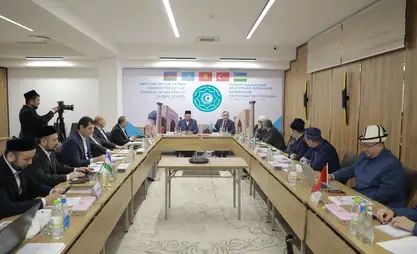
Bishkek, Feb. 3, 2026. /Kabar/. The consultative meetings of the Fatwa Committee under the Council of Heads of Muslim Religious Boards of the Organization of Turkic States (OTS) is being held on 2-4 February 2026 in Samarkand, Uzbekistan.
Hosted by the Muslim Board of Uzbekistan, the meeting has brought together members of the Fatwa Committee, senior officials of Muslim religious institutions, and prominent religious scholars from OTS Member States. In his opening speech, the Deputy Chairman of the Muslim Board of Uzbekistan, Zayniddin Eshonqulov, warmly welcomed the participants and underlined the historical and spiritual significance of Samarkand as a key center of the Silk Road and the Islamic world.
In his opening remarks, Mirvokhid Azimov, Deputy Secretary General of the OTS, emphasized the significance of holding the event in Samarkand, which was announced as the civilizational capital of the Turkic world four years ago by the Leaders of the Turkic States. He further expressed his appreciation to the Uzbek side for organizing this important gathering and underlined that the meeting aims to enhance cooperation on religious issues and further strengthen spiritual unity across the Turkic world.
During the meeting, participants hold in-depth discussions on issues of Islamic jurisprudence.
The Committee also deliberates on the determination of the beginning of Ramadan and the date of Eid al-Fitr for the Hijri year 1447, exchanging views on different methodological approaches to identifying these dates.
Further discussions address agricultural “ushr” and production costs, examining whether expenses such as fertilizers and chemical pesticides affect the amount of “ushr” due. In addition, participants will consider the use of artificial intelligence in fatwa-related processes, assessing the appropriateness and limitations of employing AI in issuing or obtaining fatwas.
This important gathering contributes to strengthening mutual understanding and institutional cooperation among the religious bodies of the Turkic States and supports the development of a more harmonized approach to Islamic guidance and scholarly exchange within the OTS framework.