Dmitry Konstantinov, Director General of the Rosatom State Corporation representative office in the Kyrgyz Republic, spoke in exclusive interview with Kabar News Agency about the planned construction of wind farm in the Issyk-Kul oblast. The projects starts near Balykchy city in the coming months. The conversation also touched on the reclamation of tailings dams located in the republic. Joint activities in this area are ongoing and will be scaled up.
- The first information about the development of wind farm construction project in the Issyk-Kul oblast appeared several years ago. Recently, information was released that Rosatom is ready to begin implementation within the next few months. Tell us more about this.
-Rosatom acts as a full-cycle project developer in international onshore wind power generation markets, from site selection and wind measurements to component manufacturing, construction, and subsequent operation of wind farms.
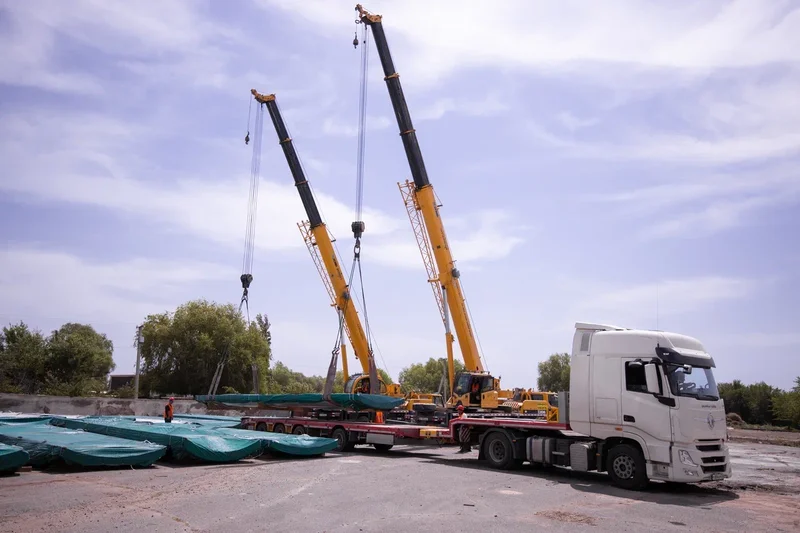
The wind farm is part of Rosatom's comprehensive energy offering, enabling rapid resolution of energy shortages. Rosatom has currently delivered wind turbine components, manufactured at its own production facilities and those of partner plants, for the construction of the future wind farm.
This year, Rosatom also signed a long-term land lease agreement for the construction of renewable energy facility and a guaranteed electricity buyback agreement with the Green Energy Fund under the Cabinet of Ministers of the Kyrgyz Republic.
- Where will the wind farm be located, and is it possible to set a timeline for the project's implementation?
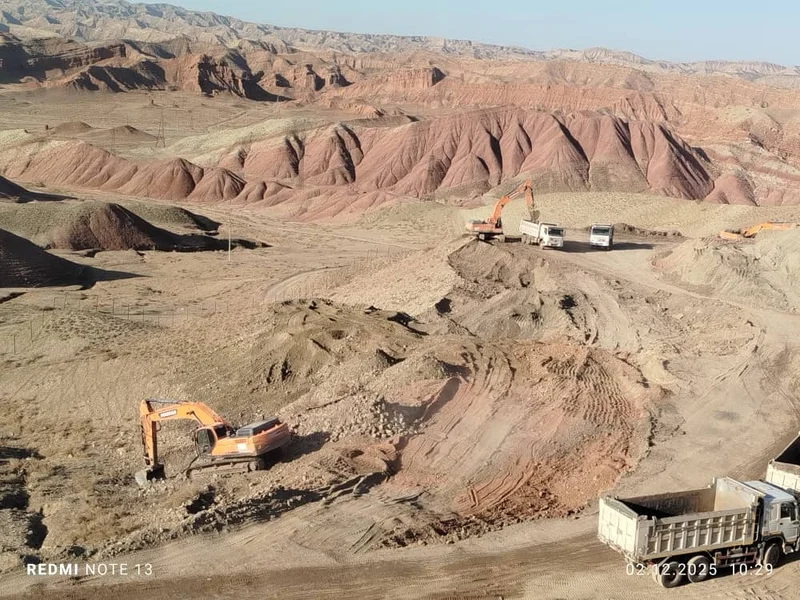
- The wind farm will be located in Kok-Moinok village, near Balykchy. Rosatom is currently verifying all contract documents and launching design work, with construction scheduled to begin in 2026.
- What are the key parameters of the future wind farm? Will it be sufficient to provide a stable electricity supply for medium-sized city?
- The total installed capacity of the wind farm will be 100 MW. This capacity is sufficient to power approximately 65,000 households. For example, the population of Balykchy is approximately 54,000 people, which, according to rough estimates, equates to less than 18,000 households.
- We know that Rosatom Kyrgyzstan is simultaneously conducting large-scale remediation of radioactive waste storage facilities in several regions of the country. Could you please tell us how this work is progressing and what remains to be done to neutralize the threat posed by the tailings dams?
- Rosatom State Corporation has been providing its Kyrgyz partners with all necessary assistance for many years in solving the problem of rendering a number of uranium tailings dams radiation-safe. Russia is a leading donor in this area.
In the first stage, reclamation activities were carried out within the framework of the CIS Interstate Target Program. These works were fully completed this year. Four tailings storage facilities near Min-Kush village, Naryn oblast (Kak, Taldy-Bulak, Tuyuk-Suu, and Dalneye) and one near Kadji-Sai village, Issyk-Kul oblast have been rendered radiation-safe. Russian and Kyrgyz authorities confirmed the safety of the facilities based on soil, water, and air sampling. The total cost of the work in Kyrgyzstan was 2.07 billion rubles, 75% of which was contributed by the Russian Federation. We can guarantee the quality of the work performed. Reliable engineering barriers have been installed to prevent the further spread of uranium tailings, and continuous monitoring of the radiation situation and potential landslides has been established.
I would like to note that our cooperation did not end with the completion of the aforementioned CIS program. A decision was made jointly with the Ministry of Emergency Situations of Kyrgyzstan to continue rehabilitation activities on a bilateral basis. The Russian Government has already allocated 2.14 billion rubles in budgetary funds for these purposes, with the work scheduled to be completed from 2024 to 2030.
The following sites have been identified for future activities:
1) the structures of the former electrical engineering plant, coal mines, and ash dumps in Kadji-Sai, Issyk-Kul;
2) eight waste rock dumps and seven waste trenches, eighteen shafts, and eleven adits in Too-Muyun village, Osh;
3) mine dump, shafts, adits, and structures in Kyzyl-Zhar village, Jalal-Abad region. The work is proceeding strictly according to the planned schedule. The design and survey phase has already been completed, the necessary cost estimates have been developed, and state expert assessments required by Kyrgyz legislation have been received. State contract for the rehabilitation work itself was signed in 2025.
The necessary engineering infrastructure, access roads, and waste disposal sites with anti-seepage screens have been created at the sites. Reinforced concrete foundations and structures at the work sites have been dismantled. The waste has been excavated, transported, and placed at the waste disposal sites, the shafts and adits have been mothballed, and hydraulic structures have been constructed.
Rehabilitation of the Too-Moyun and Kyzyl-Zhar facilities is planned for 2026. Subsequently, all efforts will be focused on the site in Kadji-Sai, which contains large amount of contaminated soil. Thus, upon completion of the work, these tailings storage facilities will no longer pose a hazard to the population and the environment. The work is carried out in accordance with best international practices.
Reducing the negative impact on nature and preserving and replenishing biological resources are all priorities for the Russian nuclear industry.
Rosatom State Corporation is ready to continue our joint efforts. All our projects meet the most stringent sustainability standards. Rosatom's work is primarily aimed at the benefit of people and environmental protection, which is an integral part of its mission.