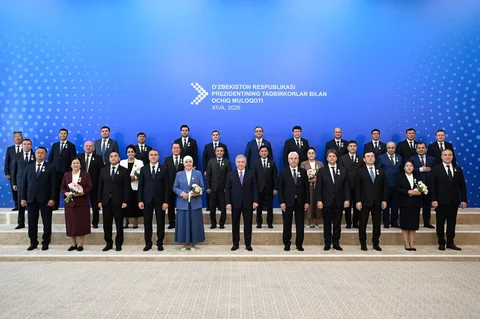
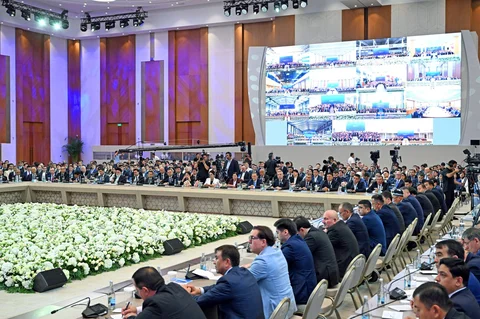

The latest open dialogue between President Shavkat Mirziyoyev and Uzbekistan’s entrepreneurs in Khiva marks an important new stage in the country’s economic transformation. While the presidential dialogue, launched in 2021, initially focused on identifying and resolving problems faced by businesses, the 2026 meeting placed greater emphasis on creating an environment in which private companies can become sustainable sources of investment, employment, innovation and exports.
The change reflects the growing role of entrepreneurship in Uzbekistan’s economy. The country now has around 1.2 million members of the business community, while private enterprises are playing an increasingly important role in production, services, employment and exports. Over the past five years, issues raised by entrepreneurs have contributed to the adoption of 84 laws and 861 presidential decrees and resolutions. This demonstrates that the dialogue has increasingly become part of the policymaking process and an important feedback mechanism between the state and the productive economy.
A major priority of the 2026 agenda is business financing. New “Business Start,” “Business Lift” and “Business Rise” programmes are intended to support companies at different stages of development. A proposed digital credit portal could allow entrepreneurs to compare bank offers, while a counter-guarantee mechanism could help businesses overcome the problem of insufficient collateral. Together, these measures point toward a more sophisticated financial ecosystem tailored to the needs of growing companies.
Regional economic specialization is another important element of the strategy. Different regions will focus on areas reflecting their economic potential — from export-oriented businesses and industrial chains to tourism, agribusiness, mining, metallurgy, green energy, IT, artificial intelligence, automotive production and electrical engineering. This approach could promote more decentralized growth, although its success will depend on infrastructure, skilled labour, logistics, investment and access to markets.
Artificial intelligence has also become a central part of Uzbekistan’s economic agenda. The proposed “AI Partner for 10,000 Enterprises” programme is intended to help companies introduce AI into their operations by compensating part of the relevant costs. The objective is not simply to develop a new technology sector, but to use AI to increase productivity in existing industries. This will require reliable data, digital infrastructure, cybersecurity and qualified specialists. The planned training of one million young people in modern skills is therefore closely linked to the country’s digital transformation.
Uzbekistan is also moving from a volume-oriented export model toward greater competitiveness and value creation. The planned “Export Navigator” system will support companies with market research, tariffs, logistics and international requirements. The government also plans to identify 100 products with strong foreign demand and adapt 2,000 companies to international market requirements. Greater attention to branding, international marketplaces and export support could help Uzbek businesses move higher up global value chains.
Administrative reform remains another key priority. A proposed three-year moratorium on most inspections of small businesses, the principle of warning entrepreneurs for a first mistake, reduced fines and the “silence means consent” principle for certain public services are intended to reduce administrative pressure and uncertainty. Such measures could be particularly important for small and medium-sized enterprises, which often lack the resources of large companies to manage complex regulatory procedures.
Tourism is also gaining importance as a component of the country’s services economy. Measures to expand hotel capacity, provide tax incentives and support tourism investment reflect Uzbekistan’s growing potential in international tourism. Recognizing services provided to foreign tourists as exports further highlights the sector’s contribution to foreign-exchange earnings. The country’s historical cities, cultural heritage, gastronomy and natural landscapes provide a strong foundation, while improving service quality and encouraging longer stays remain important challenges.
Another potentially significant initiative is the preparation of 50 large enterprises annually for initial public offerings. Developing capital markets could give successful companies an alternative to bank financing while encouraging greater transparency, corporate governance and financial reporting. However, investor confidence will be essential, requiring stronger accounting systems, transparent ownership and predictable regulation.
The most important feature of the 2026 dialogue is the growing connection between different areas of economic policy. Finance supports digitalization; digitalization enables AI; AI can increase productivity; productivity encourages investment; investment strengthens exports; and exports depend on branding, skills and access to international markets. In this sense, the government is increasingly seeking to build an integrated economic ecosystem rather than address individual problems through separate programmes.
The scale of the agenda is ambitious. Uzbekistan aims to maintain rapid economic growth, increase GDP beyond $180 billion and raise exports above $40 billion. Achieving these targets will depend not only on adopting new legislation and programmes but also on effective implementation. Reforms must reach entrepreneurs at the local level, ensure equal access to finance and technology, generate productive investment and strengthen competition rather than create permanent dependence on state support.
The evolution of the presidential dialogue since 2021 reflects a broader change in the relationship between the state and business — from resolving individual complaints toward building a partnership. The state continues to play an important role in financing, infrastructure, industrial policy, exports and human-capital development, but its objective is increasingly to create conditions in which private companies can invest, innovate, expand and compete internationally.
The 2026 Khiva dialogue is therefore significant not simply because of the number of initiatives announced, but because it reflects a new direction in Uzbekistan’s economic reforms: from removing barriers to creating opportunities, from supporting individual businesses to building an ecosystem, and from domestic growth toward international competitiveness. If effectively implemented, the reforms could accelerate the emergence of a new generation of Uzbek enterprises capable of attracting investment, adopting advanced technologies, entering global markets and creating high-quality employment.
Utkir Alimov
UzA