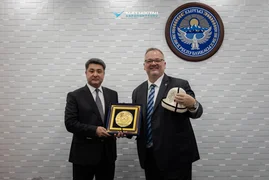
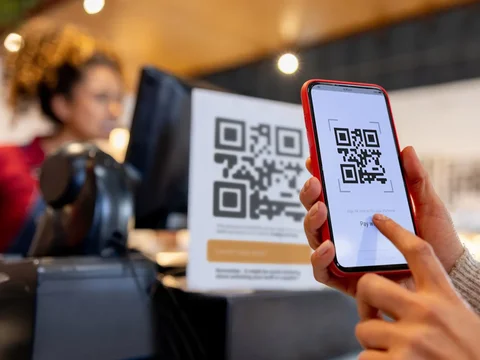



Bishkek, Dec. 2, 2025. /Kabar/. Kyrgyzstan's transition to cashless payments has led to avalanche-like effect, Melis Turgunbaev, Chairman of the National Bank of the Kyrgyz Republic said. According to him, since the introduction of the unified ELQR standard, the country has effectively transitioned to the mass use of digital payments, radically changing the financial behavior of citizens and the business environment as a whole.
According to the head of the regulator, the number of transactions via ELQR has increased 54.6-fold, and the volume of payments has increased almost 85-fold. In the first six months of 2025 alone, 274.9 billion soms were processed via QR code, almost 20 times more than in the same period last year. Turgunbaev noted that digitalization directly impacts the structure of cash flows.
In the first quarter of 2025:
The volume of cash withdrawals from cards decreased by 33%, the number of withdrawal transactions by 26.3%.
"Money remains in the system, this is a key indicator of financial market maturity," emphasized the Chairman. The head of the regulator emphasized that the current surge is the result of the National Bank's consistent efforts:
- 2022: Launch of the unified ELQR standard;
- 2024: Elimination of fees for domestic transfers;
- Mandatory acceptance of QR payments for entrepreneurs;
- Creation of broad ecosystem: 20 banks, 14 payment organizations, 32 apps, 15 million accounts, 9.8 million cards, 3.5 million e-wallets.
"Today we can confidently say that the country has almost completely switched to QR payments," noted Turgunbaev.
According to the Chairman of the National Bank, the rapid growth of cashless transactions has led to three important changes. Payments are automatically recorded, budgets are easier to control, and impulse purchases are reduced. "When people see their money in real time, it's a powerful disciplining factor," he emphasized.
Utilities, government services, communications, e-commerce, and taxis are all paid with just two taps. The number of e-wallets has reached 3.5 million, and payments to the government have increased 371-fold in terms of transactions.
Interbank transfers take seconds, and their volume has increased 49-fold. Installment plans, microloans, and savings products, all of which were impossible in predominantly cash-based economy, have become available through apps.
Turgunbaev emphasized that Kyrgyzstan has entered a new stage in the development of its financial sector. "Digital payments are becoming the norm. Trust in banks is growing, and citizens are making more informed decisions. This is no longer just convenience, it's a change in the country's very financial structure," he emphasized.