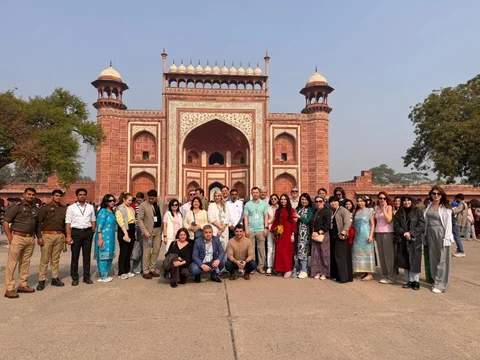

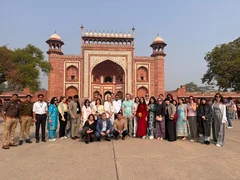
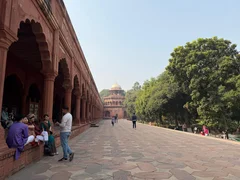
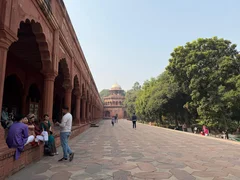
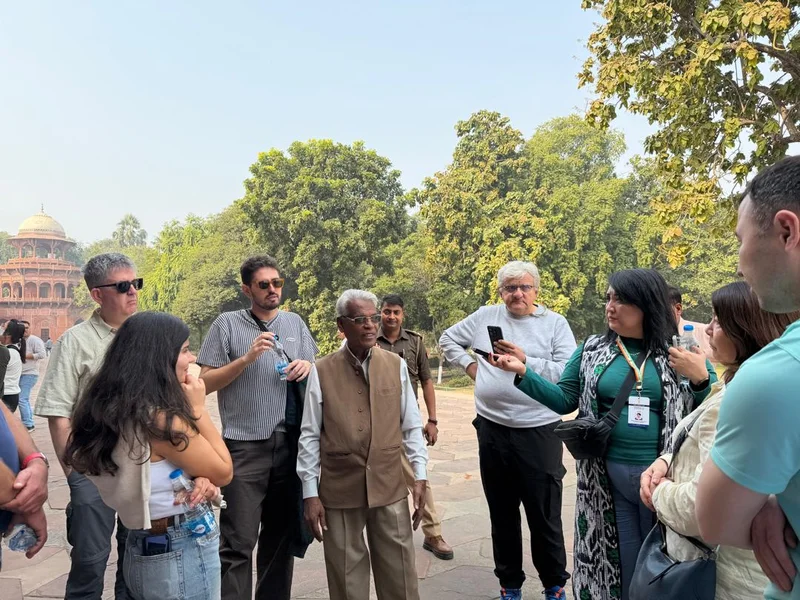
This December, I was fortunate to visit India as part of a press tour organized by the Ministry of External Affairs of India for journalists from Armenia, Georgia, Kazakhstan, Kyrgyzstan, Tajikistan, Turkmenistan, and Uzbekistan. For many of my colleagues, it was their very first encounter with India.
This was not my first time in India — yet every visit feels like the first. India is a country with powerful energy that leaves no one indifferent. People either fall in love with it or feel overwhelmed by its chaos. I belong to those who fall in love — deeply and repeatedly. That is why I keep coming back.
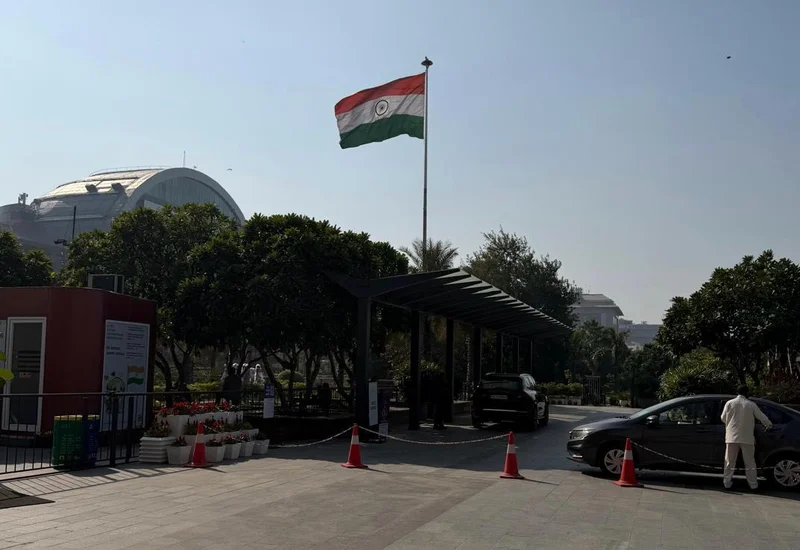
We explored New Delhi — a city of contrasts, where British colonial architecture stands side by side with ultra-modern business districts, and ancient temples coexist with the rhythm of a fast-growing metropolis. Yet there was one place everyone dreamed of seeing — a symbol that represents India to the entire world.
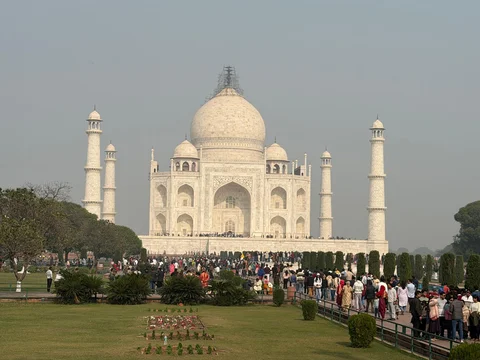
It is impossible to imagine India without the Taj Mahal — the eternal symbol of love, wrapped in legends and poetry.
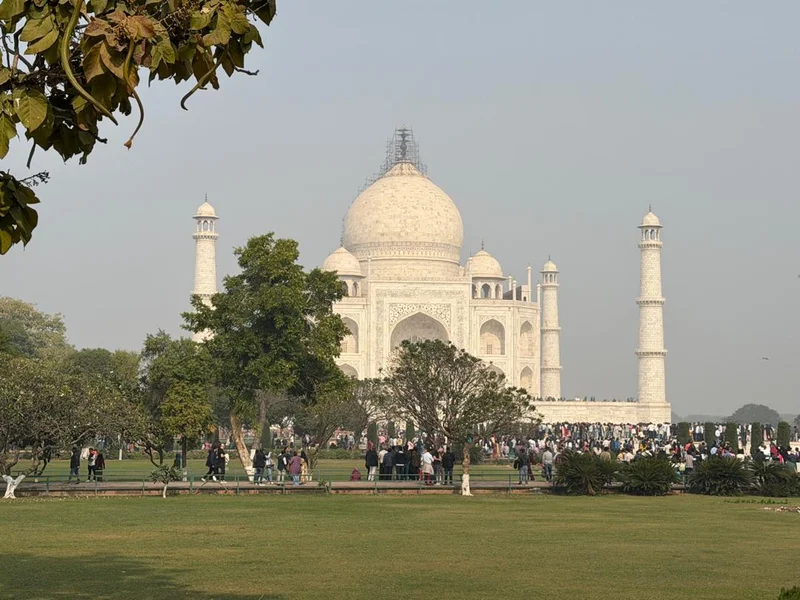
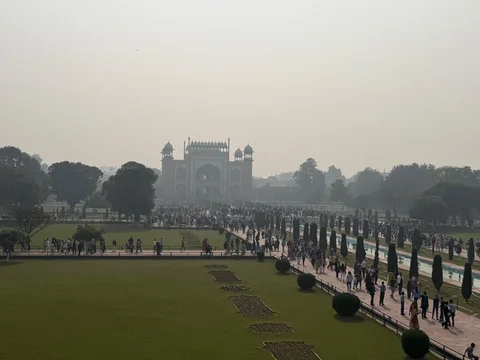
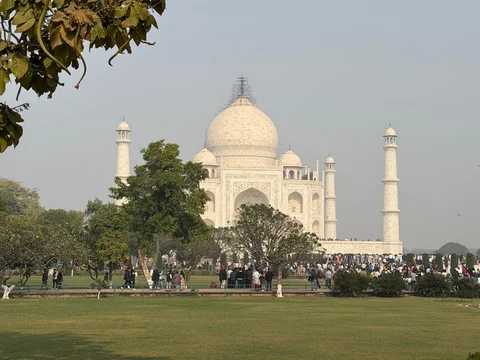
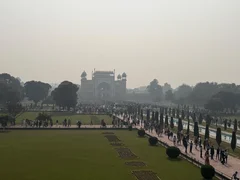
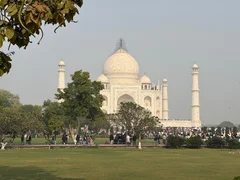
Located in Agra, on the right bank of the Yamuna River, the Taj Mahal rises from a vast Mughal garden covering nearly 17 hectares. From a distance, it looks unreal — like a palace from a fairytale. In reality, it is a mosque-mausoleum built in the 17th century by Emperor Shah Jahan in memory of his beloved wife, Mumtaz Mahal.
Their love story is both beautiful and heartbreaking. Mumtaz died while giving birth to their fourteenth child. Devastated by grief, Shah Jahan went into deep mourning and later decided to build a monument that would preserve her memory forever. That decision gifted the world one of its greatest architectural masterpieces.
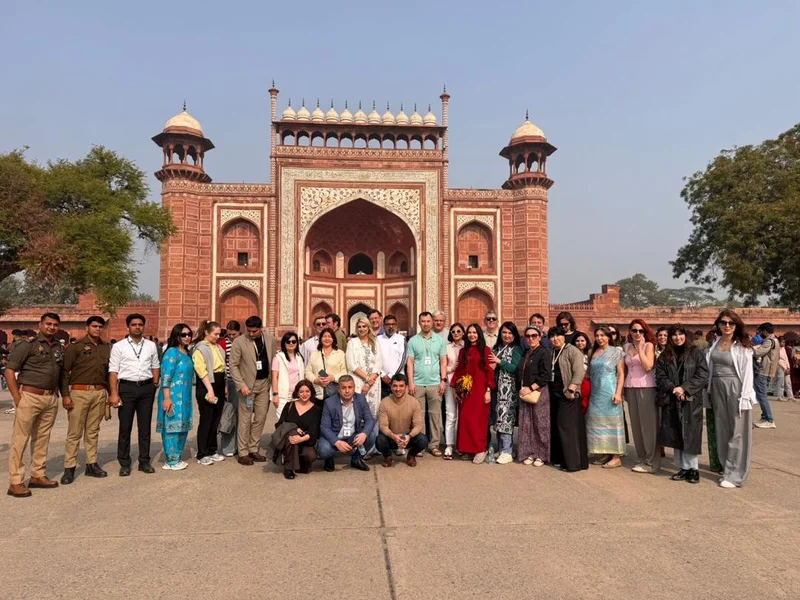
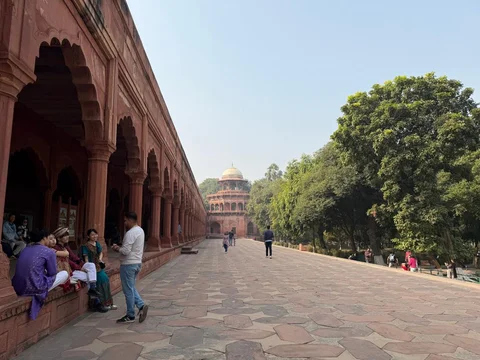
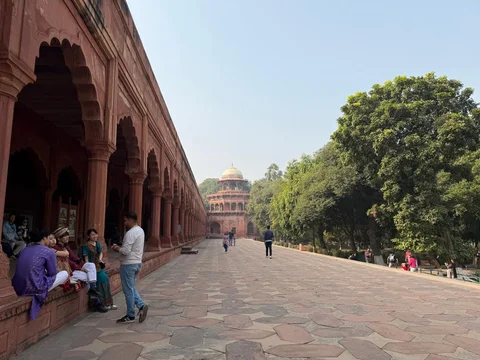
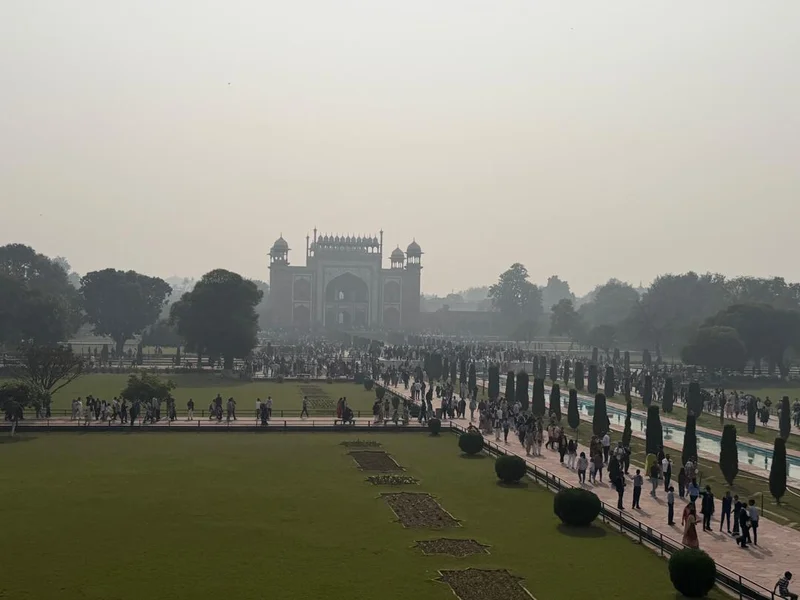
Walking through the complex, I was struck by its perfect symmetry. Every element — from the main mausoleum to the mosque and surrounding buildings — is designed with absolute balance. Persian, Indian, and Arab architectural traditions blend seamlessly, creating a feeling of harmony and serenity.
The closer you get, the more details reveal themselves. Delicate floral ornaments carved into white marble. Arabic calligraphy with verses from the Quran. Precious and semi-precious stones — jasper, jade, turquoise, agate, malachite, carnelian, and many others — carefully inlaid using the intricate pietra dura technique. The marble was brought from Rajasthan, while the stones came from different regions of Asia.
Under sunlight, the marble walls seem almost translucent, making the mausoleum appear as if it is floating above the ground. During the day, the Taj Mahal looks pure white; at sunrise, it turns soft pink; and under moonlight, it glows silver.
Preserving the Taj Mahal requires constant care. Polluting factories around Agra have been closed, vehicle traffic near the complex is restricted, and the marble is regularly cleaned with special clay. Restoration work is carried out when necessary, and the Indian government closely monitors the condition of the foundation. The main threats remain air pollution, which causes the marble to yellow, and the shallowing of the Yamuna River, which can lead to structural cracks. To protect the monument, vehicles with internal combustion engines are prohibited near the site, and visitors reach it on foot or by electric buses.

After the visit, we all shared our emotions. We spoke about the unimaginable effort invested in its construction, the legend of eternal love, and India’s remarkable ability to preserve its cultural heritage. For many of us, this visit became the emotional peak of the journey.
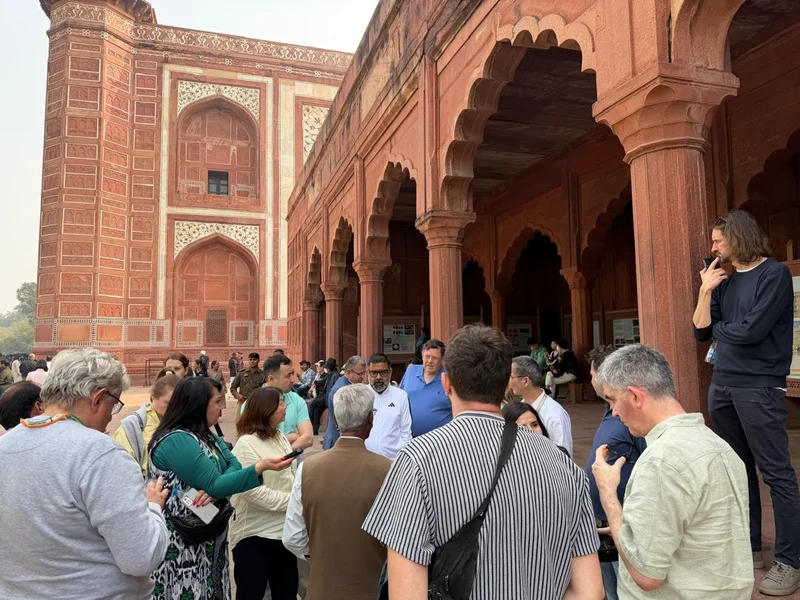
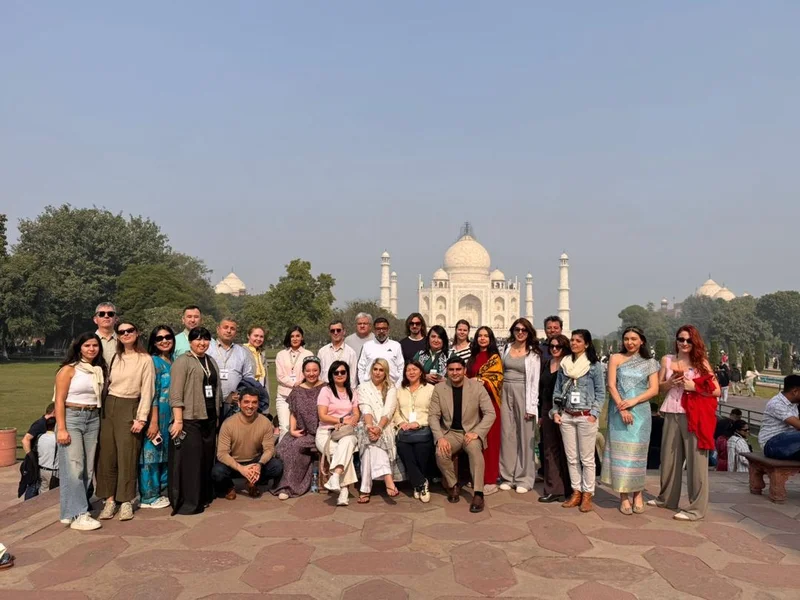
One of my colleagues, Rakhila Tleuova from Kazakhstan, shared a story that felt especially close to my heart. Like many people of our generation, she grew up watching the Indian films like Seeta and Geeta, loving Indian movie songs, and collecting photos of Shah Rukh Khan and Kajol.
“I dreamed of seeing the Taj Mahal, one of the Seven Wonders of the World, wearing a sari, and taking a photo in front of it. And now it finally happened. On the way, I bought modern Indian clothes and took pictures near the Taj Mahal. I couldn’t hold back my emotions. Sometimes a dream waits for years — not because it’s impossible, but because its time hasn’t come yet.”

Listening to her, I realized how deeply India lives in people’s hearts — often long before they ever set foot on its land.
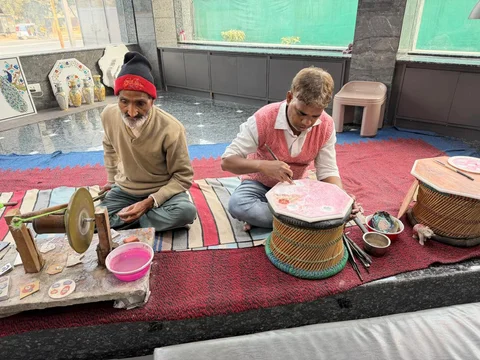
The Taj Mahal is not only a monument to eternal love and an architectural masterpiece; it is also a testament to the extraordinary craftsmanship of artisans. Many of today’s masters are descendants of those who once worked on its creation.
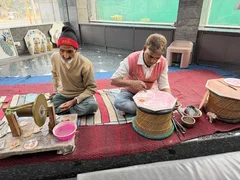
After visiting the Taj Mahal, we went to a traditional Indian workshop in Agra, where the ancient marble inlay techniques are still practiced — the same methods used centuries ago and passed down through generations of artisans. We witnessed how painstaking and demanding this work is, requiring immense patience, precision, and dedication.
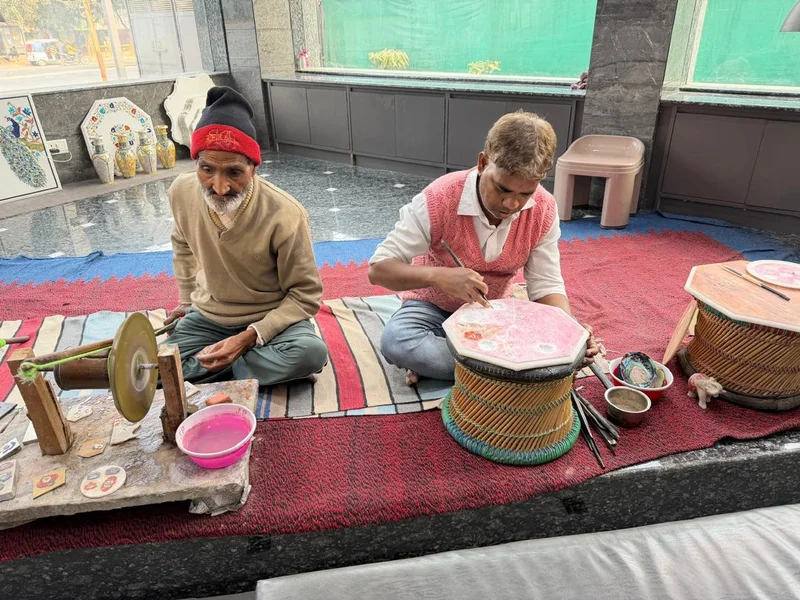
We were shocked not only by the beauty and scale of the Taj Mahal, but also by the intricate process of its decoration.
By the end of the trip, one thing became clear: it is impossible to truly understand India without visiting the Taj Mahal. There is nothing else like it in the country — or in the world.
If you ever come to India, make sure this place is on your list. Stand there. Feel the silence, the history, the love carved into marble. Some places stay with you forever — and the Taj Mahal is one of them.
Nurzhan Kasmalieva