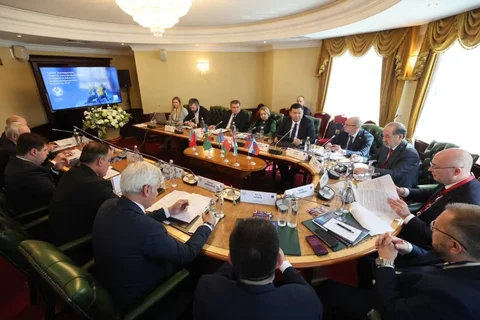
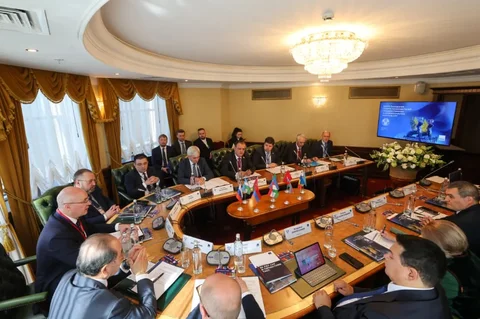
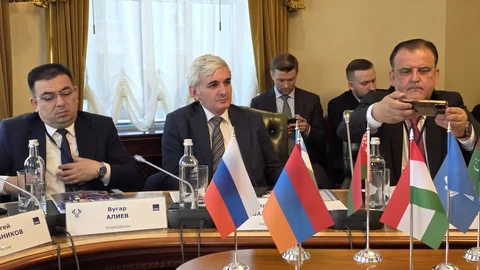
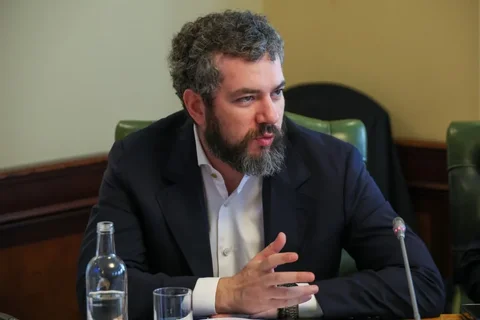
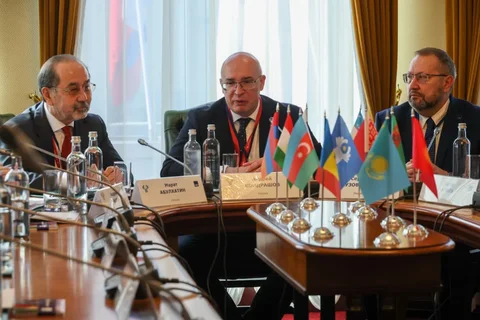
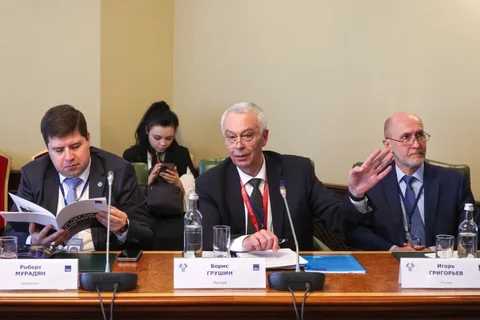
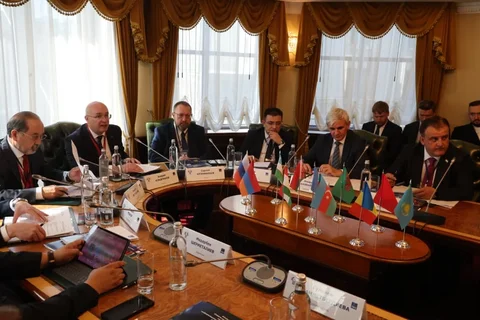
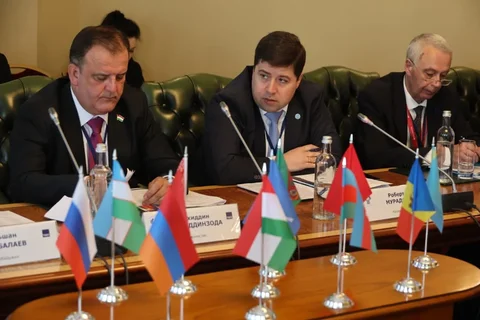
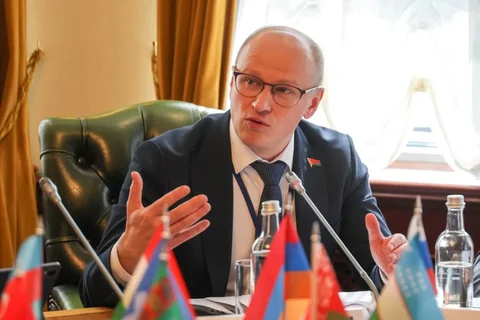

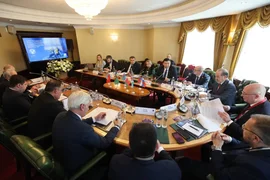
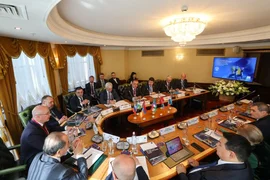

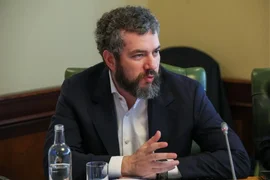
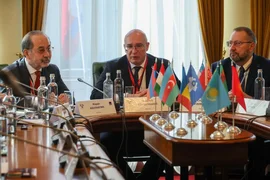
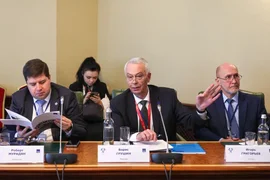
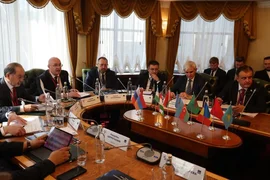
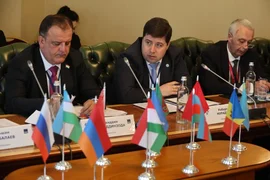
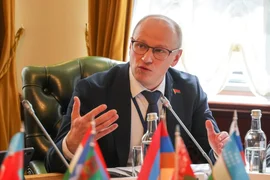
Bishkek, June 4, 2026 /Kabar/. A meeting of the Council of Heads of CIS State News Agencies was held in St. Petersburg on June 3, 2026.
During the 34th meeting of the Council, participants discussed the development of modern media, including the use of artificial intelligence (AI) in journalism and the expansion of cooperation among news agencies of the Commonwealth of Independent States.
Particular attention was given to the integration of AI into editorial workflows, the development of digital platforms, and the strengthening of fact-checking efforts amid rapidly growing information flows.
Kyrgyz National Kabar News Agency Director Mederbek Shermetaliev presented his agency’s experience in using AI. He noted that since last year, the agency has been producing short news videos in Kyrgyz and Russian using virtual presenters.
According to Shermetaliev, the project has delivered positive results, including audience growth and an increase in social media followers. AI is also used to visualize historical events, enhance archival materials, produce multimedia content, and analyze audience interests.
TASS Director General Andrei Kondrashov noted that his agency was among the first to adopt automated information processing tools. He stressed that while intelligent systems help journalists perform technical tasks, core journalistic responsibilities—professional judgment, communication skills, and the ability to convey truth and emotion—remain human.
He emphasized that artificial intelligence should be viewed as a tool to enhance newsroom efficiency, not as a replacement for journalists.
BelTA Director General Andrei Mokhor stated that AI today can compete with rewriters and copywriters rather than journalists, as it primarily processes existing texts. He also highlighted risks related to the scale and quality of AI-generated content.
He noted that online environments increasingly feature AI systems interacting with one another, generating comments, questions, and responses, making it more difficult to distinguish between human communication and algorithmic activity.
Vladimir Tabak, CEO of the Dialogue and Dialogue Regions nonprofit organizations, also participated in the meeting. He spoke about the work of the International Fact-Checking Association (GFCN), which uses neural network technologies to verify information and counter misinformation.
He stated that fake news has become a key instrument in modern information warfare, affecting areas ranging from economics to military conflicts. He also noted that the growing volume of information makes it increasingly difficult for users to assess the reliability of content.
Tabak reported that the International Fact-Checking Association currently brings together around 110 organizations from more than 50 countries.
Participants also discussed strengthening the CIS Information Council as a permanent platform for cooperation among news agencies, as well as the creation of a unified digital space for exchanging news and materials.
Additional topics included joint media projects on culture, tourism, and economics across CIS countries, as well as training programs in media and artificial intelligence.
At the conclusion of the meeting, participants highlighted the upcoming World Nomad Games in Kyrgyzstan, which media representatives from CIS countries have been invited. Kyrgyzstan also proposed holding the next meeting of the Information Council during the Games.