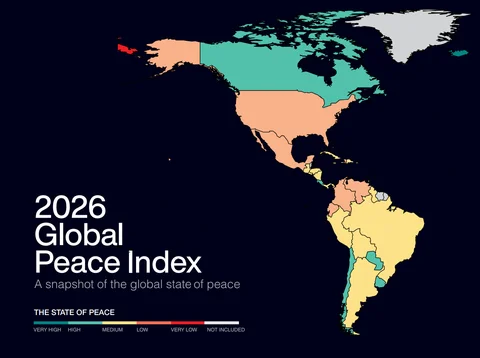

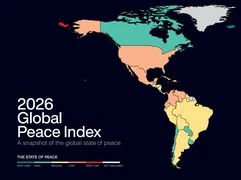
The number of armed conflicts worldwide has reached its highest level since the end of World War II, while the global level of peacefulness has deteriorated for the 12th consecutive year, according to the Global Peace Index 2026 (GPI) released by the Institute for Economics and Peace (IEP), Qazinform News Agency reports.
The average level of global peacefulness declined by 0.7% over the past year. Of the 163 countries and territories included in the ranking, 99 recorded a deterioration, while only 62 improved. In total, 119 countries are now less peaceful than they were in 2008.
“The rise in conflict sits inside a broader structural transformation of the international system that IEP terms the ‘Great Fragmentation’, which began in the late 2000s,” the report states.
This phenomenon is characterized by weakening international institutions, intensifying geopolitical competition and the growing internationalization of conflicts.
The number of countries involved in external conflicts over the past five years has increased from 59 in 2008 to 103 in 2026. Meanwhile, the number of internationalized intrastate conflicts has risen by more than 175% since 2010.
The economic impact of violence on the global economy in 2025 is estimated at $21.8 trillion in purchasing power parity terms, equivalent to 10.5% of global GDP, or $2,657 per person worldwide.
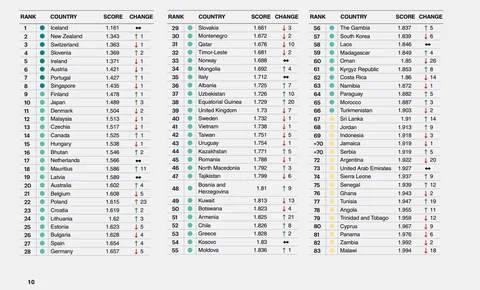
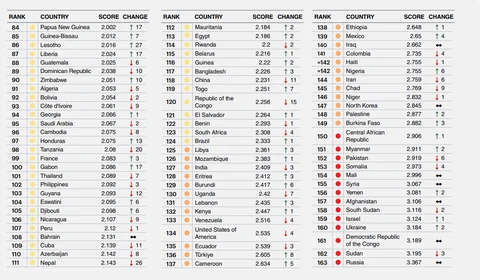
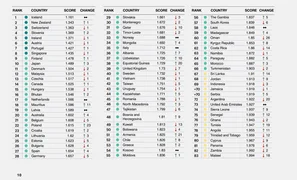
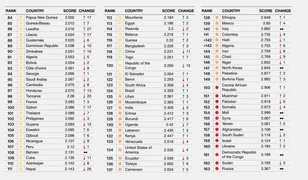
Iceland remains the world’s most peaceful country for the 19th consecutive year, followed by New Zealand, Switzerland, Slovenia and Ireland. Russia ranked as the least peaceful country, followed by Sudan, the Democratic Republic of the Congo, Ukraine and Israel.
Global Peace Index 2026 for Central Asian countries:
Uzbekistan- 37, with score 1.726.
Kazakhstan - 44, with score of 1.771.
Tajikistan - 47, with score 1.799.
Kyrgyzstan - 61 with score 1.853.
Turkmenistan - 66 with score 1.903.