
Bishkek, Dec. 12, 2025. /Kabar/. Constitutional Court recently ruled that the death penalty in Kyrgyzstan is inconsistent with the Constitution.
As Temirbek Nurmatov, Doctor of law and associate professor, told Kabar that Constitutional Court, like any other court, is subject only to the Constitution and laws and makes decisions solely within this framework.

"Kyrgyzstan has signed number of international agreements, conventions, and documents concerning human rights and freedoms. Within these documents, the country has assumed certain obligations. The Second Optional Protocol to the International Covenant on Civil and Political Rights stipulates that states must abolish the death penalty and prevent its introduction. Instead, it recommends the use of other forms of punishment," he stated.
According to him, the death penalty is abolished in the current Constitution. The maximum sentence for those who committed crimes has been replaced with life imprisonment. Until 2010, moratorium on the death penalty was in effect in the country. The Constitution, adopted in June 2010, clearly and unequivocally enshrined the legal prohibition of the death penalty for the first time in Kyrgyzstan's history. Since then, this has become constitutional norm.
"Our country has signed a number of international agreements, conventions, and documents concerning human rights and freedoms. Kyrgyzstan has assumed relevant obligations under these documents. One of the most important of these is the Second Optional Protocol to the International Covenant on Civil and Political Rights. This is authoritative document regulating political, civil, and economic human rights," the associate professor emphasized.
As Nurmatov noted, in accordance with this international document, states must abolish the death penalty, and its reintroduction is unacceptable. Alternative punishments must be considered instead," he said. He also believes that today, society includes both those who support the death penalty and those who disagree with it.
The expert stated that in this situation, the Constitutional Court, as the highest judicial body, has issued its opinion. Once the Constitutional Court's opinion enters into force, bill amending the basic law cannot be submitted to referendum, and all procedures for implementing the relevant legislative initiative are subject to termination.
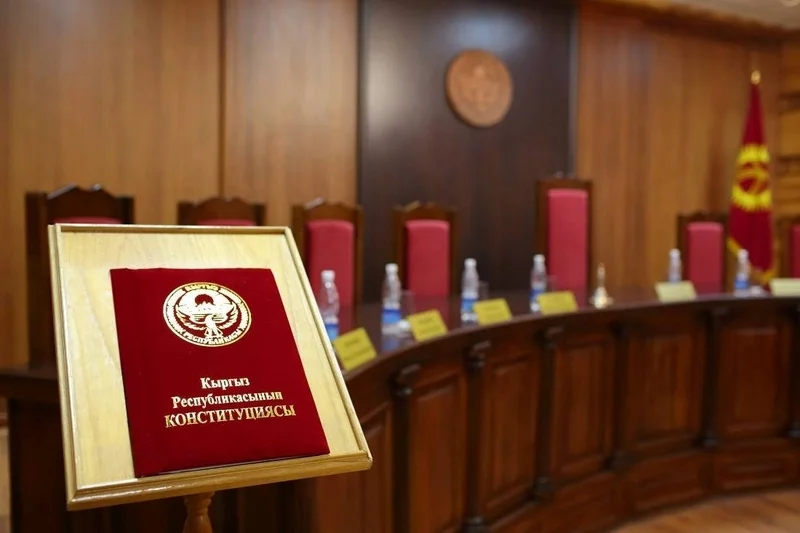
"Kyrgyzstan is state governed by the rule of law. Therefore, we must obey the law. The court's decision is binding on all citizens and government agencies. This demonstrates that we are truly a state governed by the rule of law and fulfill our international obligations. The Constitutional Court, like any other court, is subject only to the Constitution and the laws. Decisions are made solely within the framework of these norms. I believe that all actions are currently being carried out precisely on this basis," the doctor of law concluded.