Corruption directly hinders societal development, economic investment, and public trust in government. It weakens the legitimacy of state institutions, contributes to the growth of the shadow economy, and undermines democratic structures. However, global experience shows that it is possible to fight corruption systematically. This requires political will, the use of modern technologies, the establishment of independent institutions, and the promotion of public awareness. Countries such as Estonia, Latvia, Lithuania, and the Czech Republic have successfully applied these principles, significantly reducing corruption over the past two decades. Kyrgyzstan also has the potential to learn from these experiences and adapt them to its local context in order to advance its anti-corruption policies.
Since 2021, anti-corruption efforts have become a strategic priority in Kyrgyzstan. The main driving force behind this change is President Sadyr Japarov’s political will and commitment to reform. Under his initiative, the Presidential Anti-Corruption Business Council was established to promote dialogue between civil society and the government, ensure transparency, and monitor reform processes. Under the leadership of Secretary-General Nuripa Mukanova, cooperation between ministries and civil society has improved, fostering greater trust. In addition, the “three-level anti-corruption approach” initiated by State Committee for National Security (SCNS) Chairman Kamchybek Tashiev has been implemented. This approach includes: (1) systematizing anti-corruption work, (2) strengthening legal enforcement, and (3) raising public awareness to build social support. As a result of these efforts, according to the Ministry of Finance, the shadow economy decreased by 31% in 2024, and billions of soms were recovered through the dismantling of corruption schemes.
Estonia, for example, is recognized globally for its successful digital governance system. In Estonia, 99% of public services are available online. Through the “X-Road” platform, citizens provide their data only once, which is then shared across institutions—this "once only" principle reduces bureaucracy and minimizes opportunities for bribery by limiting direct contact. Additionally, Estonia was the first country to introduce online voting (i-Voting) in 2005. By 2023, 51% of voters cast their ballots online. This system increases transparency and public trust, as it allows voters to verify their own votes. Although Kyrgyzstan has launched its own data exchange system, “Tunduk,” further efforts are needed to fully implement it and digitize public services. Adopting a “one-stop-shop” approach, integrating databases, and piloting online elections in student parliaments could contribute to reducing corruption and building public confidence.
The Czech Republic and Lithuania, on the other hand, have focused on strengthening legal frameworks and independent institutions. In Lithuania, the Special Investigation Service (STT) works to prevent, investigate, and educate the public about corruption. In the Czech Republic, the National Organized Crime Agency specializes in investigating high-level corruption. These institutions report to parliament and operate independently from political influence. Lithuania has also introduced legislation on lobbying transparency. Through the “Cross-declaration” system, lobbyists and public officials are required to publicly disclose their interactions. To adopt similar practices, Kyrgyzstan could consider the following steps: publicly disclose income and asset declarations of public officials; impose a two-year “cooling-off” period before senior officials can work in the private sector; strengthen laws regulating conflicts of interest; and enhance anti-money laundering oversight mechanisms.
For anti-corruption policies to be sustainable and effective, raising awareness and education is essential. Estonia, Latvia, and Lithuania consider education a key tool in combating corruption. These countries have included subjects such as “Ethics,” “Integrity,” and “Civic Responsibility” in school curricula. Universities offer mandatory courses in “Public Administration” and “Digital Security.” In Kyrgyzstan, such courses exist only in a few faculties. Therefore, national-level strategic programs are needed. Suggested actions include introducing continuous training and online certification systems for public officials and developing civic education platforms for schools and universities. Without an informed and responsible society, even the best laws and technologies cannot produce lasting results.
All things considered Kyrgyzstan is advancing in the right direction in addressing corruption. Strong political leadership, public support, and the active role of state institutions are already yielding tangible results. Estonia’s digital model and the Czech and Lithuanian examples of independent institutions offer valuable lessons for Kyrgyzstan. However, these experiences should not be copied directly—they must be adapted to the country’s specific conditions. If efforts remain consistent and systematic, Kyrgyzstan has the potential to become not only a leader in Central Asia but also a globally recognized example of clean and effective governance.
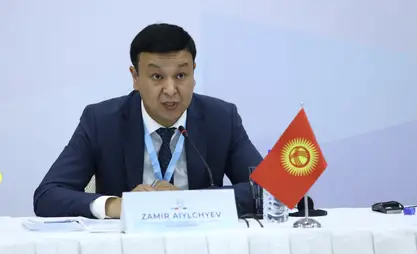
Zamir Aiyilchiev
Consultant-expert of the Anti-Corruption Business Council under the President of the Kyrgyz Republic, international anti-corruption expert, and research scholar.