

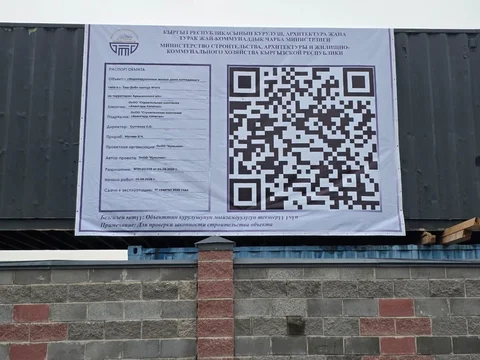




Bishkek, Oct. 15, 2025. /Kabar/. A new stage of digitalization in construction industry has begun in Kyrgyzstan: the introduction of a unified information passport for construction projects, which will be mandatory for all construction sites across the country, Nurdan Oruntaev, Minister of Construction, Architecture, and Housing and Public Utilities told Kabar.
According to the minister, the introduction of the passports is the second stage of digitalization in the industry, following the introduction of QR codes at the beginning of the year.
We introduced QR codes at the beginning of the year, but by law, every construction company is required to place a passport at its site. Therefore, after introducing QR codes, we moved on to the second stage: the introduction of unified passport. This document contains all information about the construction site: when construction began, which company is the developer, stages of work, when completion is planned, and which design organization is involved. The passport also contains a QR code that can be used to access the ministry's website and verify whether the construction is legal or not, Oruntaev noted. The minister emphasized that single passport is mandatory for all projects, from multi-story residential buildings to social projects. This will allow citizens purchasing house to be confident in the legality of the construction, he added.
The passport includes:
- the official logo of the Ministry of Construction;
- the name and address of the property;
- information about the construction company;
- information about the responsible specialists and their contact information;
- permit numbers;
- construction start and completion dates;
- a QR code for accessing additional information online.
The introduction of a single passport is aimed at increasing transparency, strengthening government oversight, and protecting citizens' rights when purchasing housing.