A Central Asian newcomer will take one of the most coveted positions in international diplomacy next year after Kyrgyzstan outpolled the Philippines in a drawn-out General Assembly contest on Wednesday, June 3, claiming the Asia-Pacific region’s lone open seat on the United Nations Security Council, the Filipino Magazine reported.
Bishkek will join the council for the first time in its history when the 2027-2028 term opens, having captured 142 votes on the fourth and decisive ballot — comfortably past the 128-vote threshold for a two-thirds majority. Manila finished with 49.
The outcome ended a streak that had held for nearly seven decades. The Philippines had secured a council seat on every previous attempt, winning in 1957, 1963, 1980-1981, and most recently 2004-2005. This marked the first defeat in five tries.
The race never tilted Manila’s way. Kyrgyzstan led the opening round 105-85 and pulled further ahead with each subsequent count — 110-81, then 123-68 — before the fourth ballot delivered the margin it needed. Every vote was cast in secret.
Foreign Affairs Secretary Theresa Lazaro accepted the loss in a statement issued soon after the tally was confirmed, offering thanks to the governments that had backed the Philippine campaign.
“The Philippines respects the decision of the member states of the United Nations and extends its congratulations to the Kyrgyz Republic,” she said. Lazaro described the bid as one grounded in the country’s dedication to “peace, dialogue, international law, and cooperation among nations.”
President Ferdinand Marcos Jr. had driven the campaign for more than three years, with Lazaro and her predecessor Enrique Manalo repeatedly raising the Philippine case at international gatherings and lobbying foreign leaders and ministers for commitments of support.
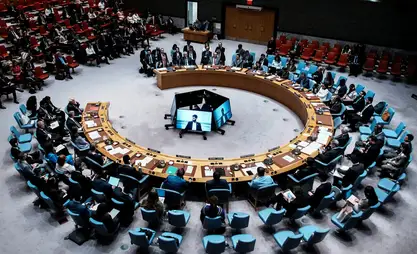
The seat in question is one of ten non-permanent positions on the 15-member council, each filled by General Assembly election for two-year terms and apportioned across regional blocs. Unlike the five permanent members — China, France, Russia, Britain and the United States — non-permanent members hold no veto. Even so, the post grants a voice in decisions on ceasefires, sanctions and peacekeeping deployments, which carry binding force on all UN members in a way most Assembly resolutions do not.
That binding authority has increasingly run up against the limits of the council’s actual reach. The body has repeatedly been faulted for failing to act on major conflicts, hamstrung by the veto held by its five permanent members. Deadlock between those powers has stalled the council on Ukraine and Gaza alike — illustrated starkly in 2022, when Russia struck down a resolution that would have demanded it end its invasion of Ukraine and withdraw its forces.