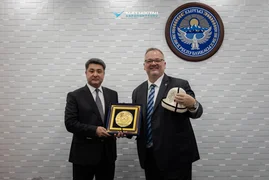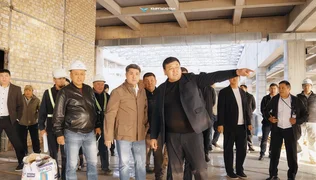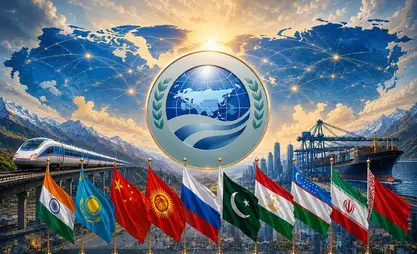
In the lead-up to the SCO summit, Kyrgyzstan hosted a series of important visits and a high-level consultative meeting, which have a significant political context and are directly related to shaping the new agenda of the Eurasian partnership. Currently, amid global crises and conflicts, the consequences of which have been felt by both Kyrgyzstan and neighbors, the most important thing is to maintain stability and the trend toward sustainable economic development.
The Shanghai Cooperation Organization, which unites the continent's largest economies, is emerging as a pole of a multipolar world. Therefore, Bishkek to host key event in global politics with participation of heads from 21 countries. In this regard, Kyrgyzstan is becoming a crucial platform for partners.
One of the key issues is adapting the work of the Shanghai Cooperation Organization to the current global situation and geopolitical changes. Furthermore, the SCO is considering creating a development bank to finance joint infrastructure and major investment projects. Other important topics include strengthening trade, transport, and logistics ties, and jointly combating terrorism, extremism, organized crime, and new cross-border drug threats.
Political scientist Mars Sariev, in his comments to Kabar noted that in recent months, the geopolitical situation, from the South Caucasus to Central Asia, has changed significantly. Until recently, this region was perceived as a stable transit corridor between East and West, but today the consequences of major international conflicts no longer bypass us.
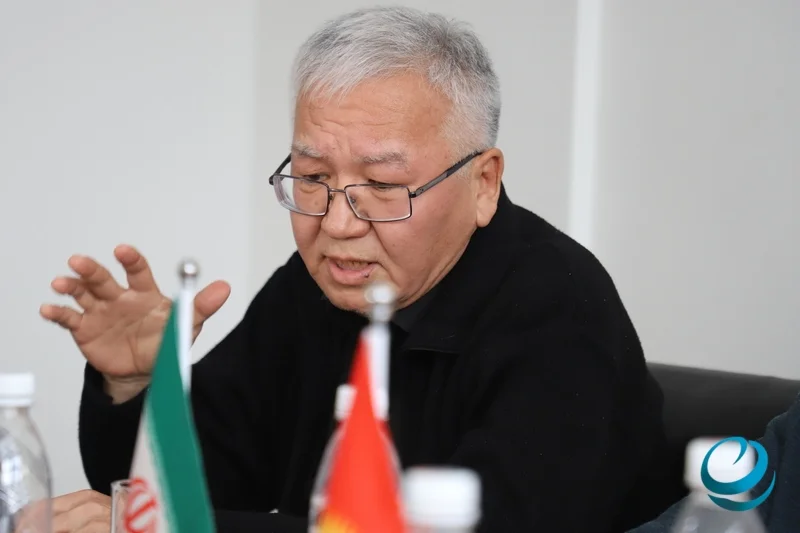
The escalation in the Middle East is already having a direct impact on Central Asia. Drone and missile strikes on targets in the Caspian Sea region and damage to rail infrastructure supporting cargo transit to Central Asia are disrupting logistics and making traditional routes unsafe. Furthermore, the expert believes, threats emanating from Afghanistan cannot be discounted. In this regard, Mars Sariyev believes that the series of visits and talks recently held in Kyrgyzstan are crucial, for maintaining and strengthening economic ties in the region and coordinating efforts to maintain energy security and stability. Furthermore, the upcoming SCO leaders' summit in Kyrgyzstan will be a key political event for the broader Eurasian partnership in the context of the changing situation.
"Holding an informal summit in the C6 format (Central Asian countries and Azerbaijan) seems logical. Its significance extends far beyond regional cooperation." A unified strategic space is effectively being formed, from the Caspian to the Tien Shan, where issues of transport connectivity, energy security, and joint crisis response are being coordinated.
This is precisely why Kyrgyzstan's chairmanship of the Shanghai Cooperation Organization is particularly significant. It is expected not only to organize events but also to develop an adequate collective response to fundamentally new security challenges. This includes protecting international transport corridors, coordinating efforts to combat terrorism and transnational crime, countering sabotage against critical infrastructure, strengthening cybersecurity, and developing mechanisms for operational cooperation between member states.
Today, the SCO is becoming more than just a platform for political dialogue, but one of the key institutions for ensuring stability in Eurasia. In a context of increasing turbulence, it is precisely such organizations that can pool the potential of China, Russia, India, the Central Asian states, and other participants to prevent the spread of crises across the entire Eurasian continent.
Kyrgyzstan's chairmanship gives the republic the opportunity to initiate a new security agenda that takes into account modern hybrid threats, protects international transport corridors, and strengthens the resilience of the entire Eurasian space. The ability to propose practical mechanisms for collective response could become the main political outcome of Kyrgyzstan's SCO chairmanship," Mars Sariev emphasized.
The SCO partnership is a broad framework of support for countries united by the goal of creating a large development region where civilizations enrich each other, more fully realize their economic potential, and jointly address security issues. Expert, Baktybek Saipbaev says that Eurasia has more than enough resources to create a self-sufficient subregion on the continent—one that is industrially developed, high-tech, and has fair trade rules and opportunities for progressive, multi-level development.
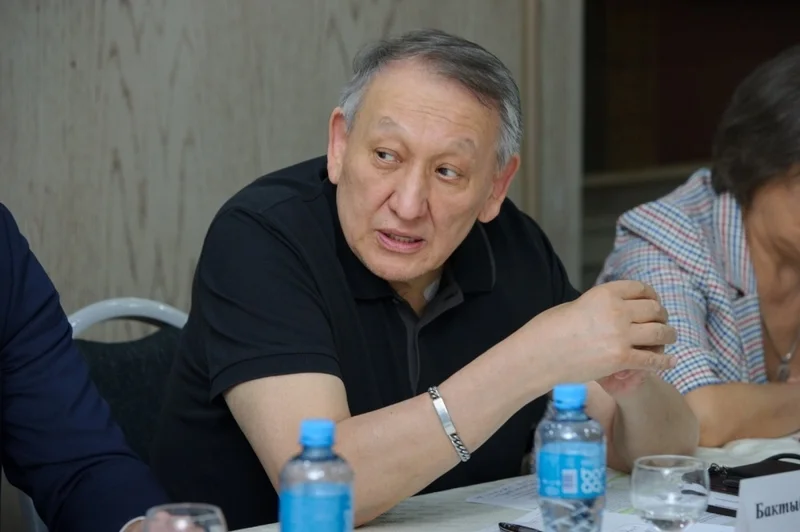
"Look how the SCO is weathering the crisis. Compared to the rest of the world, our economy continues to grow. Russia, India, and China are also performing better than once-advanced countries. The world is changing, and the fact that Bishkek will host the most important summit of the Shanghai Cooperation Organization, perhaps at a turning point in world history, is very significant.
I would like to point out that the SCO agenda is filled with constructive projects. These include the development of the transport system and logistics, the expansion of industrial potential, technological re-equipment, digitalization, and artificial intelligence. The Shanghai Cooperation Organization discusses how to make the world a better place by bringing peoples and civilizations closer together.
The SCO represents more than a third of the global economy and half of humanity's population. It is important that this is a constructive project. And very important issues related to the future will be discussed at the summit in Kyrgyzstan. "Therefore, we will witness very important global events taking place in our republic," concluded Baktybek Saipbaev.
Bishkek is hosting this major international event in the year when the Shanghai Cooperation Organization celebrates a quarter-century since its founding. The summit's motto is "25 Years of the SCO: Together for Sustainable Peace, Development, and Prosperity." Kyrgyzstan is becoming a mediator between major partner countries on the Eurasian continent and is participating in the formation of new rules for international cooperation.