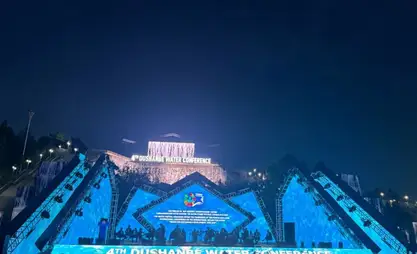

The United Nations General Assembly’s proclamation of the International Decade for Action, “Water for Sustainable Development,” 2018–2028, has helped unite global efforts on sustainable water management, a senior Commonwealth of Independent States official said Thursday.
According to Khovar, speaking at a high-level international conference in Dushanbe, Nurlan Seitimov, deputy secretary-general of the CIS, said the initiative—launched at the suggestion of Tajik President Emomali Rahmon has strengthened international coordination on water issues.
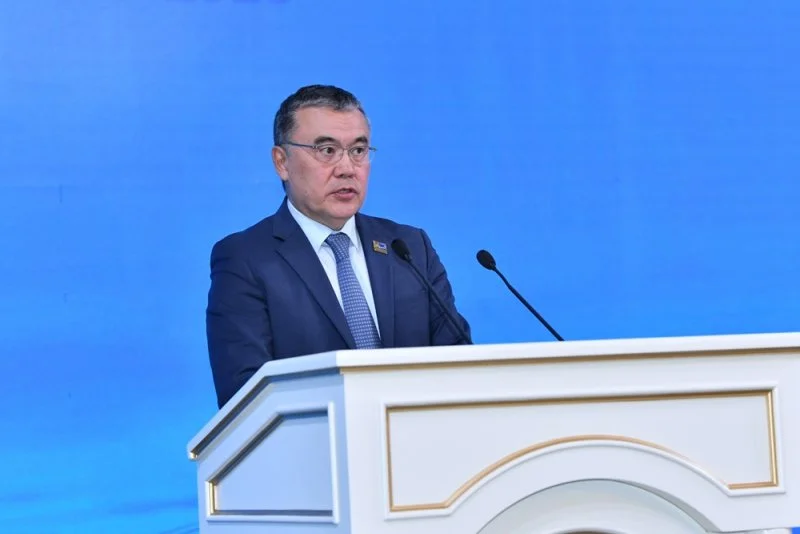
“The proclamation by the UN General Assembly, at the initiative of the President of the Republic of Tajikistan, Emomali Rahmon, of the International Decade for Action, ‘Water for Sustainable Development,’ 2018–2028, has enabled us to consolidate the global community’s efforts in the area of sustainable water resources management,” Seitimov said.
He said the CIS is closely monitoring implementation of the decade’s objectives, noting that access to water resources is essential for economic growth and prosperity across Central and South Asia.
Seitimov said progress has been made in recent years in strengthening dialogue among states on water management and identifying new areas for economic cooperation.
“In this regard, we are pleased to note that much has been accomplished over the past years, both in terms of advancing dialogue between states on water management issues and in identifying new promising avenues for economic cooperation in this area,” he said.
He added that the efficient use of water resources remains a priority for CIS member states.
“I believe it’s worth noting that the prudent use of water resources is one of the priority areas of cooperation among the Commonwealth states,” Seitimov said.
He pointed to the CIS Economic Development Strategy to 2030, which incorporates goals aligned with the International Decade for Action on water.
Seitimov also highlighted the work of CIS environmental and hydrometeorological bodies in advancing environmental monitoring, protection and safety at both regional and national levels.
He said participation from governments, international and nongovernmental organizations, businesses and the scientific community would help generate new ideas for addressing shared water challenges.