Over the past five years, significant progress has been made in the country's economic development. For example, while the gross domestic product (GDP) was $8.3 billion in 2020, it exceeded $22.6 billion by the end of 2025. These figures indicate that Kyrgyzstan's economy has nearly tripled.
Kabar News Agency reports on the influx of investment that has contributed to economic growth, the areas of greatest interest to investors, and the conditions created for entrepreneurs in the country.
Tax revenues quadrupled over five years
Over the past five years, tax revenues have increased approximately fourfold, customs duties sixfold, and non-tax revenues almost ninefold. While the consolidated budget was 313 billion soms in 2021, it exceeded 1 trillion 100 billion soms in 2025, representing a 3.5-fold increase.
These figures indicate that entrepreneurs have moved away from the shadow economy and toward legal compliance. The industry has emphasized transparency and accountability, and opportunities for corruption have been significantly reduced.
Both domestic and foreign investors have undoubtedly made a significant contribution to economic growth. This influx of investment is facilitating the implementation of projects in various sectors, creating new jobs, and increasing tax revenues.
Foreign Direct Investment Inflow: Figures
According to the National Statistical Committee, the volume of foreign direct investment(FDI) in Kyrgyzstan has increased significantly over the past four years.
While FDI inflows totaled USD 537.6 million in 2020, they reached USD 1,029.7 million in 2024.
31.9% came from non-CIS countries, while 68.1% came from CIS countries.
Which sectors are receiving the bulk of investment?
According to the structure of attracted investment, capital is distributed across the following key economic sectors:
- Agriculture, forestry, and fisheries;
- Mining;
- Manufacturing;
- Power, gas, steam, and air conditioning;
- Water supply, waste treatment and recycling, and secondary raw materials;
- Construction;
- Wholesale and retail trade;
- Automobile and motorcycle repair;
- Transportation and cargo storage;
- Hotel and restaurant operations;
- Information and communications;
- Financial intermediation and insurance;
- Real estate transactions;
- Professional, scientific, and technical activities;
- Education;
- Healthcare and social services;
- Arts, entertainment, and recreation;
- Other services.
Thus, investments cover virtually all basic and service sectors of the economy, creating a multiplier effect for employment, tax revenues, and infrastructure development.
Which countries foreign direct investment comes from?
Among countries other than the CIS, foreign direct investment in Kyrgyzstan comes from the United Kingdom, Germany, Canada, Cyprus, China, Luxembourg, the Netherlands, the United Arab Emirates, Pakistan, the Republic of Korea, the United States, Turkey, Switzerland, Japan, and other countries.
Among CIS countries, investments in Kyrgyzstan come from Azerbaijan, Kazakhstan, Russia, Uzbekistan, and other Commonwealth countries.
Investor Interest in Kyrgyzstan: The Country's Investment Attractiveness
Economist Kuban Choroev told Kabar, in the first nine months of 2025, investment volume increased by 21.7% compared to the same period last year. Foreign direct investment inflows also grew by more than 21%.
According to him, fixed capital investment in January 2026 amounted to 6 billion soms, a 17.9% increase compared to January of the previous year. This growth was driven by both domestic and external sources of financing, with external financing increasing 11.6-fold.
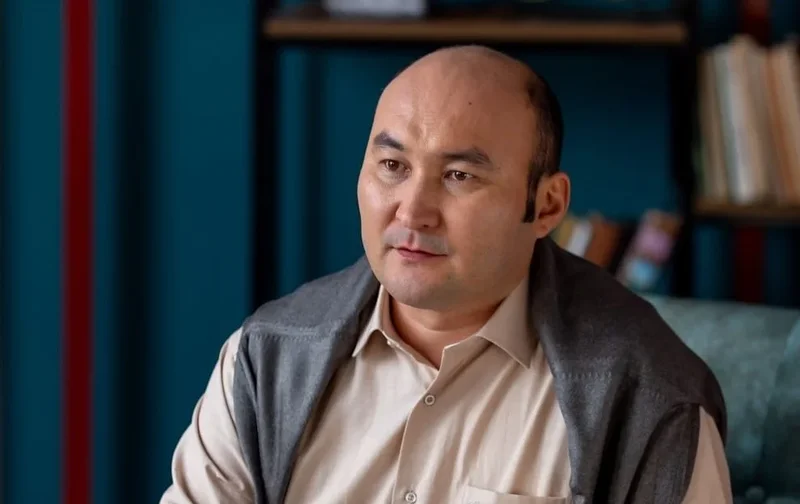
"Funds raised through investments are primarily being used to implement infrastructure projects in energy, water supply, waste management, industry, and the creation of logistics centers," Choroev noted.
He also emphasized that the growing investor interest in Kyrgyzstan is due to the creation of a number of favorable conditions for doing business and implementing investment projects in the country.
"Firstly, political stability and the resolution of border issues are noteworthy. Complete border delimitation contributes to strengthening peace in Central Asia and the creation of a more predictable environment for large investors, significantly reducing investment risks.
Secondly, the state supports entrepreneurs and provides incentives. The principles of interaction between investors and government agencies are simplified, and a number of tax incentives are provided. Customs duties are not levied on equipment imported from countries of the Eurasian Economic Union. "Furthermore, unfounded inspections of businesses by law enforcement agencies have been discontinued since January 1, 2026. This is an important step towards protecting businesses," Choroev said.
"Overall, systematic efforts are underway in Kyrgyzstan to improve the investment climate. The conditions created by the state, tax incentives, political stability, and strategic geographic location are making the country increasingly attractive to both foreign and domestic investors. If this trend continues and reforms are pursued, Kyrgyzstan has every opportunity to become one of the reliable investment hubs in Central Asia," the expert emphasized.
Entrepreneurs are partners of the state.
Over the past four years, Kyrgyzstan's average annual real economic growth rate has been 10.2%. According to the International Monetary Fund, the country will be among the world's top three countries in terms of real gross domestic product growth in 2024. This was announced last week at a national meeting chaired by President Sadyr Zhaparov, dedicated to the country's socioeconomic development in 2025 and plans for the coming years.
The president highlighted specific development areas by 2030: increasing per capita GDP to $4,500, achieving a total economic output of at least $30 billion, joining the top 30 countries globally in terms of the Sustainable Development Goals, and improving the country's Human Development Index by 10 notches.
In his speech, Sadyr Zhaparov noted that Kyrgyzstan is open to domestic and foreign investors and is prepared to create the most favorable conditions for those willing to contribute to the country's economic development through investment, technology, practical approaches, and knowledge. The president also emphasized that a moratorium on unjustified business inspections has been introduced, administrative procedures have been simplified, and legislative norms are being improved.
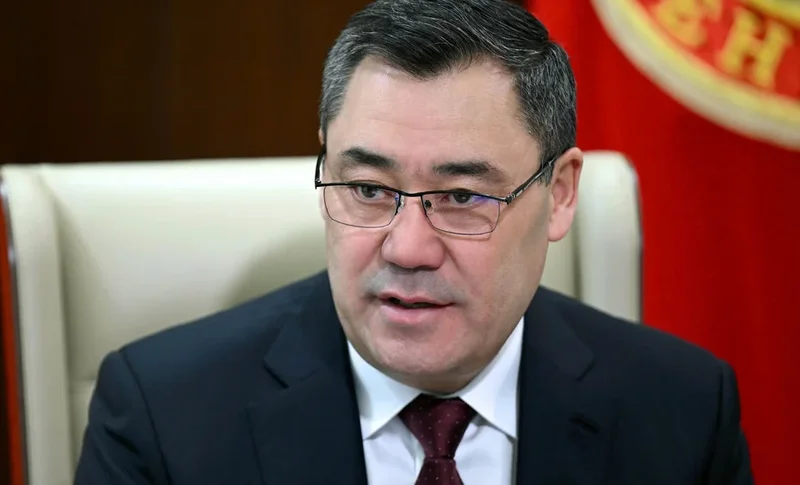
"Those entrepreneurs who benefit themselves and the state, are protected by law, feel the state's support. As a favorable investment climate is being created, I want to emphasize once again: there should be no unjustified pressure on business. I appeal in advance to all law enforcement agencies and security forces present at the national meeting: businesses that operate conscientiously and contribute to the country's development must be comprehensively protected. If entrepreneurs operate under fear and pressure, economic growth stalls, and this, of course, harms the state, the people, and ourselves, who bear full responsibility.
Therefore, local law enforcement agencies must cease unfounded inspections of akimats, mayors, and village administrations. Stop interfering with their work, demanding reports, monitoring them, or simply summoning them to your offices without reason. We want entrepreneurs to become the heart of Kyrgyzstan's economy, a source of innovation and new jobs," the president said.
He added that the state will continue to consistently protect entrepreneurs and provide them with guarantees, as well as create conditions for business development.
"In our Kyrgyzstan, entrepreneurs must feel like partners with the state. Only with such mutual respect can we ensure a powerful economic leap and a dignified future for our country," the head of state emphasized.
By 2030, the country must transition from a service-based economy to an industrial-agrarian model and increase the share of manufacturing to 28-30%. Further sustainable development will require the coordinated efforts of all government agencies.
It is noted that this will make it possible to achieve the goals set out in the country's National Development Program until 2030.