
Bishkek, June 9, 2026. /Kabar/. The 64th session of subsidiary bodies of UN Framework Convention on Climate Change (UNFCCC) SB64 has begun in Bonn, Germany. The delegates from approximately 190 countries are participating.
According to the Presidential administration, the goal of event is to develop a foundation for future climate action and prepare for the upcoming Conference of the Parties to the UNFCCC (COP31), which will be held in Antalya, Turkiye.
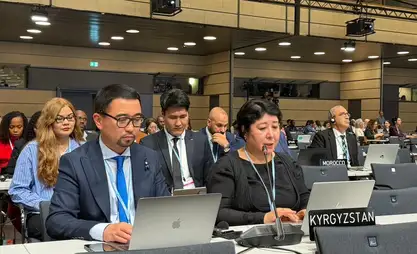
The delegation led by Dinara Kemelova, Special Representative of Kyrgyz president on the Mountain Agenda, is actively participating in the session.
Speaking at the plenary session as Chair of the Mountain Group, which brings together 11 countries, Dinara Kemelova called for access to climate finance, modern technologies, and early warning systems for natural disasters in mountain countries, which are most vulnerable to the impacts of climate change.
She emphasized that mountain regions are a key element of global resilience, significantly impacting water security, biodiversity conservation, food systems, and energy in both mountain and downstream countries.
At a thematic event dedicated to glaciers and the cryosphere, Dinara Kemelova spoke about Kyrgyzstan's international initiatives for glacier conservation and emphasized the importance of developing international cooperation in training glaciologists and conducting glacier monitoring.
During the event, international experts presented various glacier melt scenarios. In particular, the example of the Abramov Glacier in Kyrgyzstan, which could completely disappear by 2100 if global temperatures rise by 2.7°C, was cited.
Furthermore, the Kyrgyz delegation is actively conducting bilateral consultations with heads of delegations from other countries and representatives of international organizations to secure broad support for initiatives to integrate mountain ecosystem conservation and sustainable development into global climate agendas and climate finance mechanisms.
For reference: 31 official events are planned as part of global climate negotiation process, as well as a number of negotiating sessions dedicated to climate finance, adaptation, a just energy transition, gas emissions reduction, food security, technology transfer, and other relevant areas of the climate agenda.