The global climate agenda is on the verge of change. Since the beginning of 2026, more than 100 devastating natural disasters have been recorded worldwide, claiming the lives of thousands of people. Global economic losses have exceeded $50 billion, and insurance companies are struggling to cover the consequences. Drought in Southern Europe and Africa has led to rising food prices worldwide. Industry experts warn that climate disasters will become increasingly frequent, and prevention and adaptation measures must move from words to action.
The summer of 2026 has already gone down in history as one of the most extreme weather periods in the world. According to international databases and insurance institutes (in particular, EM-DAT and Aon Climate Insight), more than 130 major natural disasters have been recorded since the beginning of the year. These are events that have claimed lives and caused colossal economic losses. According to data, in the first quarter of the year alone, global damage from major natural disasters exceeded $50 billion.
On April 25, 2025, President Sadyr Zhaparov noted the deteriorating environmental situation globally at the international conference "Global Mountain Dialogue for Sustainable Development: Towards the Bishkek+25 Summit," held in Bishkek.
The head of state emphasized that today the world is facing climate change, extreme weather conditions, natural disasters, ecosystem degradation, and biodiversity loss. He noted that mountainous countries, with their unique resources, are particularly vulnerable to the consequences of these global processes.
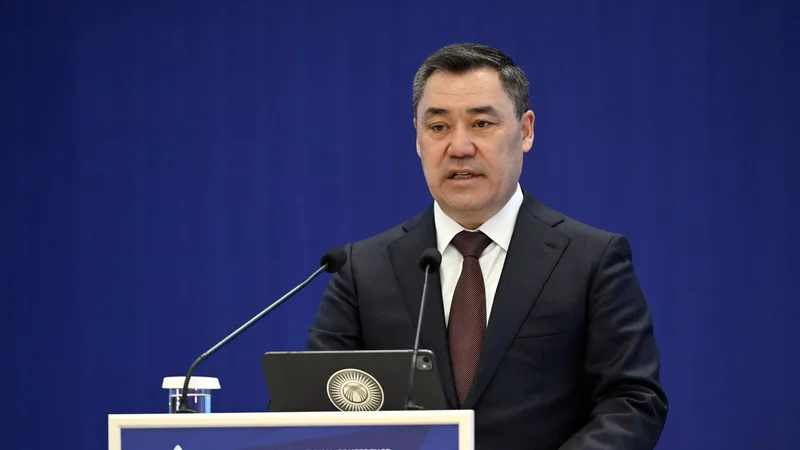
"Our conference aims to unite the countries of Asia, Europe, America, Africa, and Australia. Despite their geographical distance, they face common challenges—melting glaciers, biodiversity loss, and the degradation of mountain ecosystems in the Alps and Andes, Kilimanjaro and the Himalayas, the Pamir-Alai and Tien Shan, the Caucasus, Altai, and other mountain ranges." "These problems require urgent action, coordinated efforts, and the attention of the international community," said Sadyr Zhaparov.
It is noted that rapid global warming and the El Niño phenomenon are the cause of the large-scale human and material losses. Meteorologists warned back in the spring that warming waters in the tropical Pacific Ocean were leading to the formation of an El Niño that would persist until November. In mid-June, the phenomenon intensified, exacerbating the already unstable weather. This led to extreme events—abnormal heat waves, heavy rains, and floods.

Europe, in particular, is experiencing temperatures twice as high as normal. In France, Germany, Italy, Spain, and southern Great Britain, temperatures rose 5-12 degrees above normal, reaching 45 degrees Celsius. In the past two weeks alone, more than a thousand people have died in France, most of them elderly. In Spain, the death toll from the June heatwave has approached 900. Experts warn high risk of repeat on the continent.
"This heatwave is a rehearsal. Extreme heat waves in Europe are not an isolated event, but a recurring crisis. Heatwaves are becoming more frequent, longer lasting, and more intense," said Hans-Henri Kluge, WHO Regional Director for Europe.

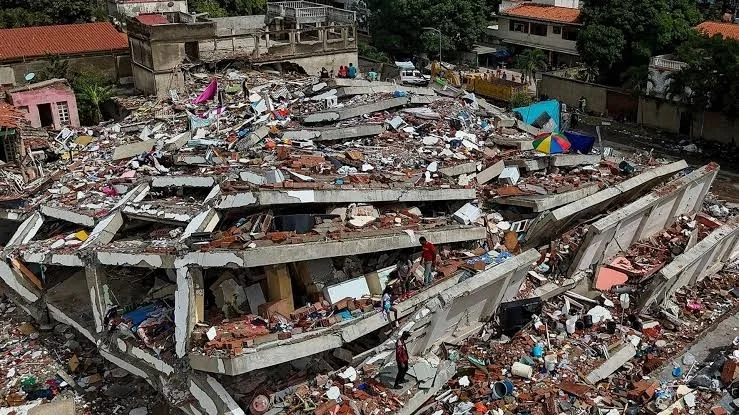
Meanwhile, Venezuela, which suffered a devastating earthquake a week ago, is in mourning. Strong tremors measuring 7.2 and 7.5 magnitudes claimed the lives of more than 2,000 people. Search and rescue efforts are ongoing. More than 10,000 people were injured, and thousands more were left homeless. The consequences of the disaster are assessed as extremely severe.
Asia is also experiencing rapidly rising temperatures. Record heat has been recorded in Japan, China, and South Korea. Flooding due to heavy rainfall is occurring in various parts of the continent, while droughts and dust storms are intensifying in the Middle East.
In Central Asia, heavy rains, floods, and mudflows continue, and the risk of landslides remains. Therefore, governments in the region are calling for heightened preparedness for climate impacts. Early warning systems and seasonal forecasts are becoming key tools for protecting populations and economies.
Priority measures for climate change adaptation include developing early warning systems, ensuring public safety, and providing additional support to vulnerable groups. Such measures are already helping save lives and should become a mandatory part of preparation for future natural disasters.
Daurbek Sakyev, head of Kyrgyzhydromet, noted that the climate changes occurring in the world.

Natural disasters require rapid and effective mechanisms to prevent natural disasters. According to him, adaptation to climate change and risk mitigation measures can minimize the impact of cataclysms.
“The climate change currently occurring on the planet is clearly changing the global agenda. All processes are interconnected. The heat in Europe is also affecting Central Asia. These phenomena will be studied, and in the coming years, issues of preventing similar extreme situations will be addressed. Based on this year's temperature changes, conclusions will be drawn and measures will be taken. One key mechanism is improving early warning systems.
At the same time, international financial institutions play a crucial role, as adaptation to climate change requires significant resources. Each country has national adaptation plans. While it's impossible to completely stop the changes, their consequences can be mitigated. Hydrometeorological services are currently being strengthened, and forecasting methods for 10-15 years in advance are being introduced. This will allow humanity to be prepared for the consequences,” noted Daurbek Sakyev.