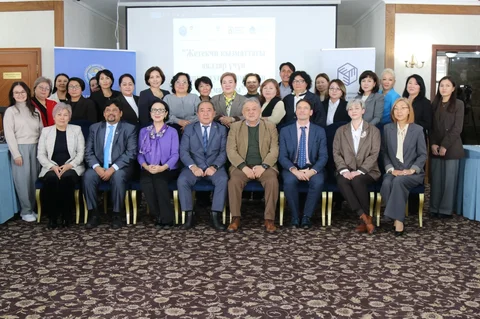
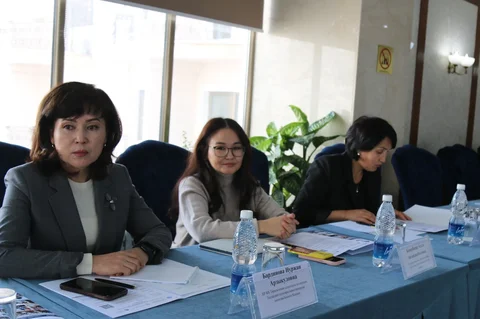
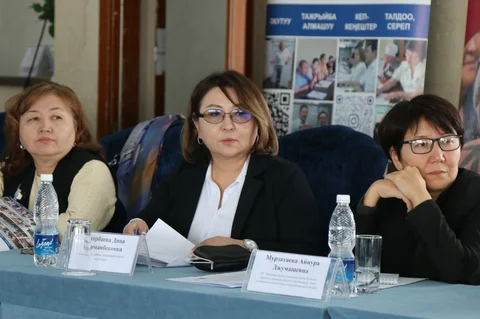

Bishkek, Nov. 7, 2025. /Kabar/. Women's participation in public and political life in Kyrgyzstan continues to grow, significant increase of their representation in local government bodies has been noted, Kudaibergen Bazarbayev, Director of agency for civil service and local self-government told during national seminar-conference for female government leaders.
According to him, as a result of the administrative-territorial reform, the total number of deputy seats in local councils decreased from 9,062 to 6,384. Despite this, 2,538 women deputies received voter support and were elected to local representative bodies. This means that women account for 39.75% of the total number of deputies. Bazarbaev emphasized that these results demonstrate women's increased involvement in governance: "Women are increasingly participating in public and political life, contributing to the country's development through their voices and actions." The state's gender policy is gradually yielding tangible results."
The head of the agency also presented up-to-date data on the personnel of state and municipal services. The total number of employees is 22,425, of which 8,604 (38%) are women.
Administrative employees – 20,665, of which 8,183 (39.5%) are women;
- Political employees – 1,234, of which 264 (21%) are women;
- Special employees – 526, of which 240 (45.6%) are women.
The proportion of women is particularly high in the central offices of ministries. In the Ministry of Labor, Social Security, and Migration, this figure reaches 80%, in the Ministry of Education – 74%, in the Ministry of Emergency Situations – 69%, in the Ministry of Digital Development – 60%, in the Ministry of Justice and the Supreme Court – 65%, and in the Prosecutor General's Office – 45%.
The seminar-meeting held in Bishkek aims to strengthen the professional and leadership competencies of women leaders, enhance their role in public administration, and further implement gender equality policies and achieve sustainable development goals.