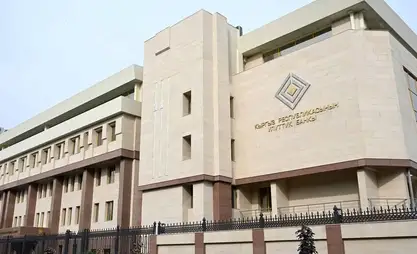
Bishkek, July 28, 2026 /Kabar/. On July 27, the Board of the National Bank of Kyrgyzstan decided to maintain the key rate at 12%.
According to the main financial regulator, the decision comes into effect on July 28.
"Emerging trends in the global economy against the backdrop of the conflict in the Middle East continue to impact inflation in Kyrgyz Republic." Price fluctuations in global food markets, the risk of disruptions to oil product supplies through the Strait of Hormuz, and the associated price shock in the global oil market remain key factors in the rising cost of imported goods.
Inflation in Kyrgyzstan has cumulatively reached 6.5% since the beginning of 2026 (11.3% year-on-year). Against the backdrop of external influences, food and fuel and lubricants have demonstrated the largest price increases in the current inflation structure, also creating secondary effects and thereby affecting the prices of other goods and services in the consumer basket. At the same time, service prices remain elevated as a result of ongoing reforms to fiscalize tax procedures in the hotel and restaurant sector, which subsequently pass on their incurred costs to the cost of services," the statement says.
The Kyrgyz economy is experiencing growth in domestic demand due to the continued increase in real incomes. At the same time, investment activity is high, primarily in the construction sector. Almost all sectors of the economy are demonstrating positive dynamics, leading to double-digit real GDP growth of 11.9%.
Due to the intensification of global geopolitical instability and the emergence of new supply shocks since the beginning of 2026, the National Bank has tightened monetary conditions to minimize the impact of external inflationary factors on the country's economy. Since May 2026, the tactical steps of the monetary policy have also been modified, and measures to regulate the volume of money in the economy have been strengthened.
Currently, the interbank money and foreign exchange markets continue to function stably, with short-term money market interest rates set near the National Bank's key rate. Commercial banks have excess liquidity, the level of which is actively managed by the National Bank's monetary instruments to limit monetary contributions to inflation.
The measures taken by the National Bank are expected to strengthen savings behavior among the population, preserve the purchasing power of the national currency, and create the preconditions for slowing inflation in the country to the target level of 5-7% in the medium term.
The main factors that could increase inflationary pressure in Kyrgyzstan include trends in the external economic environment: high price volatility in global and regional commodity markets and the tense geopolitical situation globally. Under these circumstances, the National Bank continues to assess the emerging external and internal factors driving inflation and considers it necessary to maintain tight monetary conditions for the time being to ensure price stability in the economy over the medium term.
"Should any risks to price stability arise, the National Bank will promptly respond to emerging inflationary factors," the country's main bank noted.