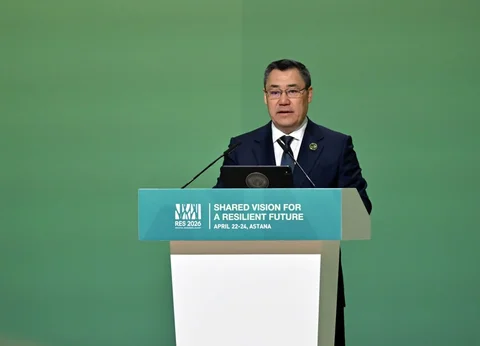
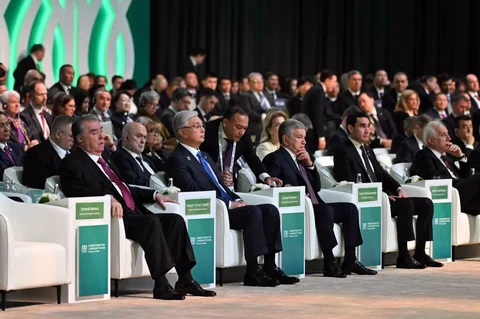
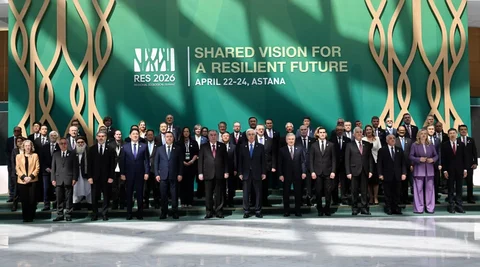

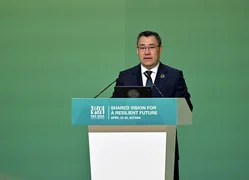

Bishkek, April 22, 2026. /Kabar/. Today, April 22, President of Kyrgyzstan Sadyr Zhaparov addressed the plenary session of the Regional Environmental Summit (RES) taking place in Astana, Kazakhstan, the presidential administration reported.
The head of state emphasized the timeliness and relevance of the initiative to hold this summit in a context where the challenges associated with climate change are increasingly impacting the sustainable development and well-being of countries and peoples.
In his speech, the president noted: "Kyrgyzstan accounts for only three hundredths of one percent of global greenhouse gas emissions. However, our country is suffering the consequences of climate change to a very large extent," he noted.
The following data are cited as illustrative examples: the number of emergency situations, including mudflows and floods, has tripled since 2020, with direct material damage amounting to approximately $16 million per year; the area of glaciation in Kyrgyzstan has decreased by 16%; According to forecasts, Kyrgyzstan could lose up to 80% of its glaciers by 2100; the water level of Issyk-Kul lake has dropped by almost 14 meters in recent decades; the number of rivers flowing into the lake has decreased from over 100 to 30; and the number of glacial high-mountain lakes has increased by 30% since 1968.
It was noted that climate change has exacerbated existing problems related to water resources and energy in the region and globally. The total annual water volume generated in Kyrgyzstan is estimated at approximately 50 billion cubic meters, the president added.
We understand that the water resources generated in Kyrgyzstan are of great importance for agriculture and for ensuring the energy, food, and socioeconomic security of the countries of Central Asia.
"Kyrgyzstan for many decades continues to maintain the same water allocation limits, provide water storage and release services, ensure the maintenance and safety of hydraulic structures, and protect against emergency situations," stated Sadyr Zhaparov.