



Demography is not just statistics, but a force that determines the future of society. The state forms policy on its basis, because the composition and size of the population, birth rate, mortality and migration are key factors influencing the social situation. For Kyrgyzstan, demographic changes are a strategic factor determining economic development and future government decisions.
In terms of population, Kyrgyzstan ranks 96th in the world, and 145th in terms of population density. On average, there are more than 35 people per square kilometer.
According to the National Statistical Committee, in January 2025, the total population was 7 million 282 thousand people. The highest population growth rates were observed in the city of Osh (2.2%) and in Bishkek (2.1%), and the lowest rates were recorded in the Issyk-Kul (1.0%) and Naryn (0.9%) regions.
The share of the urban population increased from 33.7% (in 2020) to 41.7% (in 2025) due to the administrative-territorial reform, and the share of the rural population was 58.3%.
At the beginning of 2025:
Men - 3 million 603 thousand (49.5%)
Women - 3 million 679 thousand (50.5%)
In recent years, demographic processes have been characterized by population growth.
Last year, 140.4 thousand births were registered in the country, of which:
Boys - 51%
Girls - 48% (the proportion of girls has slightly decreased).
In 2024, there were 19.4 births per 1000 people, which is 17.5% less than before.
Highest birth rate:
Batken - 23.9
Osh - 22.3
Jalal-Abad and Naryn - 22.0
At the beginning of 2024, the population structure looked like this: 34.2% children and teenagers; 56.5% citizens of working age; 9.3% people of retirement age.
In recent years, Kyrgyzstan has been developing programs to strengthen the institution of the family and support the birth rate.
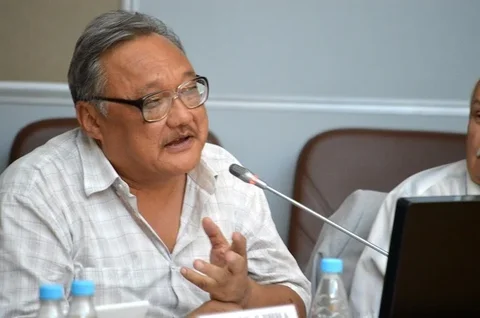
Doctor of Sociological Sciences, Head of the Center for Sociological Sciences of the National Academy of Sciences of the Kyrgyz Republic Nurbek Omuraliev told the Kabar agency that demographic incentives are an effective tool for increasing the population, as they motivate citizens to have children.
“The current population is estimated at over 7.2 million people. This is a very good indicator. After all, under the USSR, the number of our people was about 2 million people, and since independence, it has increased by more than 2 million. If we compare with neighboring Uzbekistan, in 1991 their population was 20.6 million, and by July of this year it reached 37 million 859 thousand. Kazakhstan has similar dynamics - then it was 16.4 million, and now over 19 million. What is the reason? Probably demographic support: in both countries they pay a benefit for each child born. In Russia, in addition to the benefit, there is also maternity capital, which is indexed and increased. Thus, having given birth to a child, the mother can save up for an apartment. This also increases the status of mothers and is a strong motivator. If such measures were introduced here, the population could increase even more,” Omuraliev noted.
Migration processes are also an important part of demography. In recent years, Kyrgyzstan has seen significant changes related to internal and external migration. Currently, about 650 thousand citizens work abroad.
Internal migration is mainly directed to Bishkek and the Chui region. In 2023, Bishkek accounted for 87.1% of the positive migration balance, and the Chui region - 12.9%.