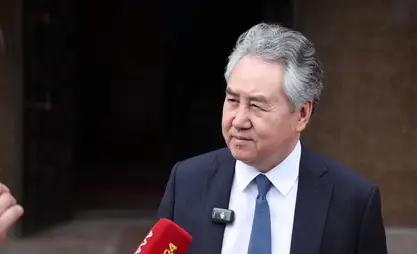

Bishkek, July 13, 2026. /Kabar/. The acquisition of foreign property by the state is an economically advantageous and strategic step for Kyrgyzstan, allowing it to significantly optimize budget expenditures. Foreign Minister Jeenbek Kulubaev told at the meeting with journalists as part of Open Cabinet media project.
According to him, the average purchase of a diplomatic property with an area of 600-700 square meters costs €5-9 million, but in the long term, this completely eliminates the country's need for expensive rent.
To date, the Ministry of Foreign Affairs of Kyrgyzstan has already built a substantial portfolio of its own real estate around the world.
"Acquiring real estate is a long-term benefit for the state. For example, in New York, we already have our own office, embassy buildings, residences, and four apartments. Kyrgyzstan fully owns embassy buildings in France and Germany, including the German residence of the head of mission, and recently acquired an official office in Hungary.
We have carried out similar work in the CIS and Asian countries. We have opened our own diplomatic facilities in Turkmenistan, Uzbekistan (Tashkent), Tajikistan (Dushanbe), South Korea, and in Kazakhstan – in Astana and Almaty. In Saudi Arabia, Kyrgyzstan was able to fully purchase buildings for both the embassy and consulate general. With Iran, we took a different approach – we concluded a mutual property exchange agreement for a period of 50 years," the minister explained.
The ministry is also currently expanding its geographic presence. The ministry has acquired land plots in China and Turkiye. Architectural designs are currently being approved, and construction of the buildings will begin soon. Furthermore, active negotiations are underway to purchase real estate for the embassy and consulate general in the UAE (Dubai and Abu Dhabi).
However, in some European countries, Kyrgyz diplomats are encountering bureaucratic obstacles and local legal hurdles.
For example, the ministry has been unable to finalize the purchase of the embassy building in Geneva, Switzerland, for two years now. Despite the relevant ministries issuing all the necessary permits, local authorities are blocking the process. They argue that the land and buildings located on it should remain the exclusive property of local citizens or companies. Transactions in Austria also involve significant time expenditures, where approval for the purchase of real estate takes three to six months.